1. Shoulder Cap Rose With Black Velvet Underlayer
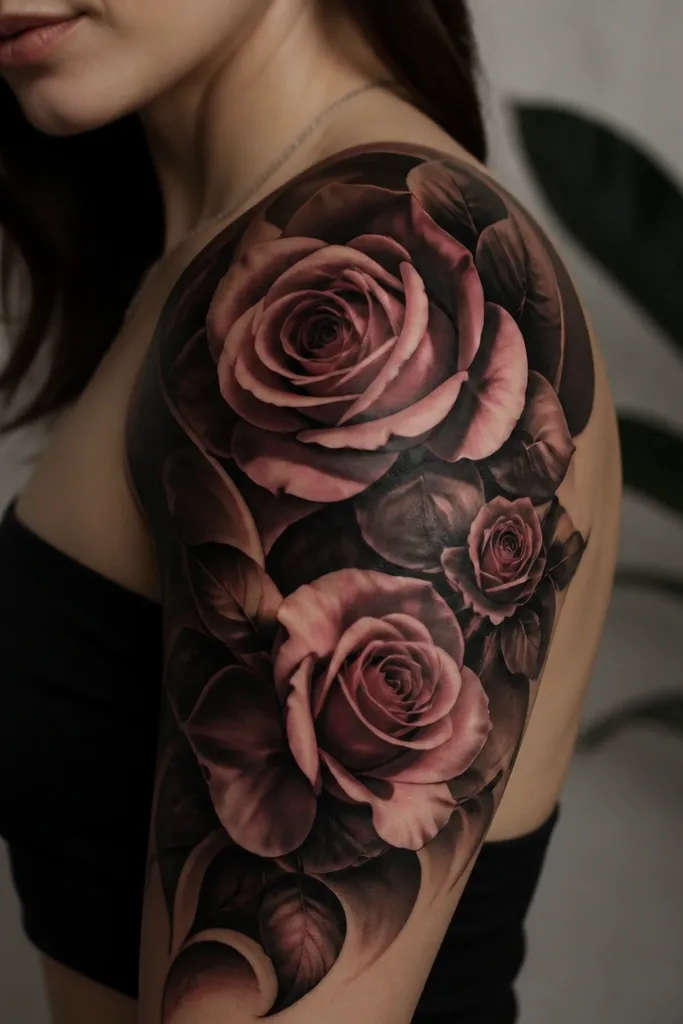
This works because the rose creates big curved petal shapes that swallow old lines. The black-brown "velvet" underlayer gives the artist a base that can eat stubborn dark ink, then the warm pink highlights make the whole piece look styled instead of masked. The negative space cuts keep it from turning into a flat blob, so it reads luxe even from a distance.
Ask for a shoulder-cap layout that starts near the outer collarbone and wraps onto the upper arm by 1.5 to 2 inches. Keep the petals thick at the center and thinner toward the edges, so the transitions stay clean as the skin moves. Colors to request: charcoal and espresso for the base, then blush pink and warm peach in the brightest petals.
Pro tipPick a rose style with fewer, larger petals. Fine petal lace can look gorgeous but it's harder to cover heavy old black cleanly.
AvoidSkipping a dense underlayer often leaves the old tattoo's outline showing through the "pretty" petals.
2. Stained-Glass Rose Panel Over Old Script
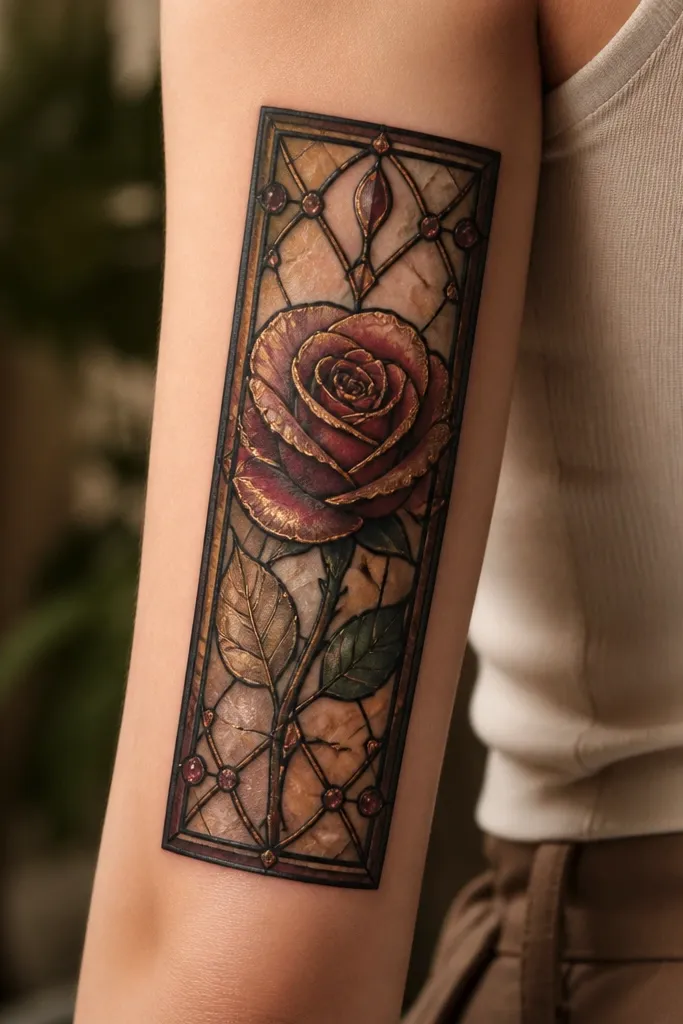
Stained-glass designs are great cover ups because the lead lines create intentional segmentation. That segmentation breaks up older lettering or patchy ink so it doesn't read as a single ghosted shape. The jewel accents pull attention upward and keep the piece from looking like a dark cover blanket.
Request a vertical panel that is about 6 to 8 inches tall on the upper arm or outer forearm. The frame should be thick enough to hide uneven healing texture, with consistent line weight. Use burgundy and rosewood for the main petals, then add a few small gold-toned highlights sparingly in the top third to mimic glass glare.
Pro tipBring one photo of your old script close-up so the artist can place the thick "lead" lines over the worst letters.
AvoidUsing too-thin frame lines makes the old tattoo's edges creep through as the skin flattens during healing.
3. Crown + Halo Geometry on Upper Arm

Crown-and-halo geometry is a cover-up workhorse because it has built-in structure: strong outlines, large highlight zones, and a ring that can mask curved remnants. The geometric filler makes it easy to place dense coverage where the old ink is darkest, then bring in lighter tones inside the crown and halo for a polished look.
Place it on the upper arm where it can sit across the deltoid and wrap slightly toward the bicep. Keep the crown width to about 5 to 6 inches so it doesn't distort across the arm's curve. Ask for a charcoal underlayer behind the halo, then add warm tan and muted gold highlights on the crown edges.
Pro tipMake the halo ring slightly offset, not perfectly centered. That small asymmetry hides old tattoo warps better.
AvoidTrying to cover with only thin stars and dots leaves the old ink's shape intact.
4. Blackwork Butterfly With Jewel Color Edges
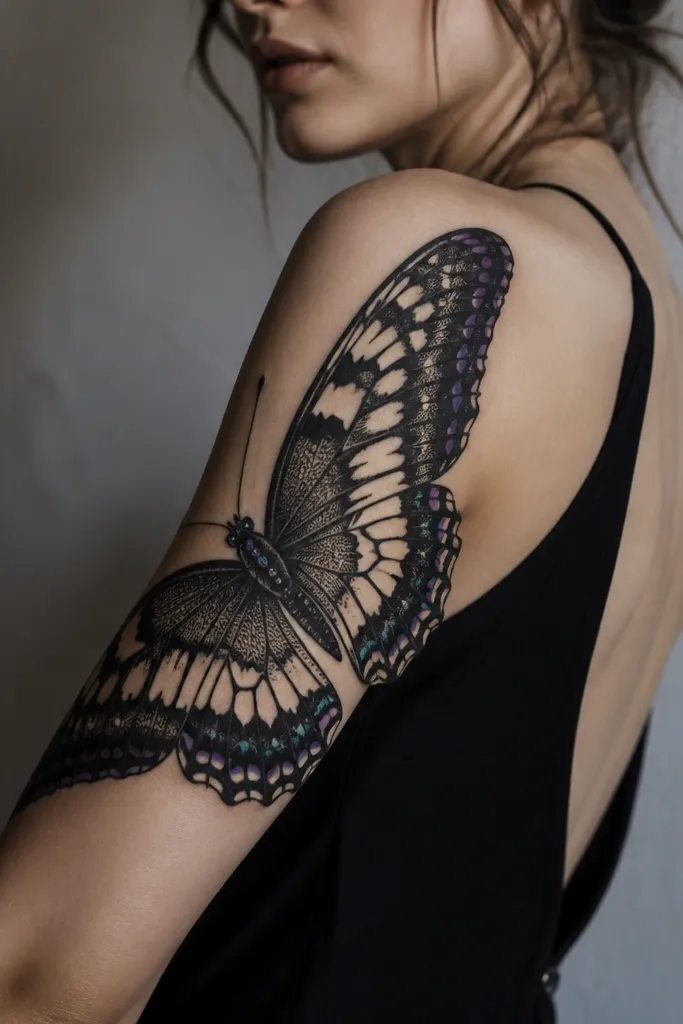
Butterflies work because the wing layout naturally creates large, curved planes that can cover old ink in layers. Dense black textures give you the real coverage, while the jewel edges add luxe color without needing heavy color everywhere. The result looks intentional, like couture ink, not like a patch job.
Choose outer arm placement so the wings can flare outward. Size it wide - about 7 to 9 inches across - so the wings can overlap the old tattoo area instead of stopping at its edges. Request blackwork shading like stipple + packed solids, then add teal (petrol) and violet (plum) as thin accent lines near the outer wing margins.
Pro tipTell your artist you want the colored edges to be narrow and consistent. Thick color bands look cheap fast on cover ups.
AvoidGoing heavy on color across the whole wing can muddy during healing, especially over older ink.
5. Upper Thigh Medusa Head With Snake Frame
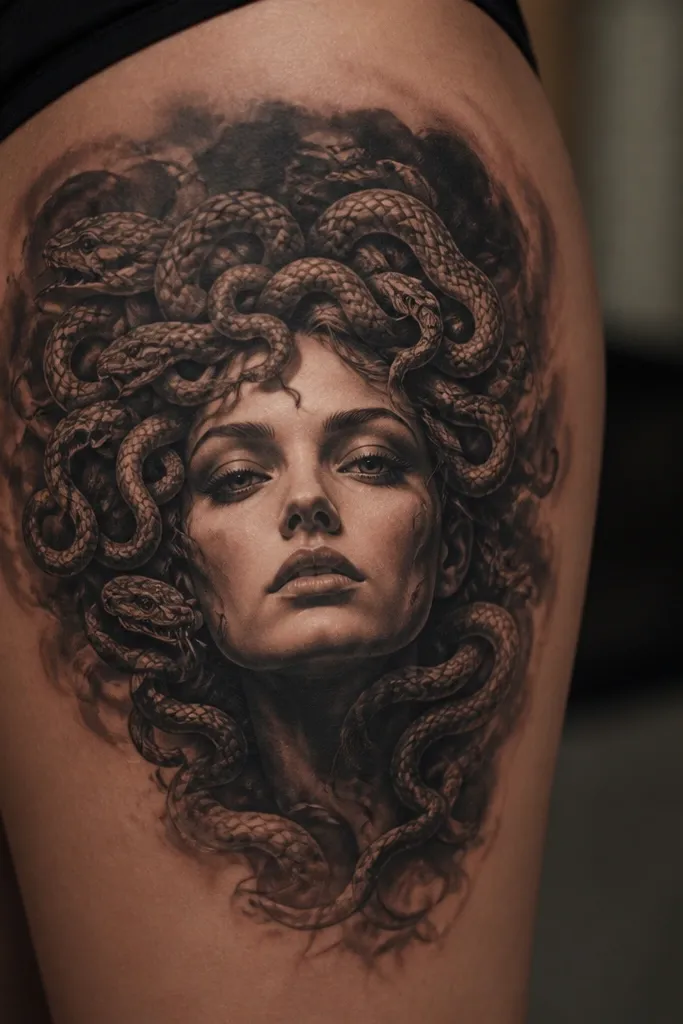
Medusa is a strong cover-up subject because the snakes create repeating shapes that hide older lines. The face gives you a focal point, and the packed background gives your artist room to bury the old tattoo without flattening the whole piece. It reads high-end when the snakes are consistent in thickness and the shadows stay smooth.
Upper thigh placement works best when the design follows the curve and doesn't sit too close to the inner groin. Aim for 8 to 10 inches across the top of the thigh, with snakes extending upward into the outer thigh. For shading, ask for charcoal gradients and soft skin-tone-like highlights that stay subtle, plus deep black for the frame behind the face.
Pro tipAsk for snake curls that overlap the old tattoo area by at least half an inch beyond its borders.
AvoidLeaving the background too empty makes the old tattoo's original spacing show through.
6. Ornamental Sleeve Band With Roses and Scrolls
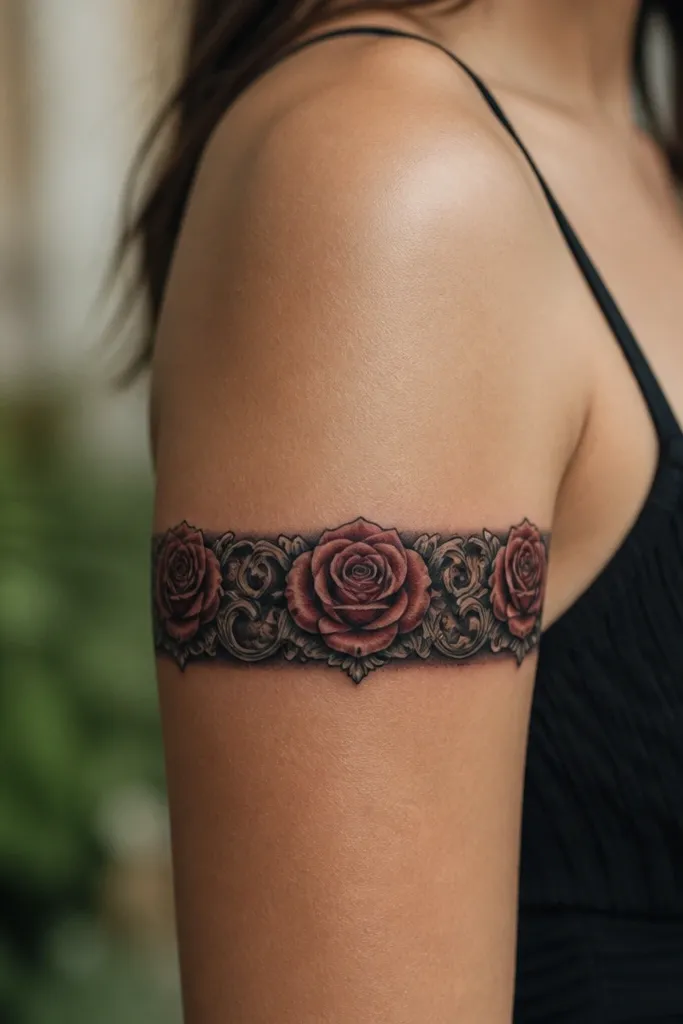
A band sleeve is a luxury cover up when your old tattoo is patchy or scattered. The scrollwork acts like a map - it breaks up the coverage into smaller zones, so you can hide problem areas without forcing one huge block of ink. The rose accents bring softness, while the band structure keeps everything cohesive.
Place it on the upper arm so it wraps in a clean arc across the bicep and toward the outer arm. Keep the band height around 4 to 5 inches so it still looks like a "piece," not a random cover. Request dark scrollwork in near-black, then muted rose reds with warm blush highlights on the petals.
Pro tipChoose an even rhythm. If one rose is much bigger than the others, the band can look like it's pasted on.
AvoidUsing only linework without solid fills creates gaps where old ink shows.
7. Ribcage Peony Bloom With Smoke Halo
Ribcage cover ups look expensive when the shading breathes. A peony has enough petal layers to bury older ink, and the smoke halo provides a smooth transition so the tattoo doesn't end with a hard edge. The smoke also hides uneven healing texture that ribs often have because of movement.
Pick the outer rib area where you have more space and less bone. Size it so the bloom is about 7 to 9 inches tall, with the smoke halo extending 1 to 2 inches beyond the petals. Request plum and wine red for depth, then add soft pink highlights on the top petal edges.
Pro tipAsk for the smoke halo to fade outward in a controlled gradient, not a sudden stop.
AvoidPacking the smoke too dark all the way to the edge makes the rib tattoo look like a single heavy patch.
8. Geometric Hex Frame With Rose Quartz Color Drops
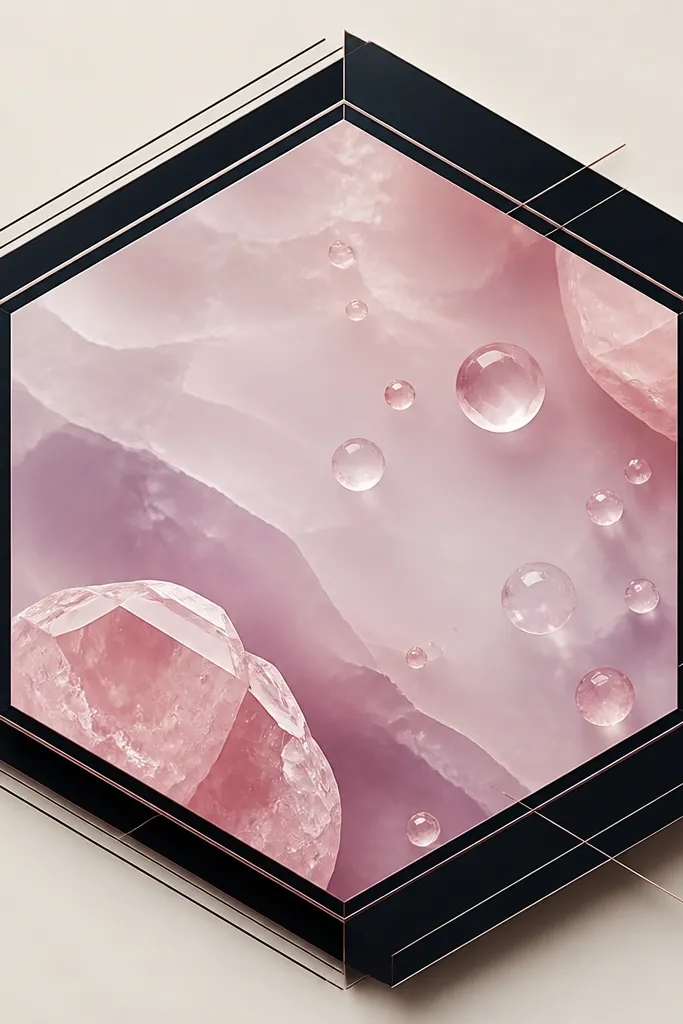
Geometry plus crystal color hides old ink because the frame gives crisp boundaries and the interior uses softer gradients to mask broken edges. The rose-quartz palette creates a "high-end" feel without needing full realism. It also lets your artist place thicker coverage behind dense old areas and keep lighter color where the skin is smoother.
Use a placement on the outer forearm or upper arm where the tattoo can sit flat when your arm relaxes. Size the frame about 5 to 7 inches across, then let the crystal drops touch the edges of the old tattoo area without covering too much skin around it. Request near-black for the frame, then pale lavender and blush for the crystal interior.
Pro tipKeep the crystal drops small and clustered in one corner. It makes the design look intentional and expensive.
AvoidSpreading the color drops everywhere makes the piece look like confetti rather than a cover up.
9. Feathered Wings With Blackwork Gradient Feathers
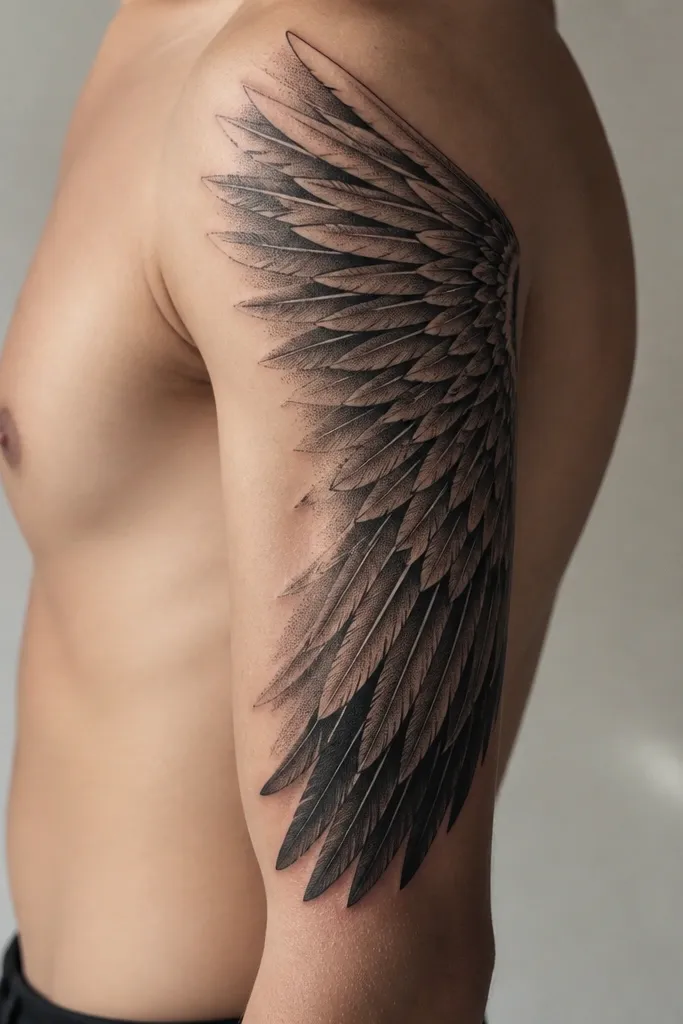
Wings cover old tattoos well because feathers create repeating shapes and natural layering. The gradient feathering makes it look dimensional instead of flat. When the artist uses texture in the feather lines, the old ink's original edges get visually absorbed into the new pattern.
Place the wings on the outer upper arm or shoulder blade area so the feathers can fan outward. Size it 8 to 12 inches tall depending on how much coverage you need. Ask for packed black at the wing tips, cool gray midtones, and fewer highlight lines so the wings don't turn shiny or overworked.
Pro tipTell your artist you want "soft fades" between feather groups, not individual feather borders all the way through.
AvoidHard outlines around every feather can make a cover up look like a stencil stuck on top.
10. Sleeve-Style Iris Flower With Deep Violet Shading
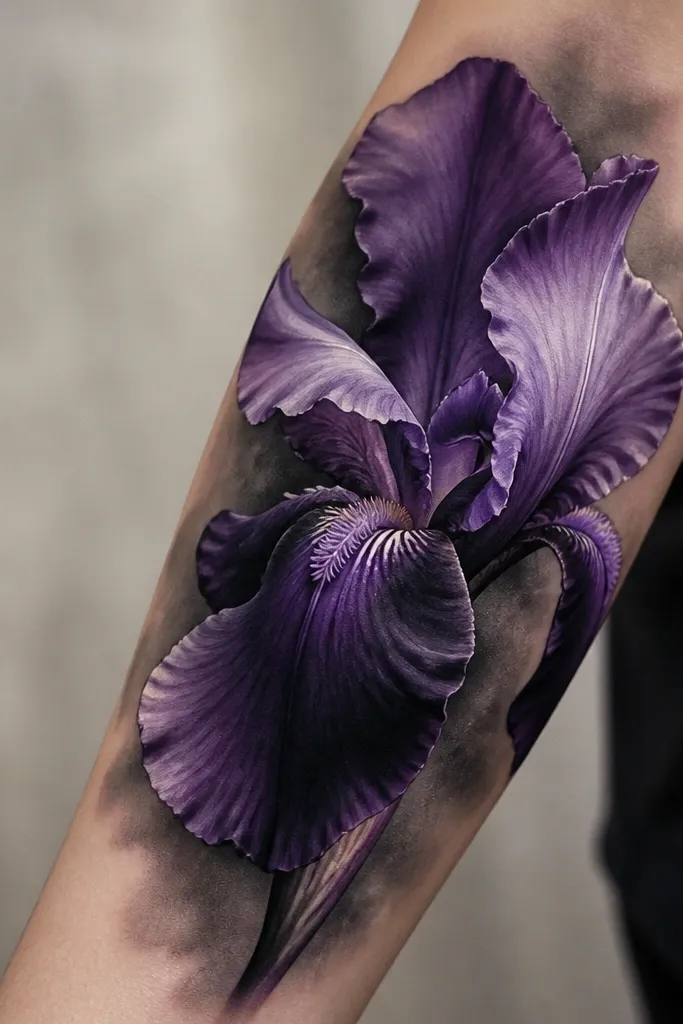
Iris petals are long and structured, so they can cover older linework without turning into a blob. Deep violet shading gives depth even when the old tattoo is dark, and the long petal shapes create a clean read from a distance. The smoky background keeps the edges from looking like the tattoo was cut off mid-sentence.
Work with the artist on an angled layout that follows your arm line. Aim for 7 to 10 inches in length, with the brightest petal tips toward the outside of the arm for a "lifted" look. Request black-purple and deep violet for shadows, plus pale lavender highlights sparingly on the top surfaces.
Pro tipIf your old tattoo has thick black blocks, ask for the darkest underlayer to sit behind the central petal folds.
AvoidPutting highlights too close to heavy old ink often causes patchy contrast that looks uneven after healing.
11. Black Rose + Pearlescent Dotwork Background
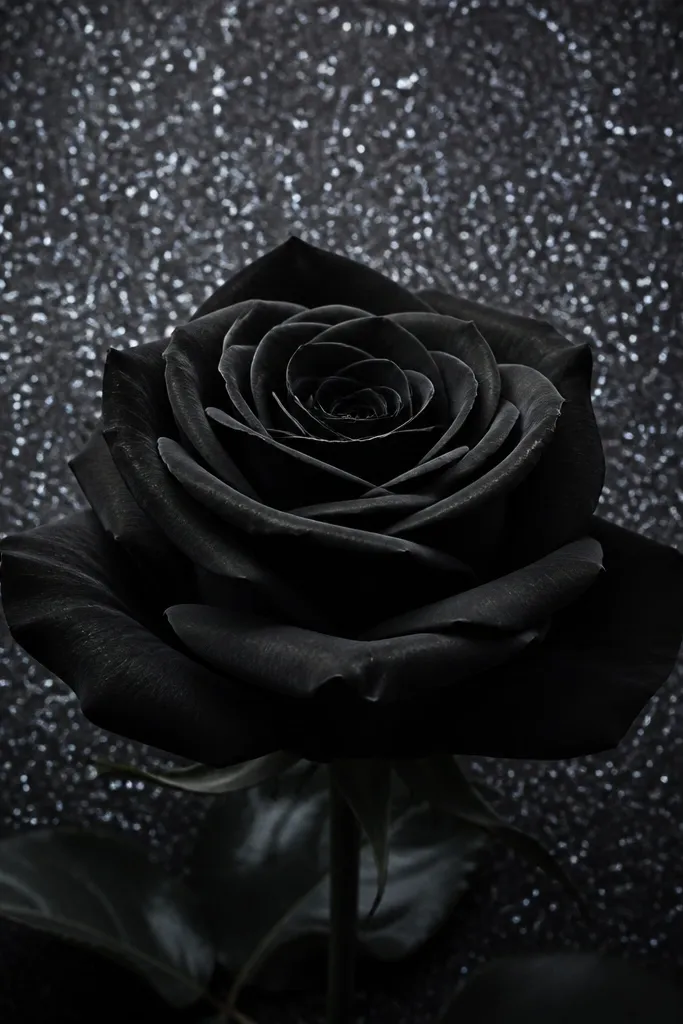
This is a luxe option because dotwork gives you texture without adding a bunch of competing shapes. The black rose handles the coverage with deep shadows, while the pearlescent dots create light-catching depth so the tattoo feels dimensional. It also helps hide uneven transitions by filling micro-gaps around the rose.
Place it on the upper arm or outer forearm where the dot field won't get stretched too aggressively. Size it about 5 to 7 inches across for a strong focal piece, or 8 to 9 inches if you need to bury a larger old tattoo. Ask for a near-black rose with soft charcoal gradients, then cool gray and tiny white dot highlights in the background only.
Pro tipAsk for dot density to be highest behind the darkest parts of your old tattoo.
AvoidOverdoing white dots can make the piece look chalky instead of pearlescent.