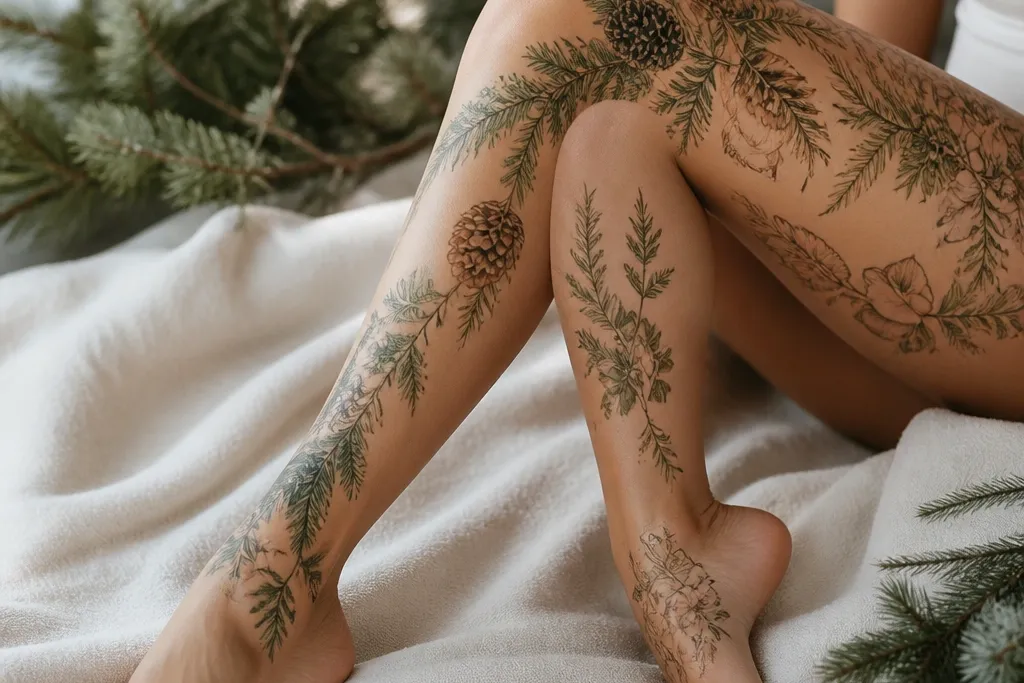
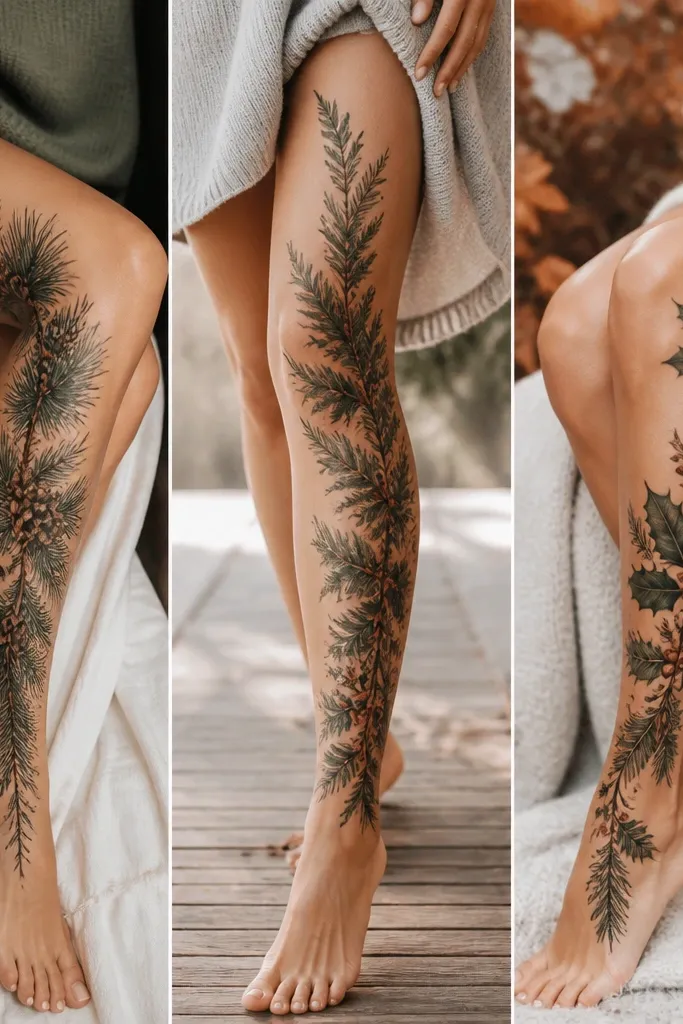
1. Sage Vine Knot on Outer Calf
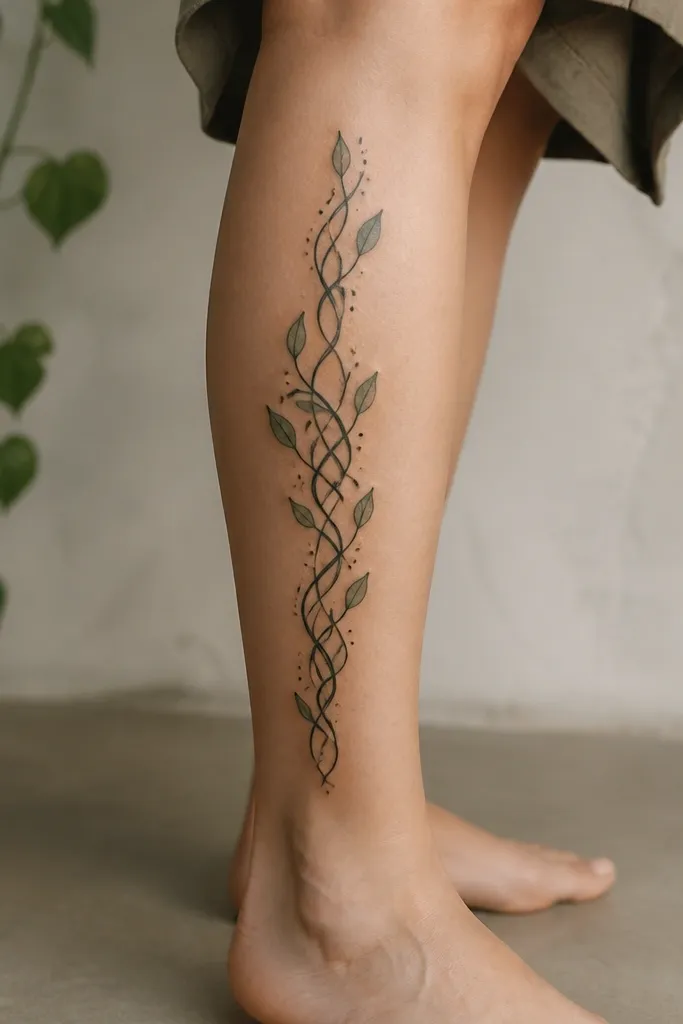
This works because vine knots let you hide uneven old ink inside the negative space - the gaps between leaves break up the coverage. The warm black shading gives depth, while sage-green accents keep it seasonal without turning neon. I like this layout for cover ups because the vine direction naturally pulls the eye up and away from a single messy patch.
Ask for the vine to start slightly above the thickest part of your calf and end near the outer ankle, about 10-12 cm tall. Keep leaf shapes small, 1-1.5 cm wide, so you can pack more ink into the cover-up area without it looking like a blob. Do sage only on select leaves, not the whole vine.
Pro tipBring one photo of your leg in daylight and one in shade; the green will look different, and your artist can place the strongest leaves on the area that catches light.
AvoidAvoid full-color flooding across the whole calf - it makes the cover-up look painted instead of tattooed.
2. Rust Rose Band with Charcoal Petals
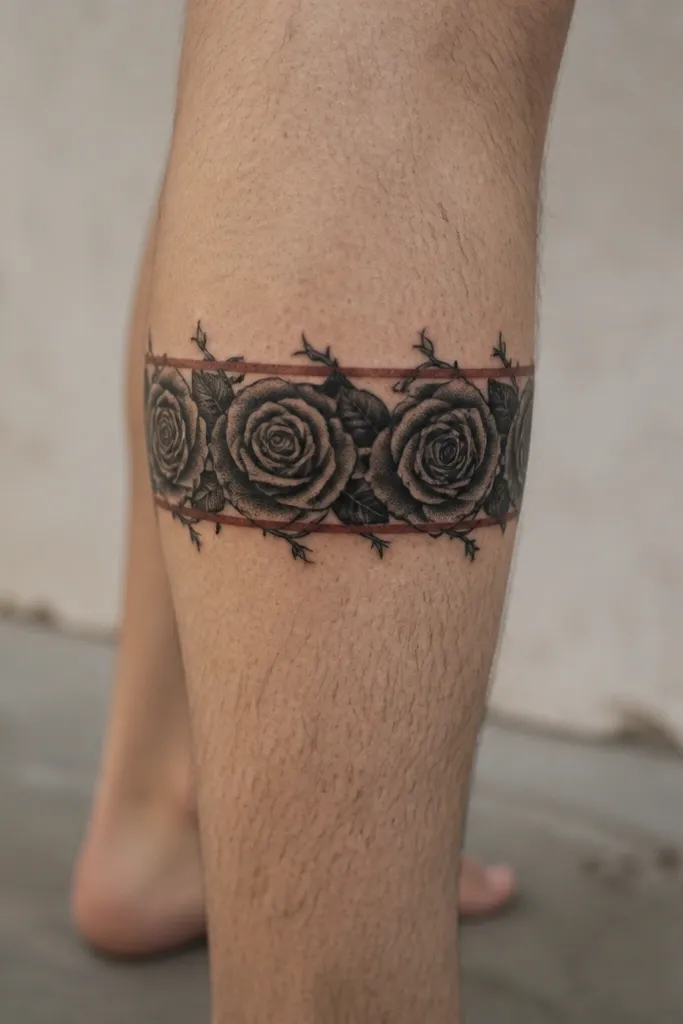
A wrapped band camouflages old ink because it creates a continuous pattern - no single spot stands out. Charcoal petals cover well, and the rust-red ring gives you a warm seasonal cue that still reads "classic." I've used this design when the previous tattoo was a half-moon fade; the band shape smooths the transition.
Place the band so it sits centered on the calf muscle, not too close to the knee. The band should be about 14-18 cm long vertically, and the petals should be thicker on the outer side where coverage usually needs more ink. Keep the rust-red as a thin accent line, not a full fill.
Pro tipWear the kind of socks you'll actually use after healing; the band looks best when the top edge sits just above where socks bunch.
AvoidSkip tiny roses with thin outlines - they disappear during healing and leave patchy coverage.
3. Evergreen Pine Branch Ladder (Micro Dot Shading)
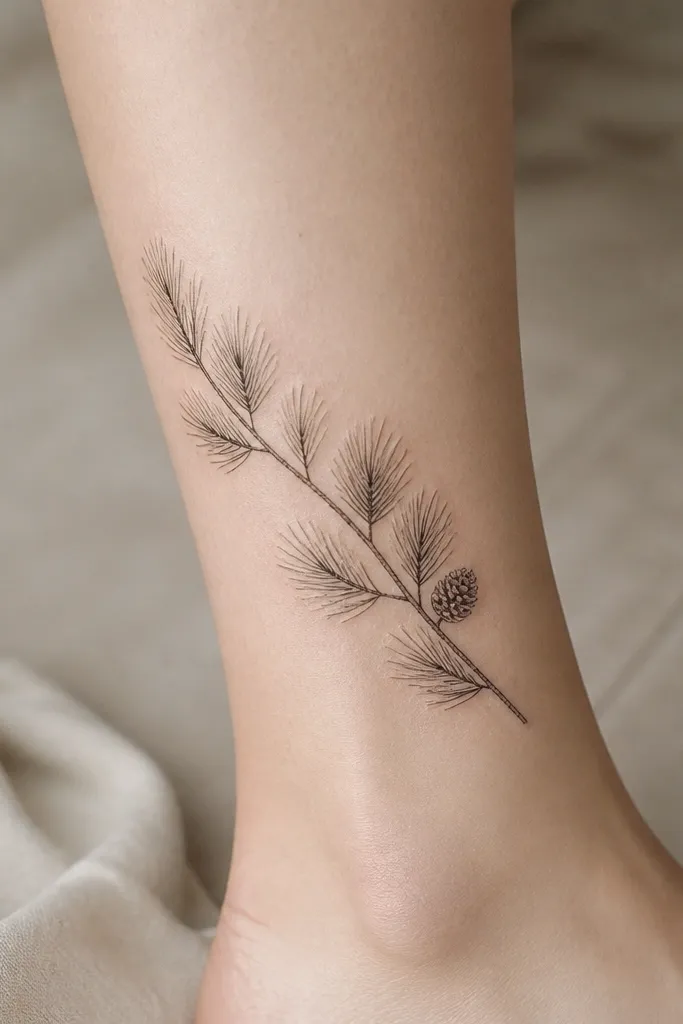
Micro dot shading is one of my favorite cover-up tools because it builds value without needing solid black everywhere. The pine needles create texture that hides older lines, especially when the old tattoo has thin, conflicting strokes. The evergreen look stays consistent through seasons because the pattern reads botanical year-round.
Ask for a diagonal composition that spans roughly 12-16 cm. Keep the branch width narrow at the top and slightly wider near the ankle so the coverage blends naturally. Use dot density higher over the darkest old area and lighter away from it.
Pro tipRequest a few "needle gaps" where the skin shows through - those breaks make the whole piece look intentional, not overworked.
AvoidDon't choose a solid pine silhouette for a cover up if your old tattoo is line-heavy; it can turn into one flat mass.
4. Blackwork Crescent Moon Over Floral Veil
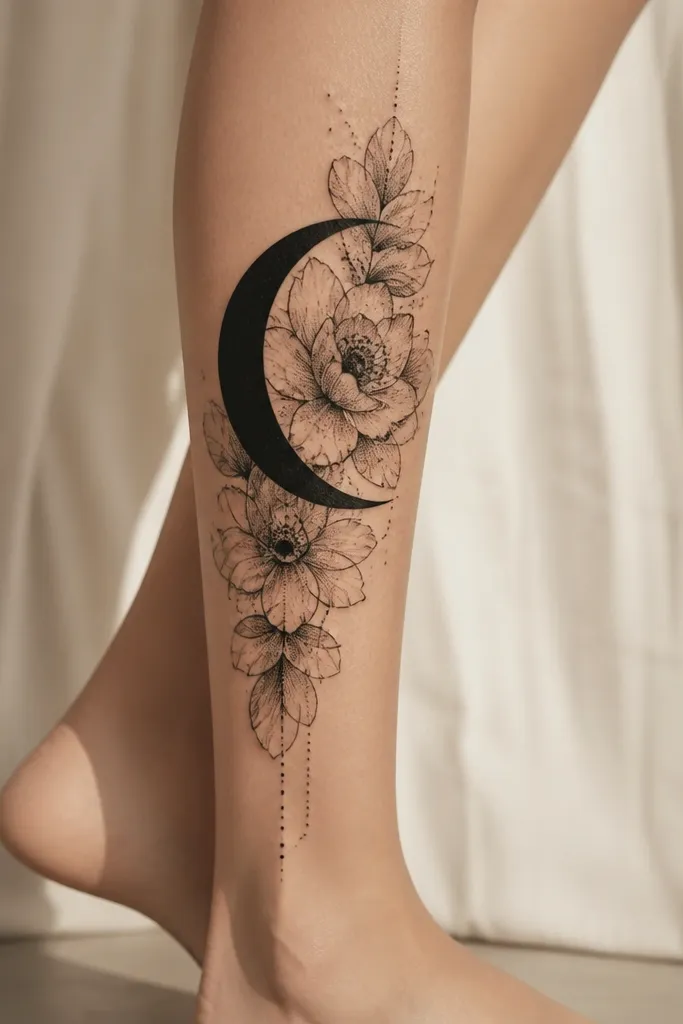
This is a strong cover-up style because the crescent moon gives you a clear dark anchor, and the floral veil breaks up the surrounding coverage. The veil effect comes from layering petals with negative-space cutouts, which helps old ink fade in the right places. It also looks great year-round because it's not dependent on color - just contrast and texture.
Place the moon so its thickest curve sits at mid-calf. The veil should extend 8-12 cm below it, with petal layers getting smaller toward the ankle. Keep lines bold at the moon edge and soften into dots on the veil.
Pro tipIf your old tattoo is on the inner calf, position the moon slightly toward the center so the veil feathers outward to hide it.
AvoidAvoid thin crescent outlines; they heal pale and make the cover area look unfinished.
5. Dusty Rose Lace Panel on Inner Thigh
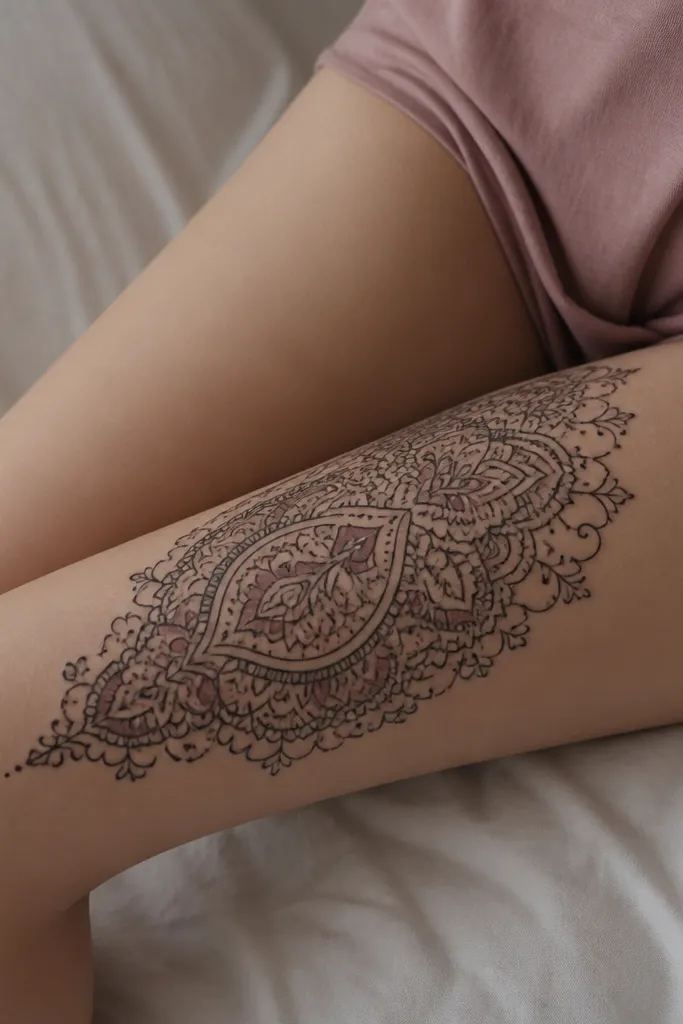
Lace panels are perfect for women who want "pretty" coverage without a heavy black block. The lace pattern works like a camouflage net - it breaks up old shapes and turns them into texture. Dusty rose in the center motifs adds seasonal softness while the black linework keeps the piece crisp.
Inner thigh is tricky because it stretches. Make the panel wider at the top and slightly narrower at the bottom so it doesn't warp when you move. Ask for a panel height around 18-22 cm. Keep dusty rose limited to 30-40% of the motifs, not the entire panel.
Pro tipChoose a placement that won't rub hard on underwear seams; the lace edges look best when they're not constantly frictioned.
AvoidSkip dense full-black fills on inner thigh - they bruise-looking during healing and fade unevenly.
6. Winterberry Holly Sprig with Black Fill Tips
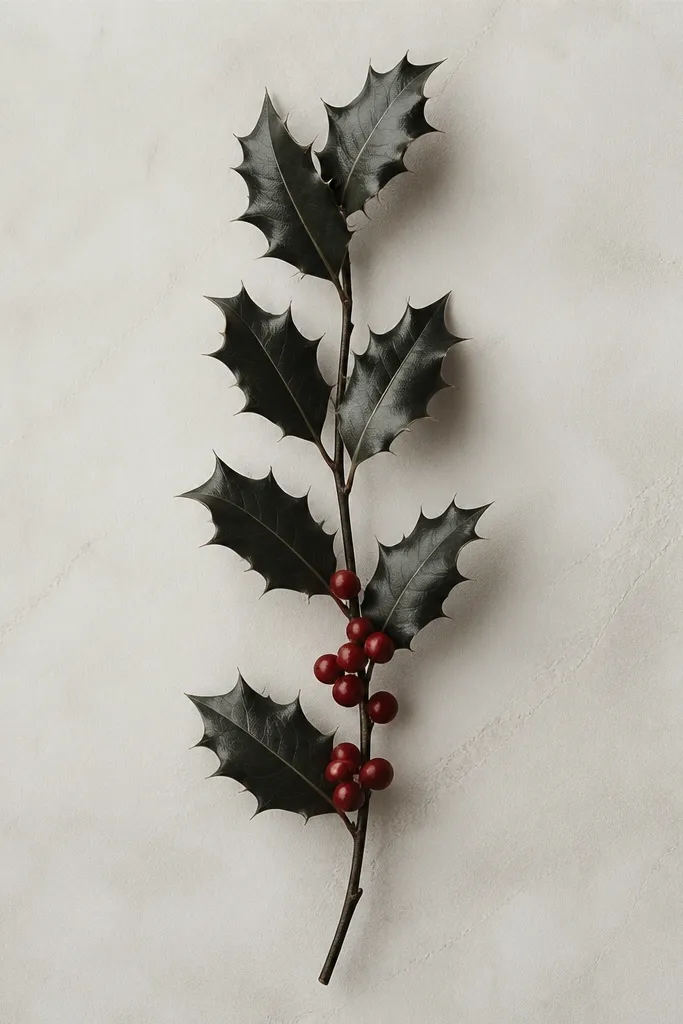
This design hides old ink because the leaf shapes let your artist place darker fills where the coverage is needed most. The berries give you a seasonal accent that still looks evergreen because holly reads as a year-round botanical motif. I like the vertical sprig for women who want coverage that doesn't overwhelm the leg.
Place it along the outside of the shin or upper outer calf depending on where the old tattoo sits. Keep the sprig width narrow, about 3-4 cm at the widest point. Use deep red only on the berries, with black fill tips on 2-3 leaves to anchor the coverage.
Pro tipIf the old tattoo is faded, ask for slightly heavier black on leaf bases so the new tattoo looks grounded once healed.
AvoidDon't add too many red berries; 6-10 berries looks intentional, 20 looks chaotic.
7. Charcoal Foxglove Stems with Negative-Space Bells
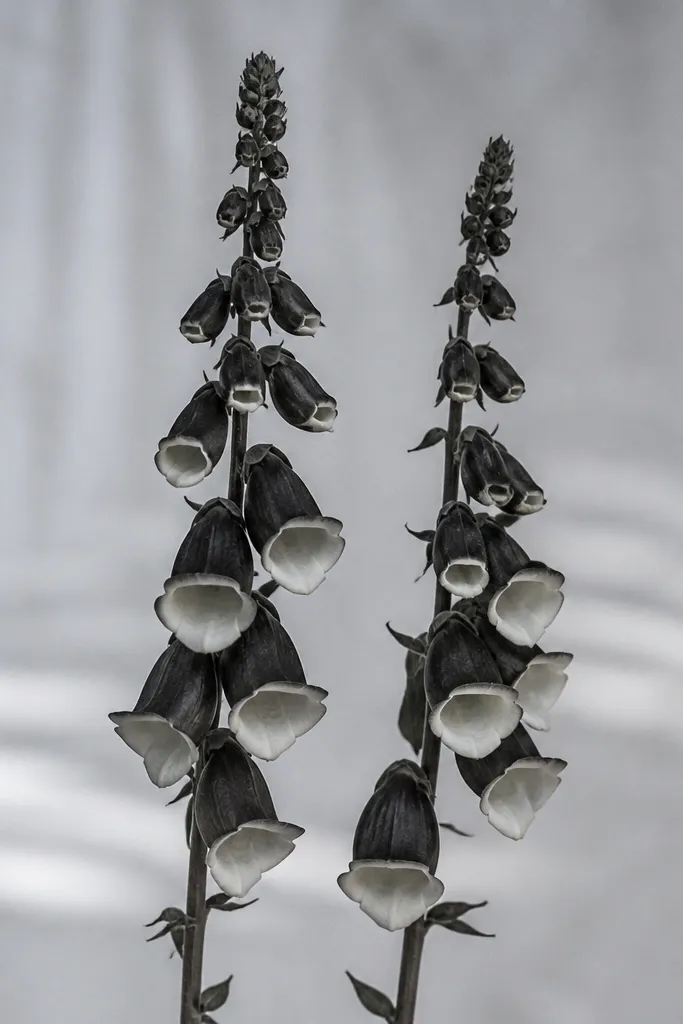
Negative-space bell interiors are a cover-up cheat. They give your artist a way to hide messy old ink around the edges while keeping the center crisp and bright. Charcoal shading adds depth without turning the whole piece into a dark slab. Foxglove also looks good in every season because the silhouette is dramatic even in blackwork.
Ask for one main stem and one secondary stem, placed diagonally across the calf. The flowers should be spaced so each bell overlaps the area above it by about one-third. Keep bell outline thick enough to survive healing - think bold marker weight, not fine-liner.
Pro tipUse a reference photo with a similar flower angle; the bell tilt matters for how the tattoo reads on a bent knee.
AvoidAvoid thin negative space surrounded by ultra-thin lines - it heals into a muddy outline.
8. Sunset Ember Dots on the Ankle-to-Calf Transition
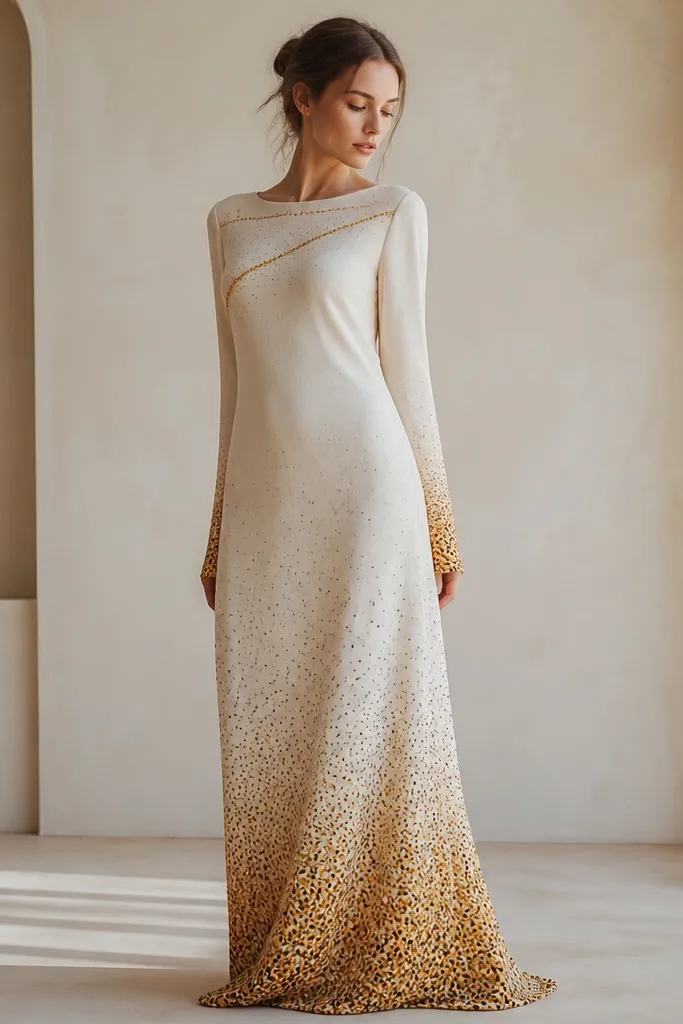
Dot fields are the best cover-up texture when you have uneven fading or patchy old ink. The ember dots create a soft transition so you don't see where the old tattoo ends. This one reads seasonal because amber looks warm in winter and flattering in summer light.
Place it from mid-ankle to upper calf over about 16-20 cm. Keep the dot density highest where the old ink is darkest, and thin it out as it moves upward. Use warm amber very sparingly - 5-8 tiny accents max - so it stays stylish, not orange-sunburn.
Pro tipAsk your artist to test the dot density by making one small patch first on stencil; it tells you if the coverage is too heavy for your skin type.
AvoidSkip huge dot gradients if your old tattoo has thick black blocks; dots alone won't cover, and you'll need a solid anchor.
9. Banded Snake with Sage Highlights and Black Scales
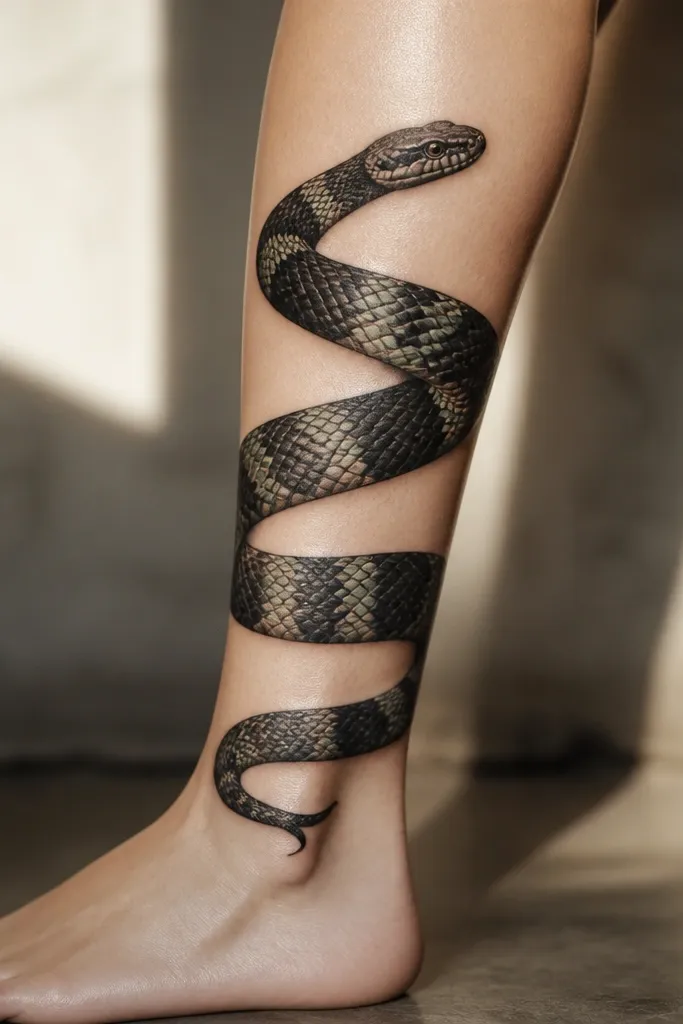
Snakes look good as cover-ups because the scales let you vary line direction and value. That variation breaks up old shapes and hides irregularities. Sage highlights keep it evergreen and clean, while the black scale map gives strong coverage.
Wrap the snake so it forms a band around the calf, height 12-16 cm. Keep the head near the outer calf where it's visible in dresses. For scale shading, ask for alternating scale sizes - it makes the piece look alive and helps blend the cover-up.
Pro tipIf you sweat a lot on your calf, choose slightly thicker lines; thin scales blur faster during healing.
AvoidDon't make the snake too skinny; thin snake bands look like a scribble over old ink.
10. Midnight Iris with Blue-Gray Petal Wash
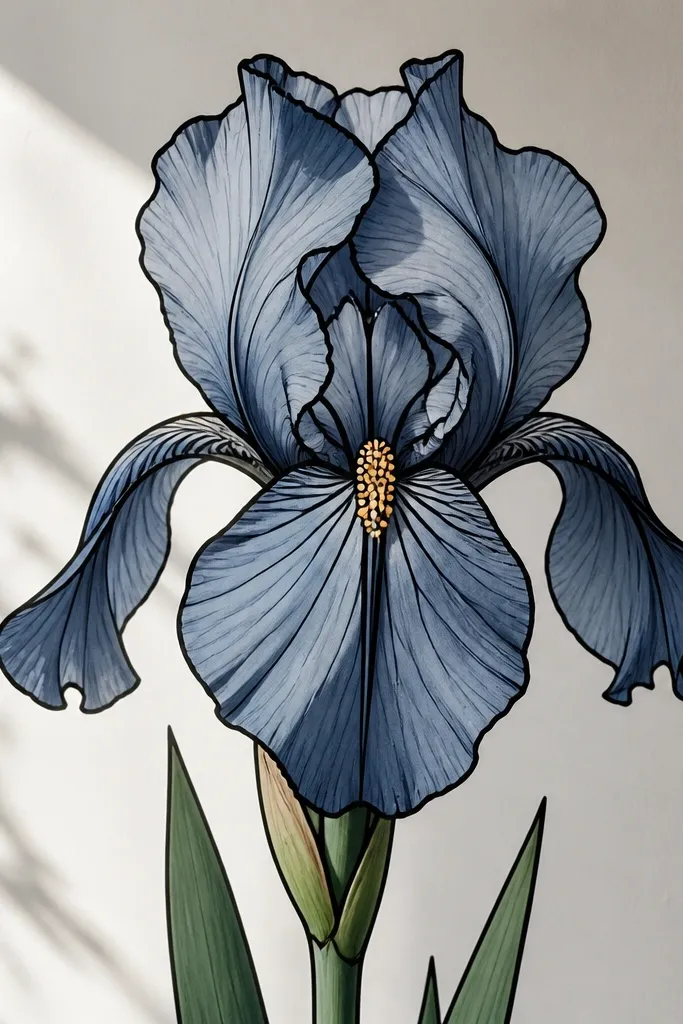
Iris petals give you natural curved areas to cover without harsh edges. Blue-gray wash makes the tattoo feel seasonal and modern, especially under winter coats and spring light. The golden dot cluster is small but it gives the whole piece a focal point so your eye doesn't linger on the cover-up area.
Place on the front outer calf or outer thigh, vertical height 18-24 cm. Keep the center dot cluster tight, about 8-10 mm wide, and let the blue-gray wash stay inside petal boundaries. Use black to strengthen any linework that needs extra coverage.
Pro tipBring fabric swatches (blue denim, black leggings) you wear most; the iris reads different on each, and your artist can tune the wash depth.
AvoidAvoid bright sky-blue; it clashes with healed skin tone and makes the cover-up look wrong.
11. Cedar Branch Frame with Blackwork Shading
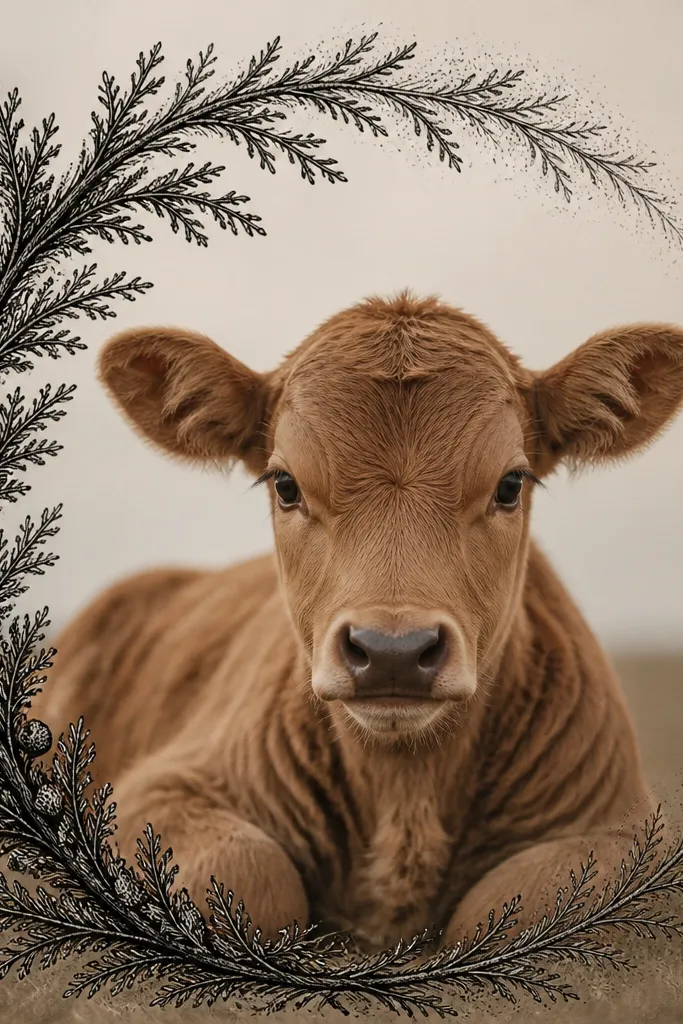
A frame design works well when you're covering something that sits in the middle. Dense blackwork on the inner edge pulls attention inward, and stippling on the outer edge blends the transition. Cedar branches are evergreen by default, so the style stays consistent even if you change outfits.
Ask for a semi-oval frame that wraps 3/4 of the calf, not a full circle. Height around 16-20 cm. Keep branch tips slightly out of alignment so it looks hand-drawn, not printed.
Pro tipIf your old tattoo has a hard edge, place the densest blackwork right over it and let the outer stippling fade out around it.
AvoidSkip perfectly symmetrical frames; symmetry makes cover-ups look like patches.
12. Monochrome Butterfly with Feathered Wing Cover
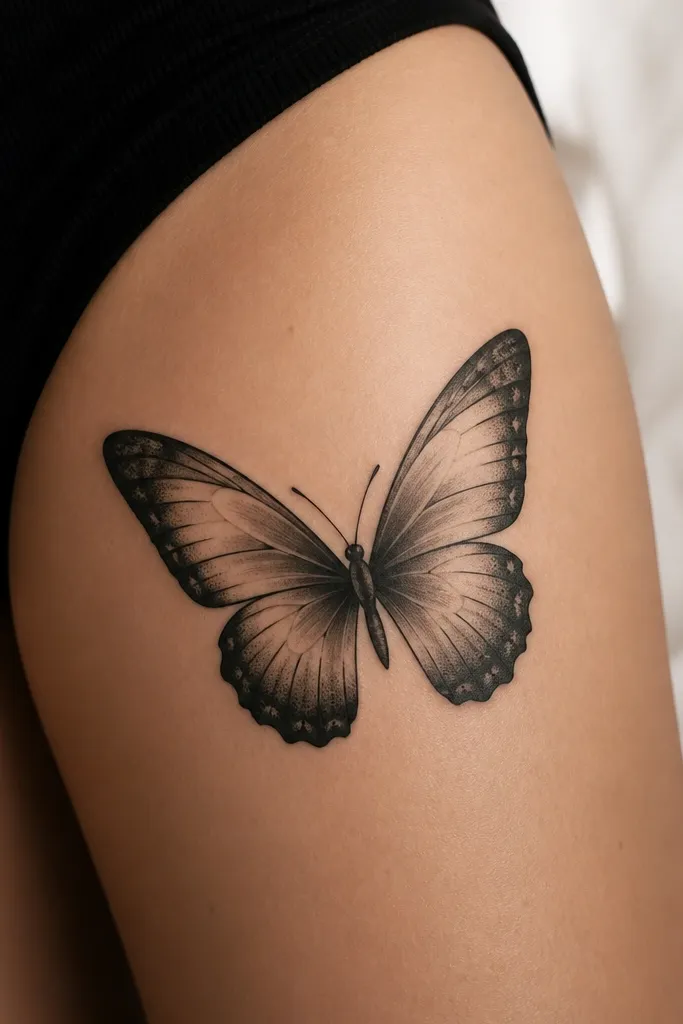
Butterflies cover well because each wing has natural sections where ink density can change. Feathered shading hides old linework, and the clean body line gives you a crisp anchor. This is a great evergreen leg cover-up because it looks intentional in blackwork and doesn't depend on color.
Place it on outer thigh or upper calf with the wings angled slightly upward. The wings should span 10-14 cm across, with the bottom wing edge covering the worst old area. Use feather lines that get shorter near the wing tips to avoid heavy blur.
Pro tipAsk for a few small "skin breaks" - tiny gaps - along the wing edge; they keep the butterfly from looking like a black sticker.