1. Sleek Black Lettering With a Thick Baseline
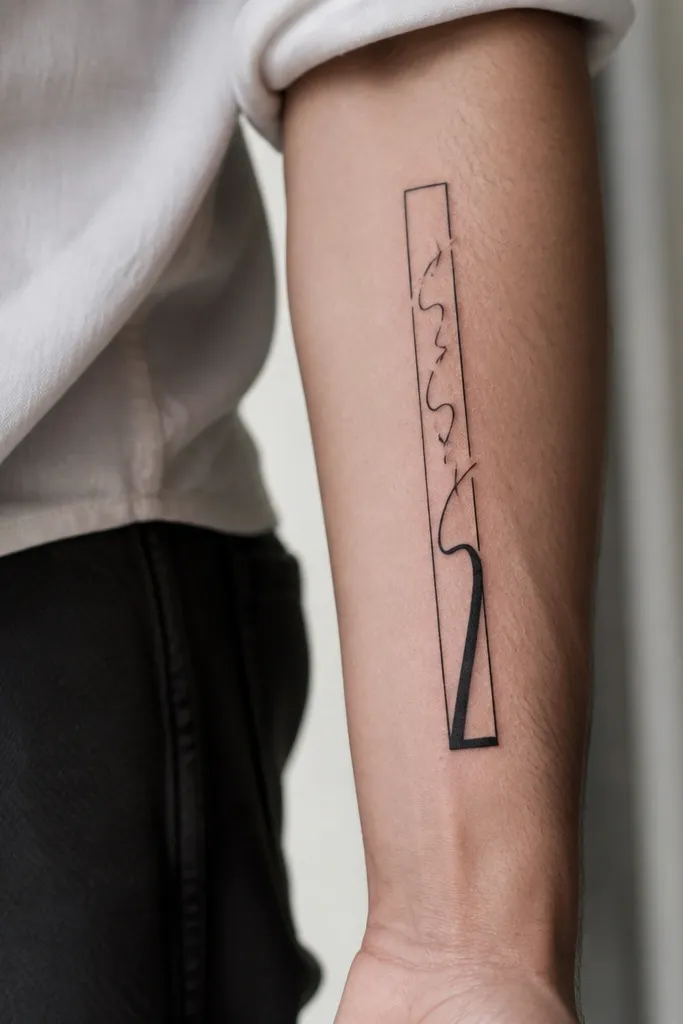
This works because thick letter bodies overpower older ink faster than thin script. The heavy baseline blocks out the underlayer, while the thinner top strokes keep it looking modern instead of like a full blackout. I like pairing deep matte black with a few hairline highlights so the letters catch light when you move your arm.
Place it on the inner forearm or outer forearm where the skin has less creasing. Use a frame width that's wider than the old tattoo footprint by about a quarter. Keep the thick baseline at least 6-8 mm in height so it reads clearly after healing.
Pro tipBring the artist two reference fonts and ask for the one where the downstrokes are naturally chunky.
AvoidAvoid ultra-thin script where the old tattoo shows through as gray shadows.
2. Black Rose With Solid Petal Blocks and One Sharp Stem
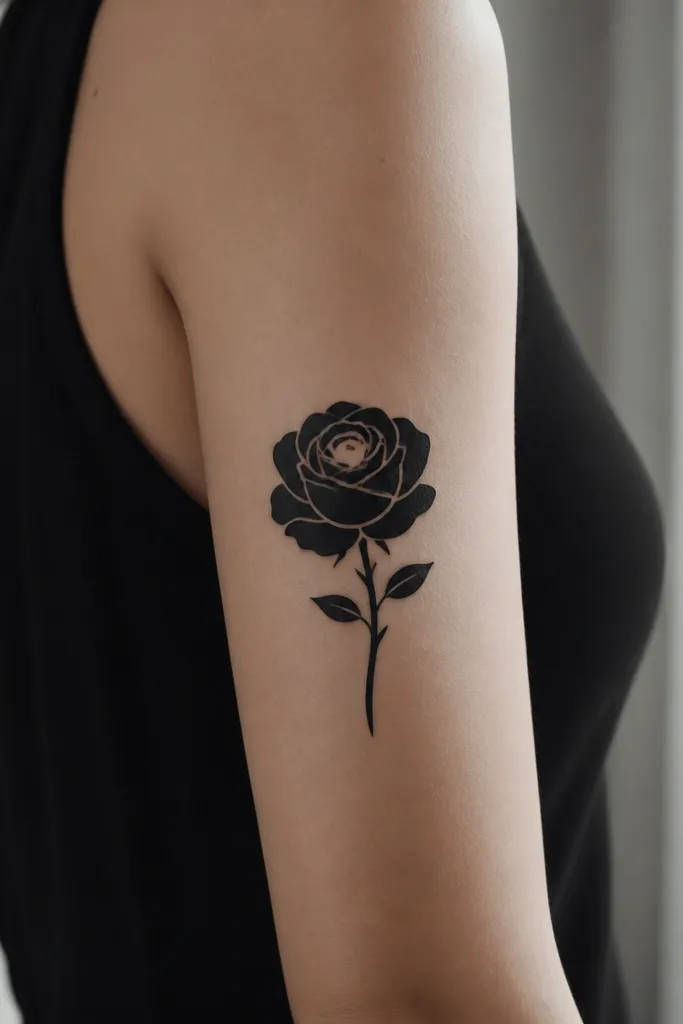
A rose is a classic cover up, but the modern part is how you build it. Solid petal blocks hide dense old ink, and a single stem line keeps the design from turning into a blob. The small negative-space center gives the eye a place to rest, so the piece looks intentional rather than overly dark.
Work it on upper arm or shoulder where you can angle the petals to follow your muscle. Ask for petals that vary in size so the black isn't perfectly uniform. Add texture only at the edges, not across the whole petal, so it stays readable.
Pro tipTell your artist you want a matte black base and only a few soft edge fades, not gray wash everywhere.
AvoidSkip a fully shaded rose with lots of gray if your old tattoo is dark - it often heals uneven.
3. Geometric Cover Up Triangle Stack
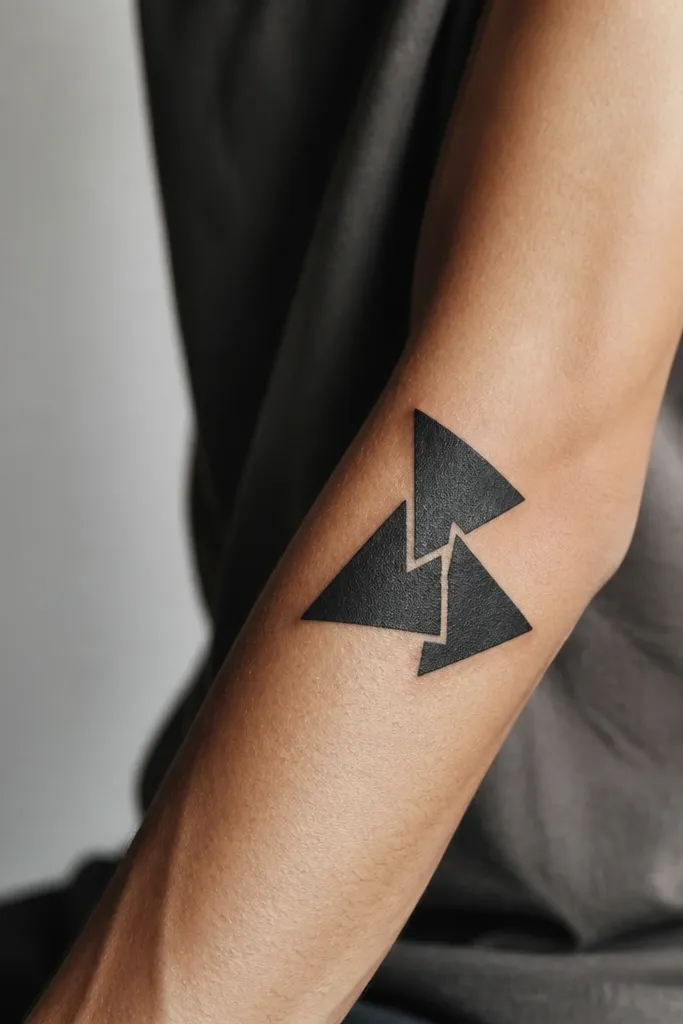
Triangles are great because they give coverage without looking like a blob. Overlapping layers let the artist "step" the black over the old tattoo's strongest lines. The thin gaps keep it modern and prevent the whole piece from becoming one flat mass.
Use triangles that extend beyond the old tattoo edges by at least 1 cm. Keep the largest triangle on top of the densest area. If your old tattoo has a curve, rotate the triangle orientation to match that curve so the cover up doesn't look pasted on.
Pro tipAsk for one triangle edge to be slightly longer than the others for a clean focal point.
AvoidDon't choose rounded, thick shapes - they tend to heal muddy when you're covering heavy ink.
4. Black Mandala With Fewer Rings and Deeper Inner Cutouts
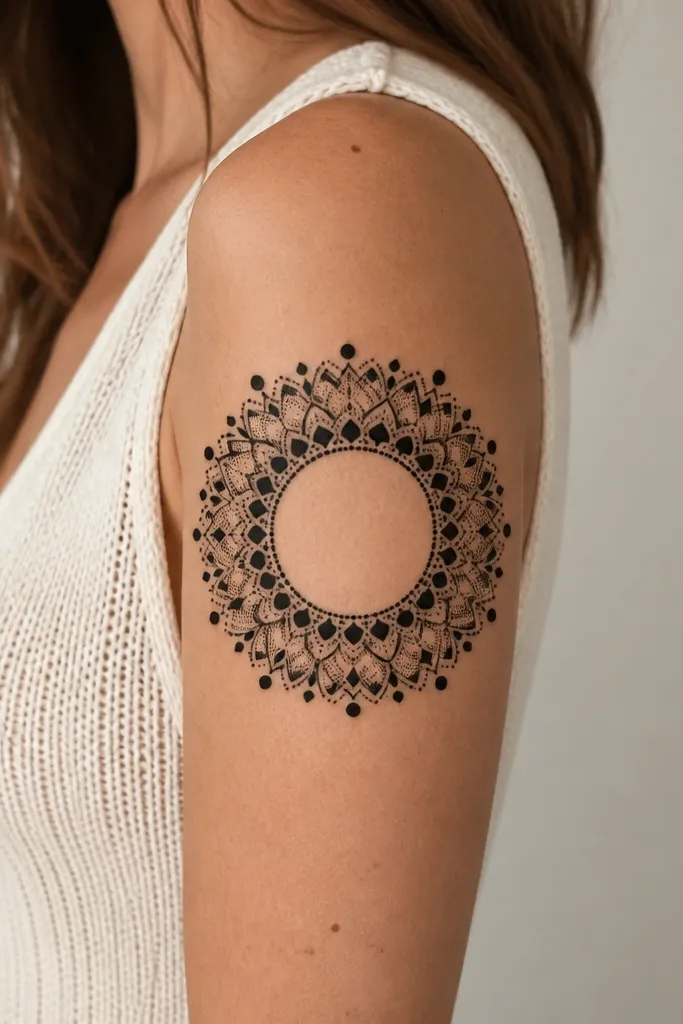
Most mandalas fail as cover ups because they're too busy. This version uses fewer rings so you get clean black geometry that hides the old tattoo quickly. The deeper inner cutouts stop the center from turning into a dark pancake and keeps the design looking crisp.
Put it on upper arm or outer bicep where you have room for ring spacing. Use dot clusters instead of full gray shading; dots hide better and heal sharper. Keep the inner negative space big enough that it's clearly visible two weeks after healing.
Pro tipRequest a stencil that marks ring spacing at least 4-5 mm apart so the artist doesn't pack it too tightly.
AvoidAvoid ultra-detailed line mandalas if you're covering a dark tattoo - the lines blur first.
5. Minimal Black Cloud With Heavy Base and White Spark Hits
A cloud cover up works when you treat it like a silhouette, not a watercolor. The heavy base hides the old ink, and the small white spark hits add a modern "light" effect that keeps the piece from looking heavy. White ink can look sharp on healed skin, especially when used sparingly.
Best placement is wrist or ankle where the cloud can be narrow and tall. Keep the cloud outline clean and the underside thick. Use only 3-6 white spark points so it doesn't turn into a glitter mess.
Pro tipIf you're worried about white ink fading, ask for white only at the outer edges where light hits most.
AvoidDon't do a fully shaded cloud with lots of gray if the original tattoo is dark.
6. Black Waterfall Lines Over a Floral Mist
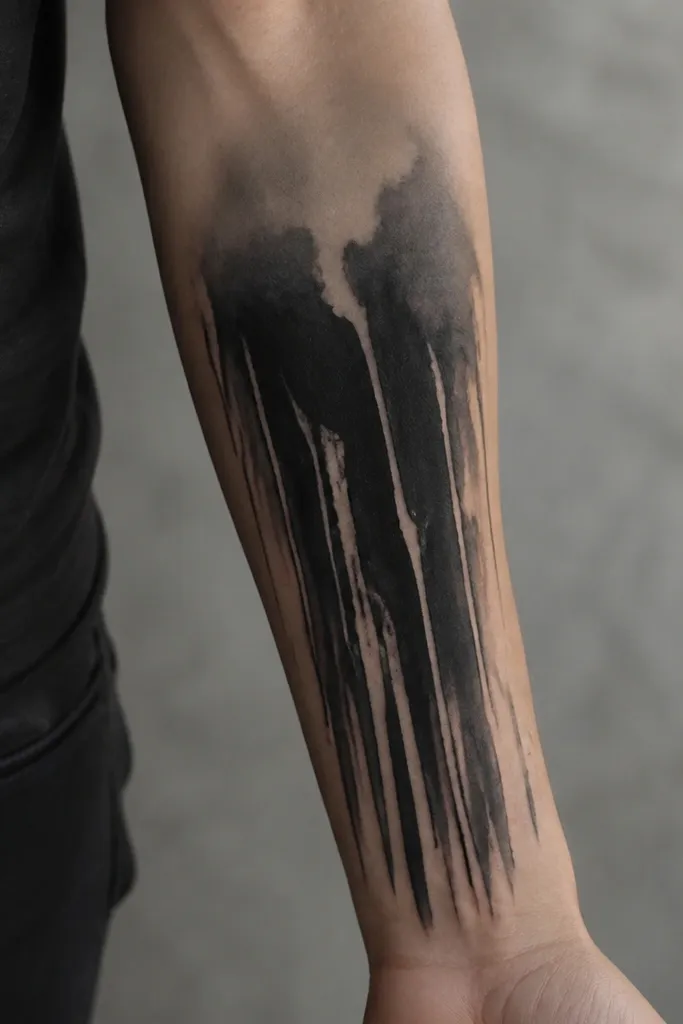
This works because the black drip lines act like armor. You can cover old floral ink by turning it into a directional pattern that pulls the eye downward. The mist behind adds depth without needing to shade the entire surface, so the coverage stays strong.
Place on forearm or calf where the vertical flow looks natural. Ask for drip widths that vary - at least one drip should be noticeably thicker to anchor the composition. Keep the gradient behind the drips lighter than the main black so it doesn't turn into a gray smear.
Pro tipUse one clear "start point" at the top so the drips look like they belong to the same story.
AvoidAvoid random line placement - it looks like you traced over a tattoo instead of building a new design.
7. Black Butterfly With Thick Wing Edges and Skin-Filled Centers
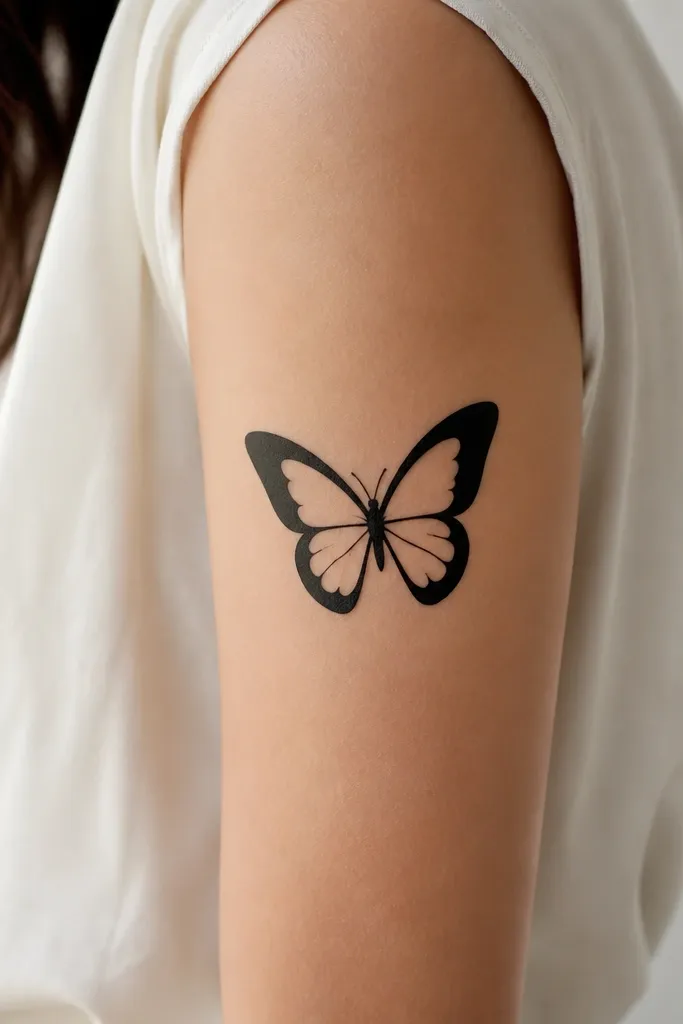
Butterflies are tricky, but this style is very controllable. Thick black wing edges bury the old tattoo, while skin-filled centers keep the butterfly airy and modern. The negative space also helps the piece stay readable even when the black settles slightly during healing.
Place it where you can keep the wings symmetrical, like outer upper arm. Keep the body compact and let the wings do the coverage. The black edge thickness should be consistent - ask for a single edge width so it heals clean.
Pro tipAsk for the negative-space centers to be slightly larger than your stencil so you don't lose them after swelling.
AvoidDon't fill the entire wings solid black - it usually looks heavy and blocks movement.
8. Black Hexagon Grid With One Bold Solid Cell
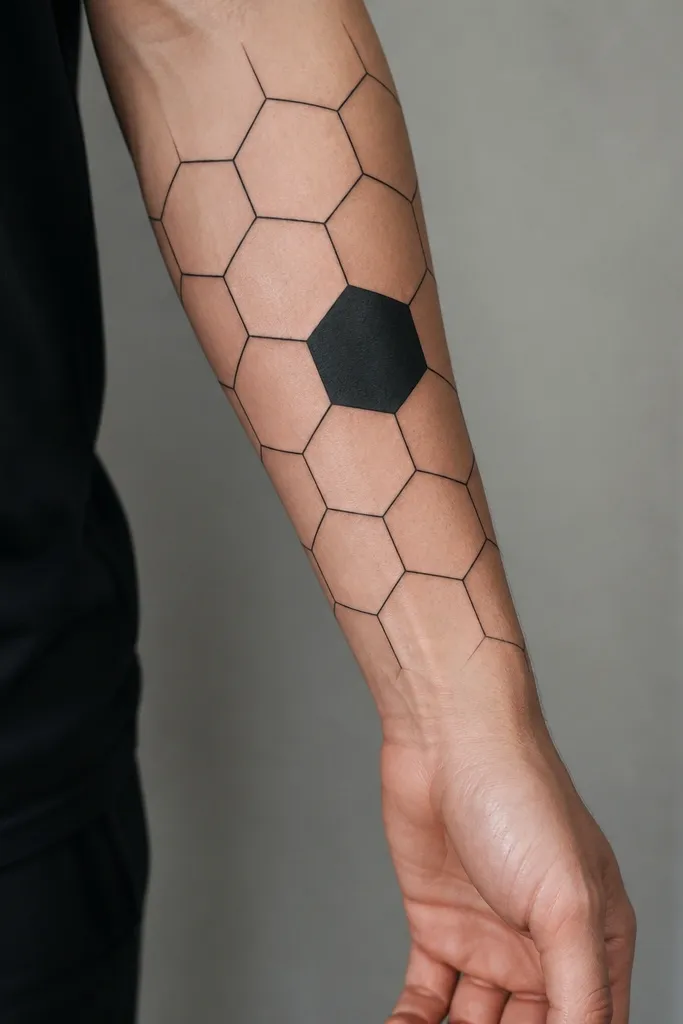
A grid hides old ink by breaking up edges and using many small boundaries. The one large solid cell gives you maximum coverage where the old tattoo is densest. Keeping the rest as negative space or thin outlines makes it look sharp and graphic.
Use this on forearm, thigh, or side rib where the skin stays relatively flat. Make sure the solid cell is positioned over the darkest old area. Keep linework tight and consistent so the grid doesn't blur into a gray haze.
Pro tipBring a photo of the old tattoo and point to the darkest spot so the artist can center the solid cell.
AvoidAvoid covering a dark tattoo with only thin line grids - it rarely hides enough.
9. Black Barbell Cross With Smooth Rounded Ends
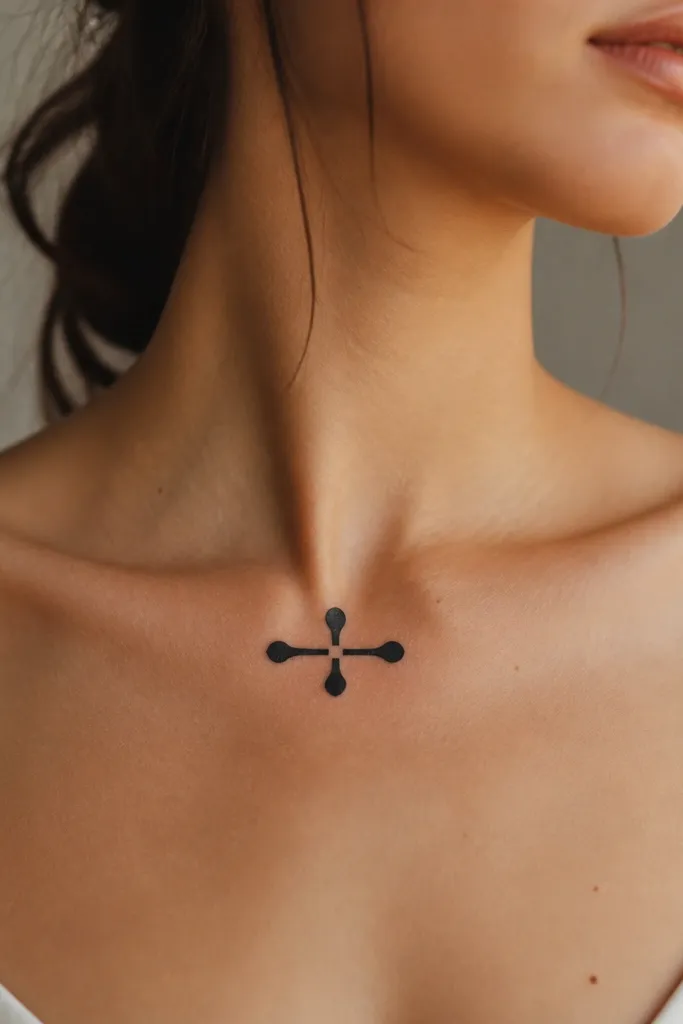
Rounded ends look modern and help the cover up feel intentional rather than religious-generic. The thick bars cover old ink well because the artist can lay down strong black without needing heavy shading. The center gap keeps it from becoming one solid block.
Collarbone and upper chest are great because the skin movement is gentle there compared to ribs. Make the bars wider than the old tattoo footprint by about 1 cm on both sides. Keep the center gap at least 4-5 mm so it stays visible after healing.
Pro tipAsk for a slightly tilted cross - it reads more stylish in photos on a natural shoulder angle.
AvoidDon't choose sharp-cornered bars; they can look harsh and blur at the edges.
10. Black Abstract Face Profile With Hard Shadow Shapes
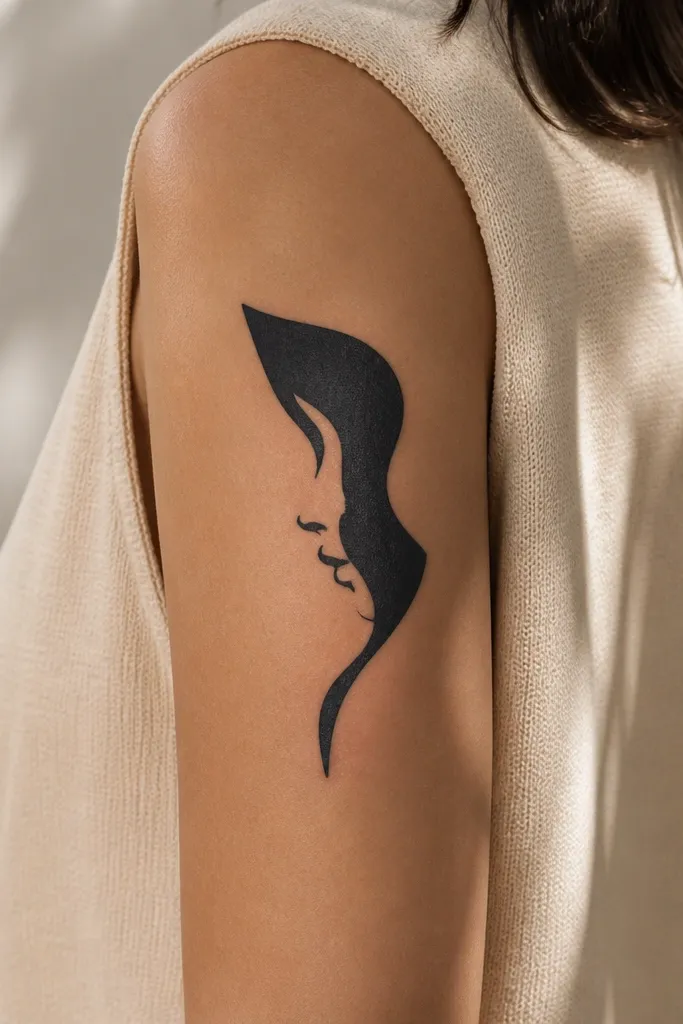
This is one of the best "story" cover ups because it lets the artist redesign the old tattoo into a new silhouette. Hard shadow shapes cover dense areas, and negative-space lines give the face definition without extra gray shading. It looks modern because it's not trying to copy realism - it's graphic.
Place on upper arm where you can let the profile angle along the bicep. The silhouette should be thick enough that the underlayer can't show through - think solid blocks, not fine art shading. Ask for 2-3 anchor shapes: forehead mass, jaw mass, and one eye/feature gap.
Pro tipBring a reference photo that has strong contrast so your artist can translate the highlights into negative space.
AvoidAvoid tiny facial line details; they heal soft and can reveal the old ink underneath.
11. Black Sleeve Band With Micro Texture Speckle
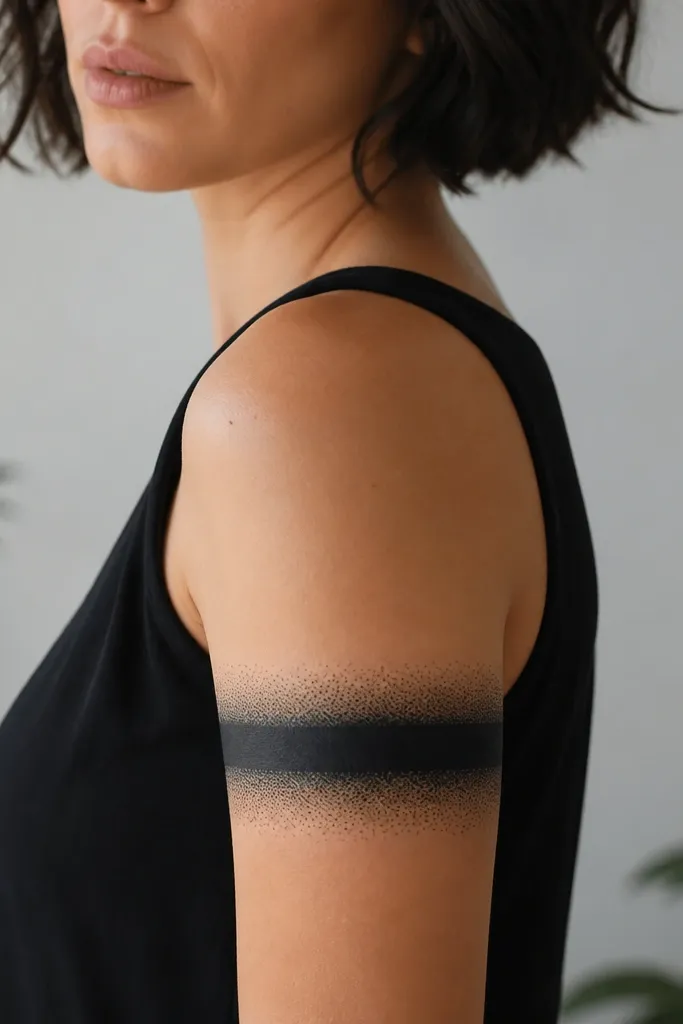
Band tattoos are sneaky good cover ups because they let you concentrate coverage in one plane. The solid middle stripe blocks the old tattoo, and speckle texture makes the edges look finished instead of cut-off. It also hides uneven healing because texture breaks up any patchiness.
Use it when your old tattoo is mostly centered on an area like upper arm or calf. Keep the band width wide enough to cover the old tattoo plus 20-25% around it. The speckle should be lighter than the solid stripe so the center stays the focal point.
Pro tipAsk for your artist to do a "test patch" on the stencil - they can adjust density before committing to the full band.
AvoidAvoid a band with a perfectly straight edge on skin that creases a lot - it can look like a sticker.
12. Black Botanicals With Solid Leaf Silhouettes
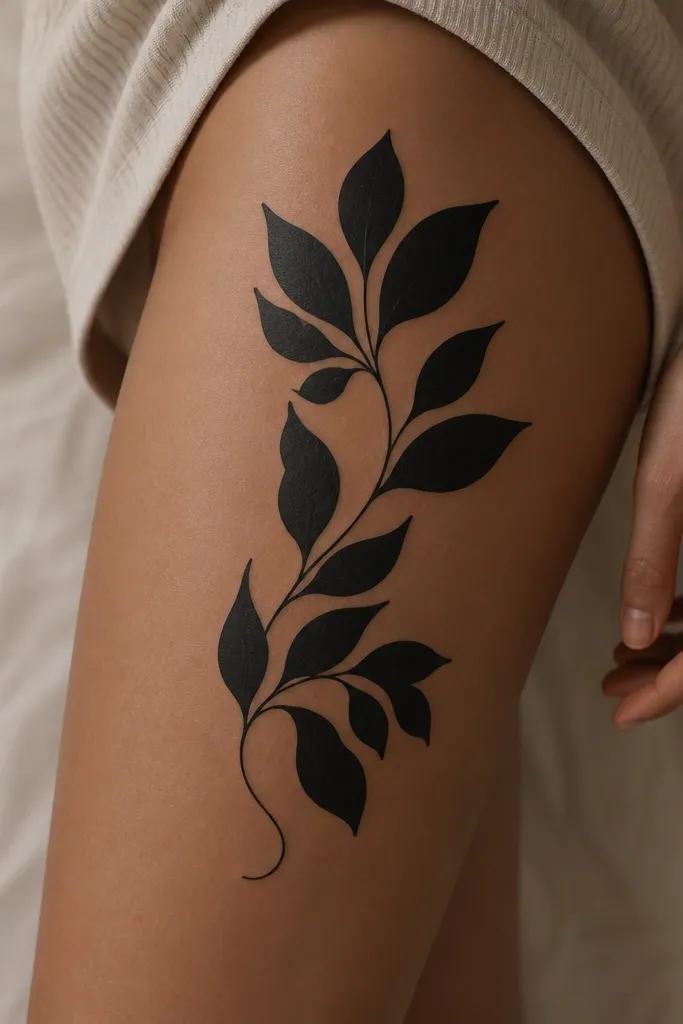
Botanicals cover well when the leaves are silhouettes. Solid leaf shapes bury old ink quickly, and the thin vine line gives the piece a modern, airy structure. Negative-space gaps between leaves stop the tattoo from looking like one heavy rectangle.
Thigh and upper arm work best because you can curve leaves along the body line. Place the biggest leaf over the densest part of the old tattoo. Keep vein details minimal - a few lines only - so you don't lose definition during healing.
Pro tipAsk for leaf edges to vary slightly in thickness so the tattoo doesn't look machine-made.
AvoidAvoid fully shaded botanicals with gray midtones if you're covering dark ink.