1. Blackwork rose with cracked-ink petals
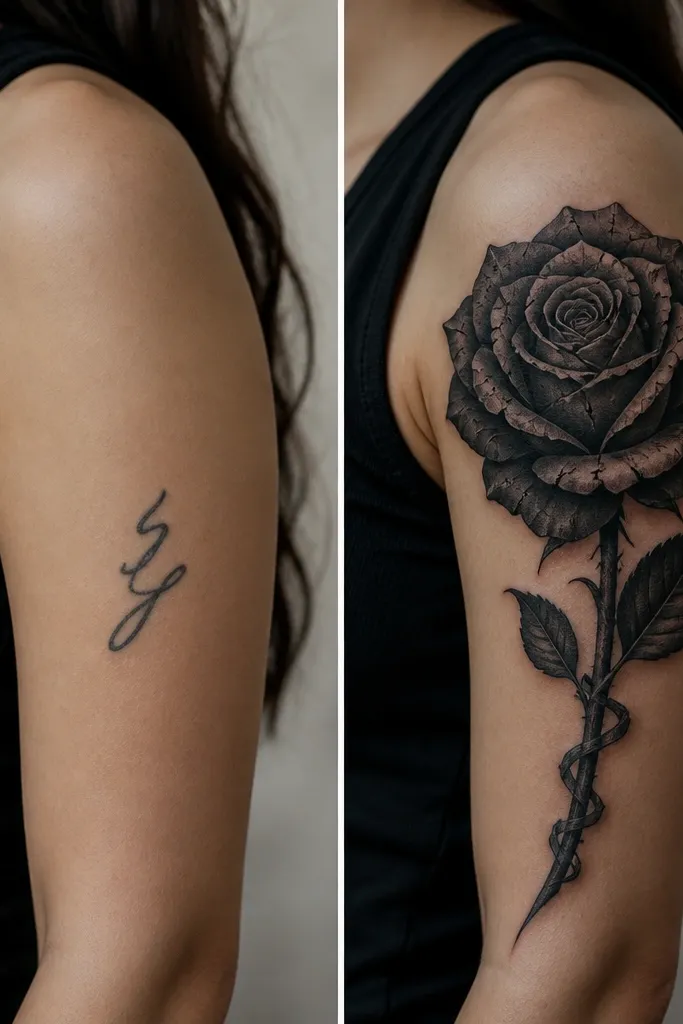
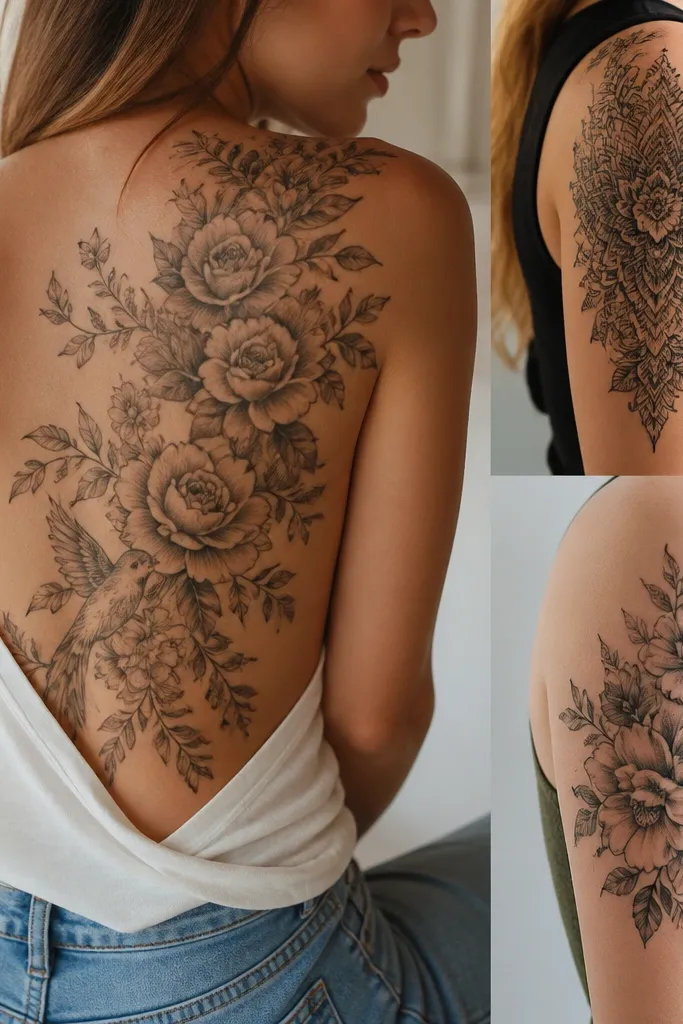
This works because cracked texture breaks up old lines and gives the cover a busy surface to land on. The rose silhouette gives the eye a clear shape, and the heavy black sections sit over the densest original ink. I like this when the old tattoo is in one spot and you can build the rose so the darkest parts overlap it by at least 1/2 inch. The cracked texture also helps the tattoo look intentional even if the cover-up needs a second pass.
Have the artist draw the rose so the highest-ink areas cover the old tattoo's center, not the edges. Keep the petals mostly black with stippled highlights in gray-brown, then add a thick stem shadow band. Placement is best on upper arm or outer bicep where you can keep the lines from stretching too much.
Pro tipAsk for a "shadow map" first - where the deepest blacks will go over your old ink - before you commit to the final stencil.
AvoidAvoid a thin-line rose over a bold script tattoo; it will leave the old letters ghosting through.
2. Terracotta moth over faded floral lines
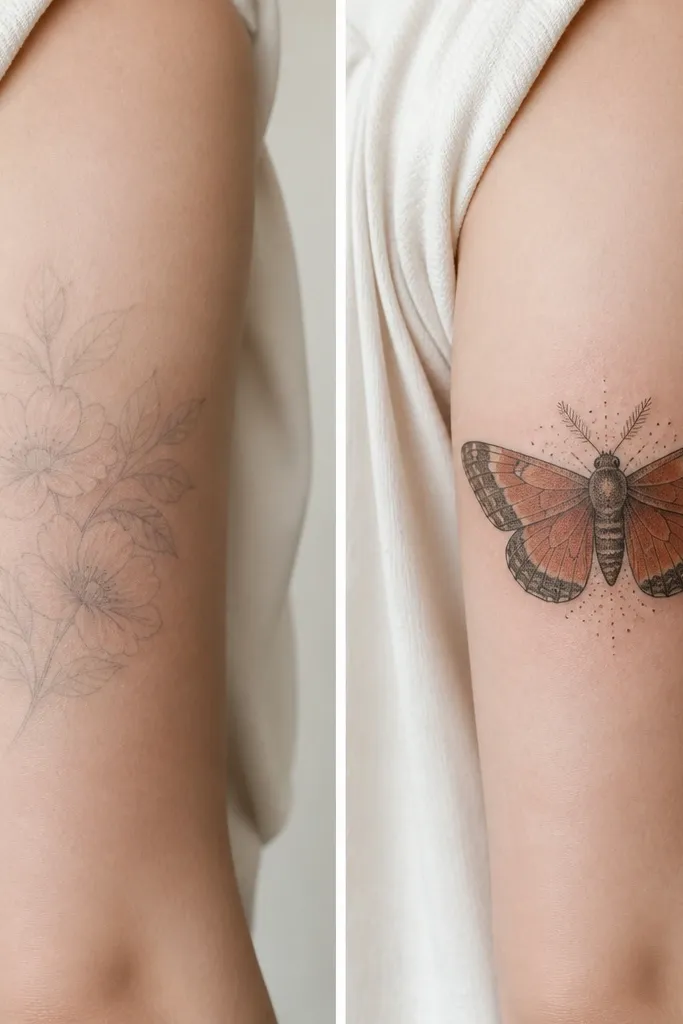
Faded florals usually have lighter gray values, which means a cover needs both warmth and edge control. Terracotta wings add warm mid-tones that camouflage the old gray, while charcoal outlines keep the moth readable. The dotwork speckles act like a visual blanket - they reduce the chance you'll see straight old strokes through the new design. I've seen this age well because the moth reads clearly even when skin texture changes.
Use a limited palette: terracotta (warm orange-brown), charcoal (near-black), and a light cream highlight for wing edges. Keep the outline thicker than you would for a fine-line tattoo, and let the wing shapes overlap your old floral center. Side of upper arm or outer forearm is a good spot because the moth's wings can wrap naturally with movement.
Pro tipBring a photo in natural daylight - warm tones look different under warm indoor lighting, and you want to see the actual terracotta match.
AvoidSkip a moth with only light color washes; over faded ink it can look like a stain instead of a tattoo.
3. Medusa head with heavy black hair fog
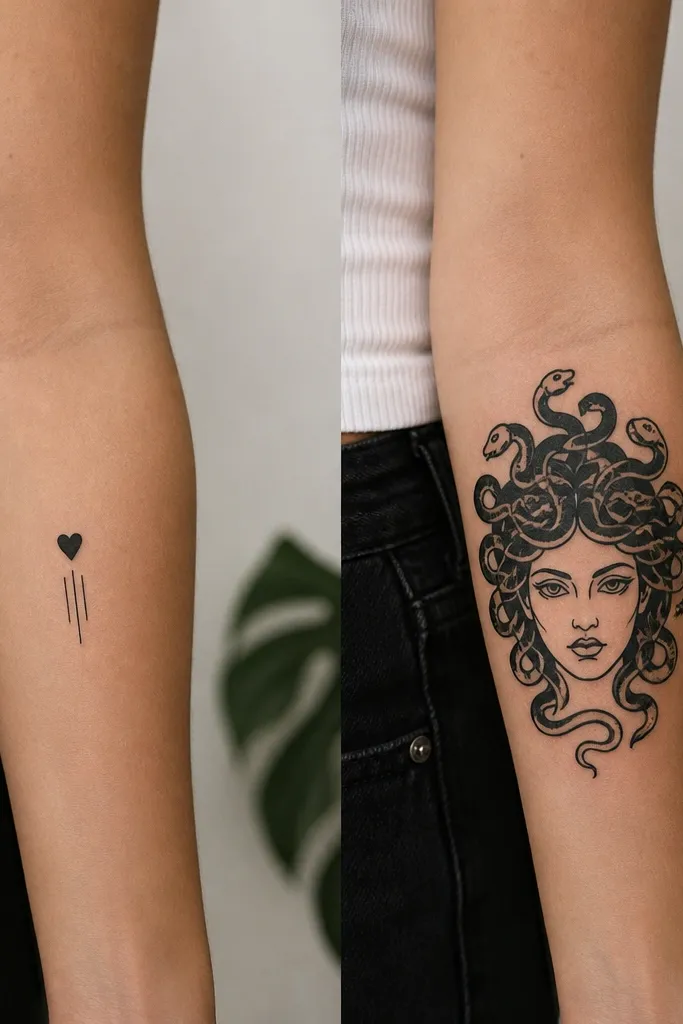
This is a cover-up that uses the oldest trick in the book: a big, dense black zone. The thick hair fog pulls attention away from the old heart lines and gives the artist room to pack pigment over the problem spot. The face outline stays crisp so the tattoo doesn't turn into a generic blob. The snakes let you place contrast highlights where you want the cover to look intentional, not accidental.
Plan the medusa so the hair mass covers your old tattoo completely with at least 1 inch of overlap. Keep the face features in fine black linework, but let the hair and curls go fully saturated. Forearm works if you accept that it will blur slightly with time - that's why you keep the hair fog dense and controlled.
Pro tipAsk for a test patch on a similar placement if you're worried about how dark ink settles on your skin tone.
AvoidDon't pick a medusa design with delicate hair strands; it leaves too many "windows" for the old tattoo to show.
4. Sleeve-style geometric frame with blackout center
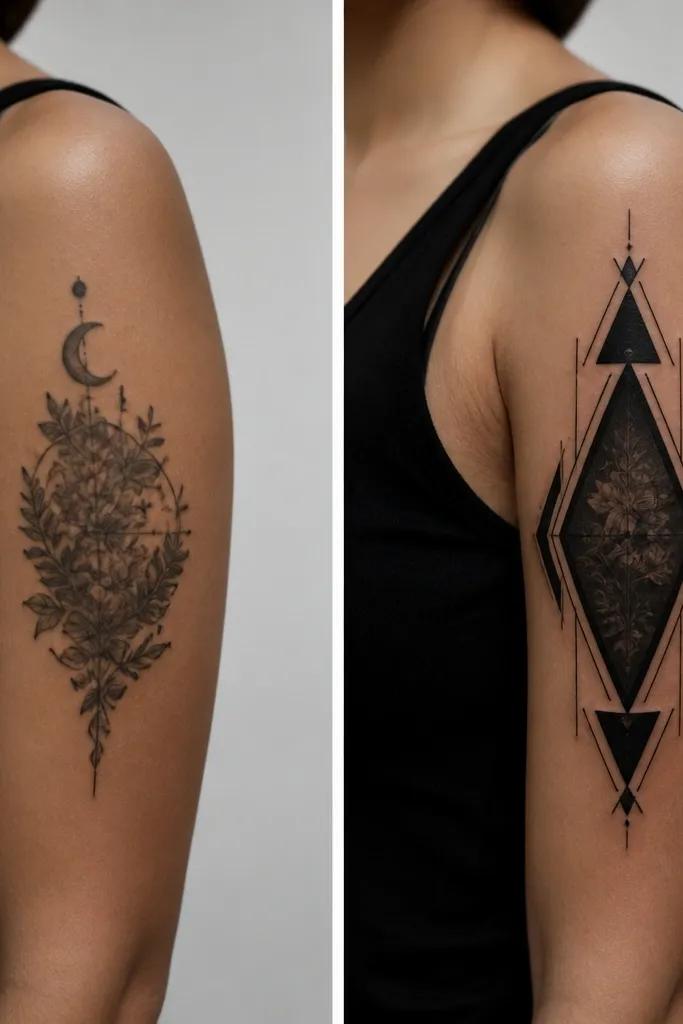
Geometric frames cover well because thick borders create a controlled edge where the old ink gets swallowed. The blackout center panel gives the artist a safe landing zone for the darkest parts of your original tattoo. Thin interior line accents are there for readability - they make the whole thing look designed, not like you covered it in black paint. This is one of my go-to ideas when the old tattoo has multiple directions of linework.
Choose a frame that's bigger than the old tattoo by about 30-40% in both width and height. Keep the border lines thick - think bold marker weight, not fine-liner weight. The blackout panel should be slightly irregular so it doesn't look like a sticker, then add small negative-space stars or dots to break up the fill.
Pro tipBring your old tattoo photo and mark the darkest spot with a pen - the artist should place the blackout panel's center over that mark.
AvoidAvoid thin geometric lines; they don't hide, they only draw attention to what's underneath.
5. Black-and-gray koi with torn-water texture
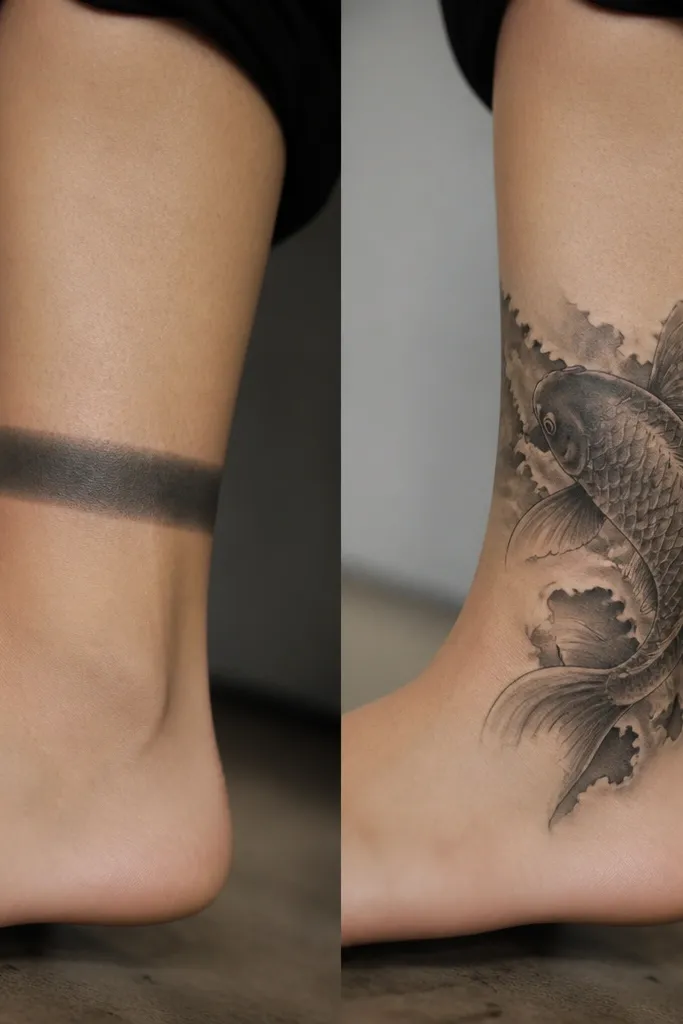
Koi cover-ups work when you use a torn-water texture behind the fish. That texture fills the negative space with small, broken shading so the old band can disappear into the noise. The thick tail shadow is a practical choice - it gives the artist a dense area to bury the old ink lines. Koi also have a natural flow, so the cover-up looks like art instead of a patch.
Anchor the koi so the tail shadow overlaps the old band by at least 3/4 inch. Use black-and-gray with a strong dark-to-mid gradient, not flat gray. The torn-water background should be slightly larger than the koi silhouette so it can swallow any leftover ghosting near the edges.
Pro tipIf your old tattoo is on the ankle, ask for a design that tolerates stretch - koi are better than small symbols there because they can move with your skin.
AvoidSkip koi with super light gray only; light gray rarely covers a dark band.
6. Deep rose and black peony with dot shading
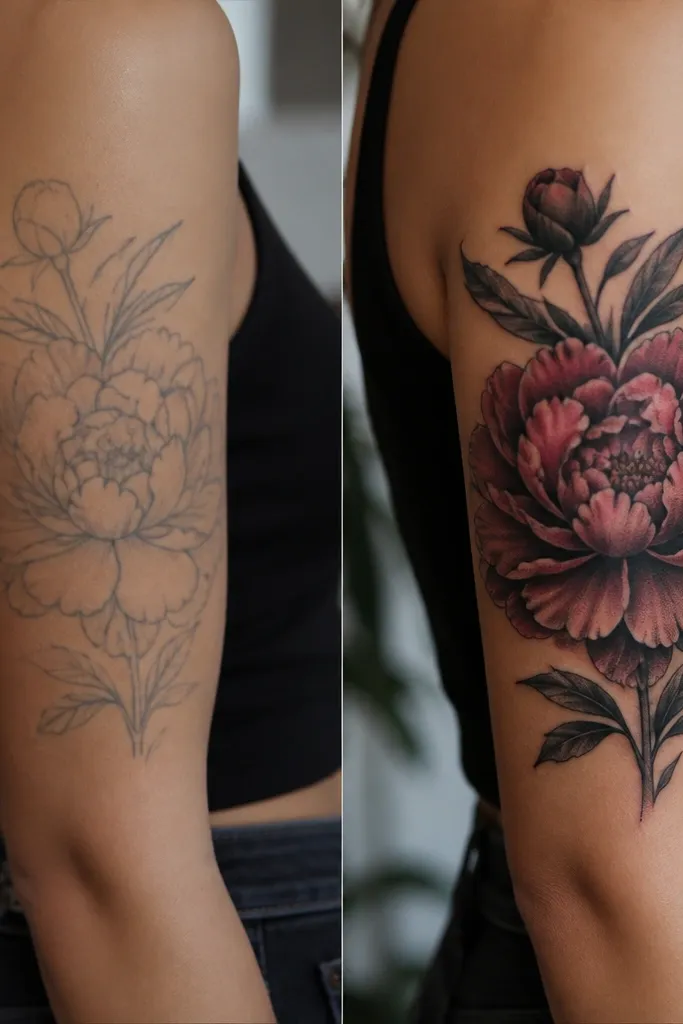
A peony is a cover-up cheat code when you build it like layers. Deep rose petals bring warmth, while black outer shading anchors the design over the old lines. Dot shading in the shadow zones helps blend edges, which is where cover-ups usually look messy. I like this for women because the final tattoo stays feminine even when it's packed with dark ink.
Use a rose that fills most of the old tattoo area, then let the darkest black sit around the petal edges. Keep the dotwork tight - small dots in the shadow - and avoid huge gaps between petals. Upper arm and bicep are great since the peony can sit flat and not stretch too much.
Pro tipAsk for a "petal overlap plan" - the artist should overlap petals over the old tattoo's worst lines, not beside them.
AvoidAvoid a peony that relies on thin line petals; the old outline will show between them.
7. Sunflower with blackout leaf veins
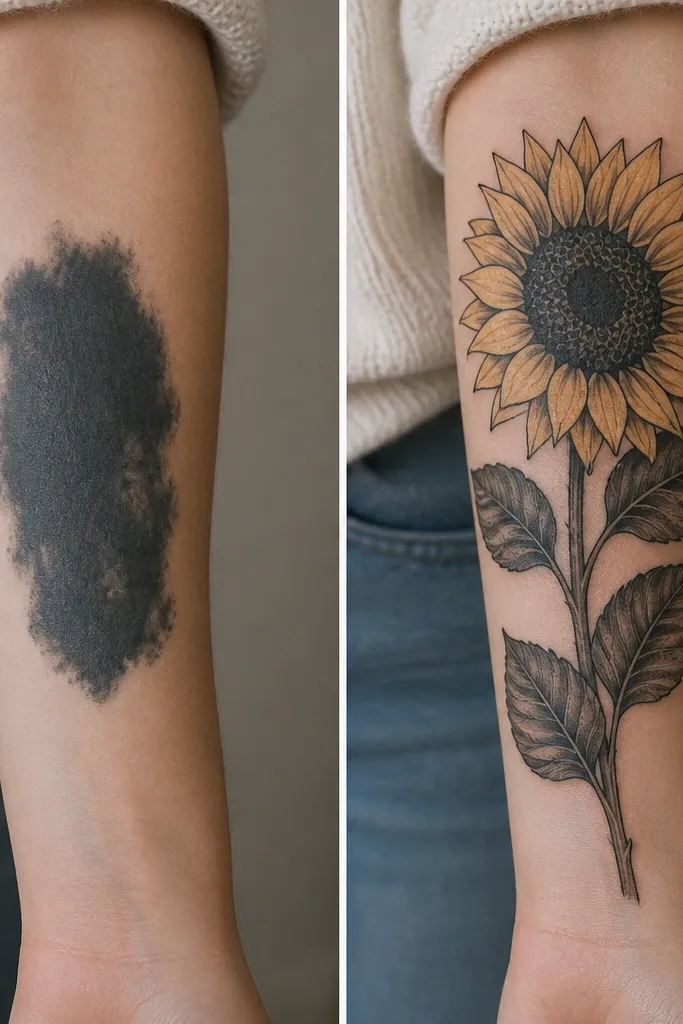
Sunflowers hide well because the center can be made dense, and the leaves give you extra coverage surfaces. Blackout leaf veins create strong lines the old ink can't compete with, and the dark honeycomb center eats the original tattoo's shape. Yellow petals add a bright contrast, but they only look good when the center and veins are heavy. This design reads clearly from across the room even if your skin has some texture changes.
Make the sunflower center bigger than the old tattoo's main area, then let a leaf angle cover the side of it. Use deep black for veins and center, then add yellow petals with a warm gradient so they don't look flat. Forearm placement works if you keep the design long enough to follow the arm's curve.
Pro tipWhen you choose yellow, ask for a slightly muted yellow, not neon - neon yellows fade faster and make the cover-up look uneven.
AvoidDon't go heavy on yellow with light shading; yellow alone won't hide dark ink.
8. Butterfly blackout wings with soft watercolor edges
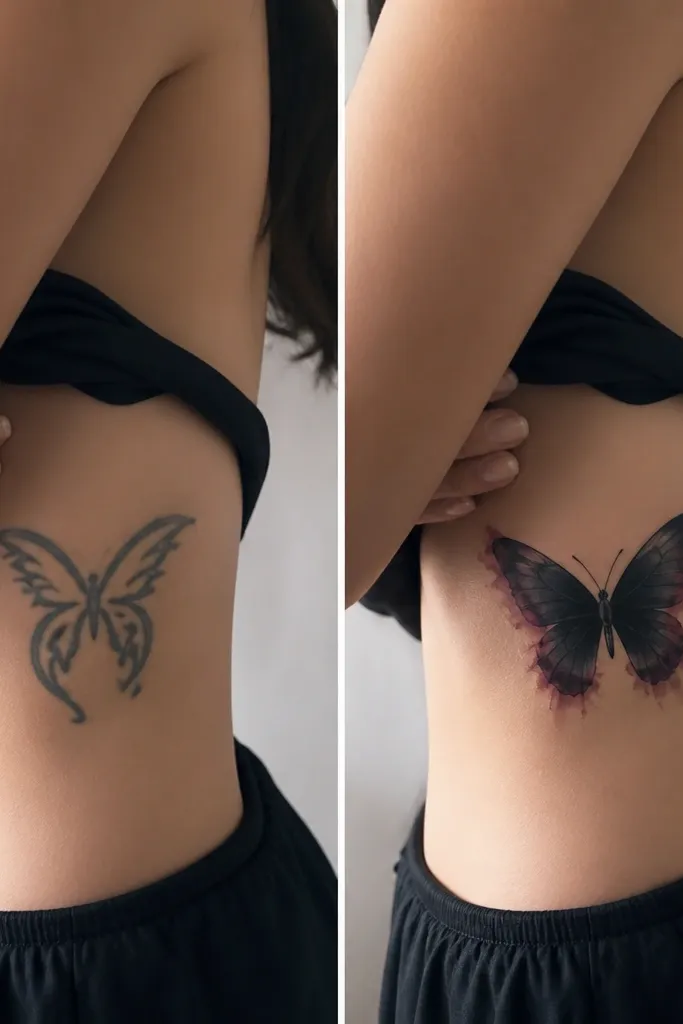
This works on old butterflies because it flips the structure. Instead of delicate wings, you use blackout wings that hide everything, then add soft mauve-plum watercolor edges to make it look airy. The clean body keeps it from looking like a black patch. If your old tattoo is on the ribs, the wings' shape helps the tattoo stretch without falling apart.
Keep the wing edges feathered with mauve and plum gradients, but the interior wing fill stays fully saturated black. The watercolor edge should be subtle - think smoky fade, not full watercolor splatter. Ribs and upper chest are good because butterflies naturally fit the body's curves.
Pro tipAsk the artist to plan the wing edges so they land over the old tattoo's outer parts, where ghosting is most noticeable.
AvoidAvoid a butterfly that's mostly thin linework; the ribs will exaggerate any gaps.
9. Script cover-up under a banner of thick black roses
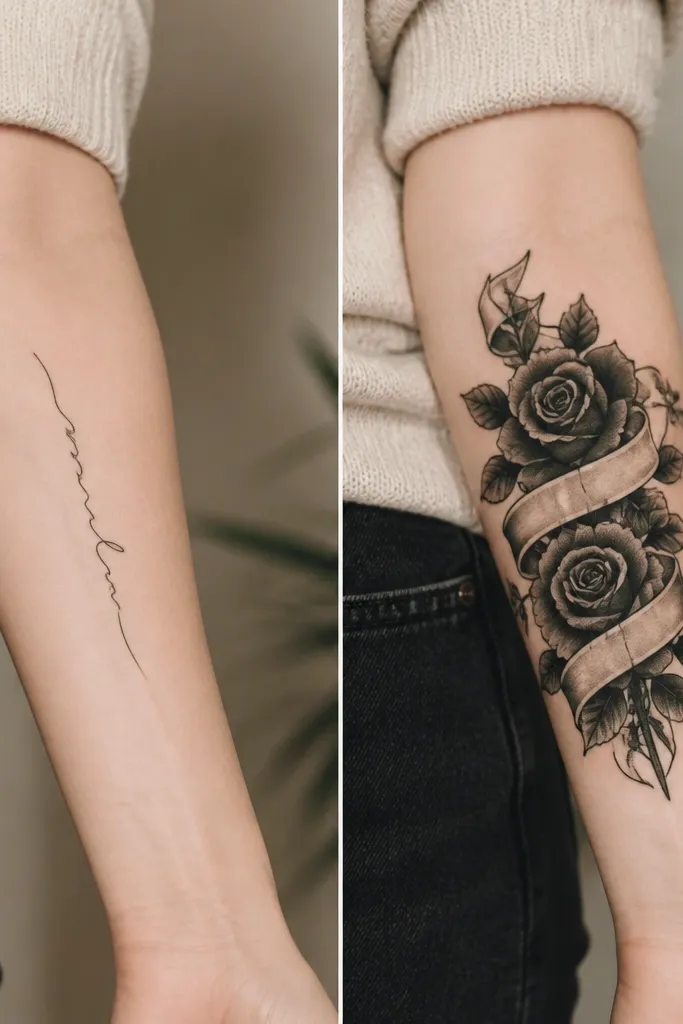
If you have script, you need coverage that interrupts letters at multiple angles. A banner ribbon plus thick roses gives you layered obstructions: the ribbon crosses the script, and the roses pack pigment over the center. Thick black roses are especially good because they hide letter strokes with minimal need for delicate shading. The ribbon also gives a clean visual story so the cover-up doesn't look random.
Design the ribbon so it crosses your script diagonally, then place the rose cluster so at least two roses overlap the densest part of the original text. Keep rose petals mostly black with small gray highlights, not heavy color. Inner forearm works well if you want a mostly flat look, but plan for slight fading along the edges due to rubbing.
Pro tipIf your script is small, scale the roses up until they're bigger than the text by at least 25% in width.
AvoidSkip thin ribbon-only covers; they leave the old letters visible where the ribbon doesn't fully saturate.
10. Crystal cluster with dark geode fill
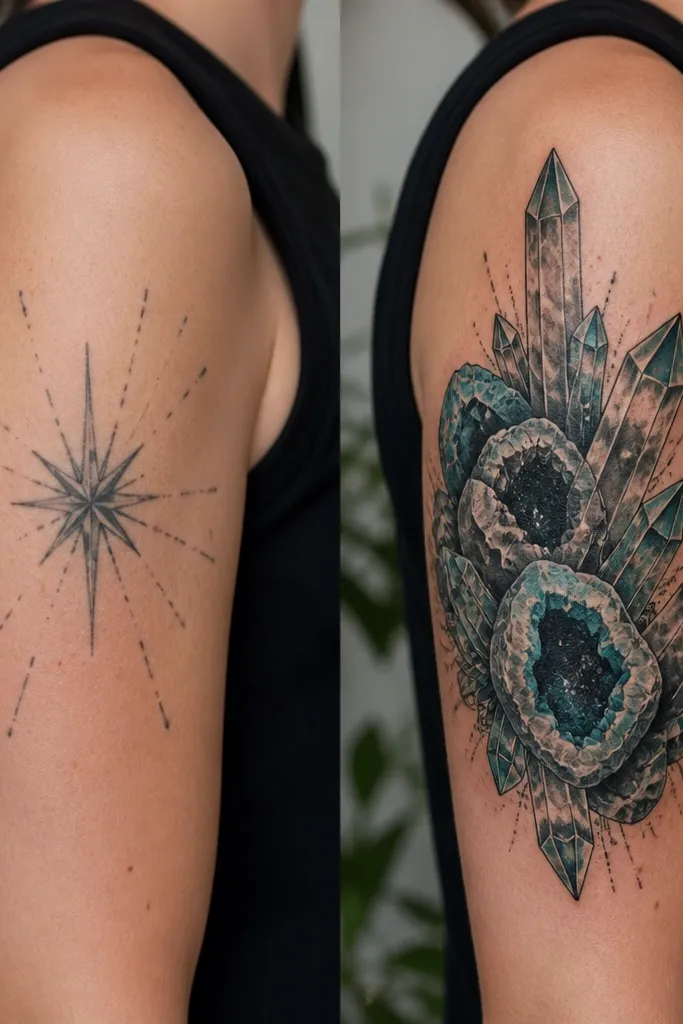
Crystals hide because each facet creates a boundary that can break up old lines. The dark geode fill is the real workhorse - it's a dense black-and-charcoal pocket that swallows the old starburst. Teal-blue highlights add a cool pop that makes the cover-up look intentional and modern. I like this when the original tattoo has multiple directions and you want a structured new pattern.
Ask for black geode pockets across the old tattoo area, then add teal highlights only on the outer facets so you don't dilute coverage. Keep the crystal points thicker than fine-line - you want them to hold up after healing. Upper arm and shoulder are ideal because the crystals can sit in a group without stretching too much.
Pro tipBring a reference photo that matches your skin tone - teal can go muddy if the artist uses too much gray in the highlight.
AvoidAvoid crystal designs that leave large open black gaps; old lines will show through those holes.
11. Hummingbird with shaded wings and thick body
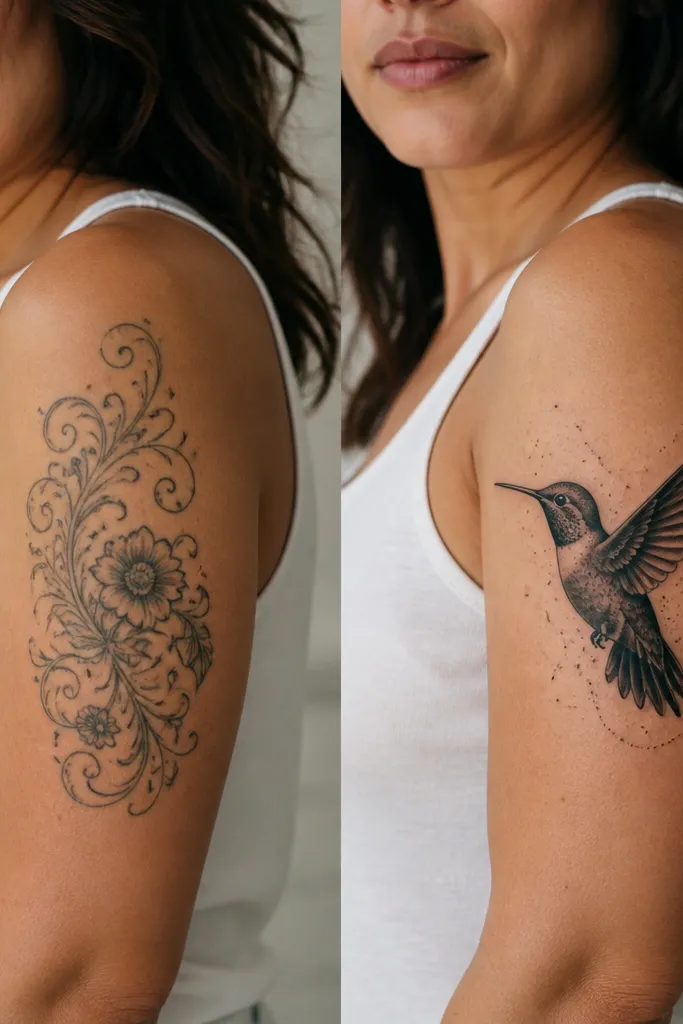
Hummingbirds work when the artist builds the body as a dense anchor. The wings provide surface area for shading that can cover old swirl lines, while tiny dot accents give the eye something to catch so the cover-up doesn't read like a patch. Gradient wings hide better than flat color blocks because they can blend around leftover ghosting. The overall silhouette stays readable even if your skin texture changes.
Place the hummingbird so the body sits over the darkest part of the old tattoo, not beside it. Use gradient wings in black-to-deep-green or black-to-purple, and keep dot accents small and consistent. Outer upper arm is a sweet spot because the bird can angle with your natural arm line.
Pro tipAsk for a second stencil option that places the bird slightly higher - tiny shifts change which parts of the old tattoo get covered first.
AvoidDon't pick a hummingbird with a super fine body outline; it won't hide a swirl.
12. Snake and roses with a dark braid background
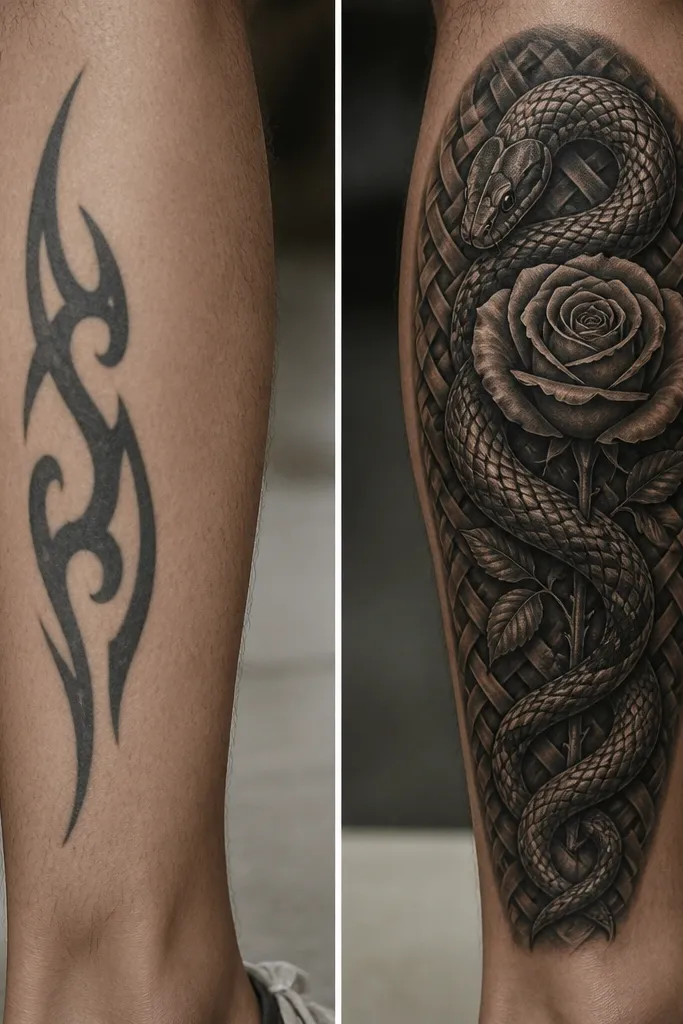
Tribal lines often have strong curves that show through if you only add a new outline. A snake-and-roses composition works because the snake follows curves, and roses create dense petal fills that interrupt the original path. The dark braid background is the coverage layer that actually hides the tribal strokes. It also looks like intentional patterning, which matters when the cover-up heals.
Wrap the snake so it crosses the old tribal line multiple times, creating overlap. Use deep black for the braid background and add roses in black plus a small amount of muted red or maroon in highlights. Calf placement is good because you can fit the braid pattern without it getting too crowded.
Pro tipAsk the artist to map where the tribal lines sit and place the braid's darkest crossings directly over those spots.
AvoidAvoid covering tribal with a single flower only; one focal element rarely covers directional lines.