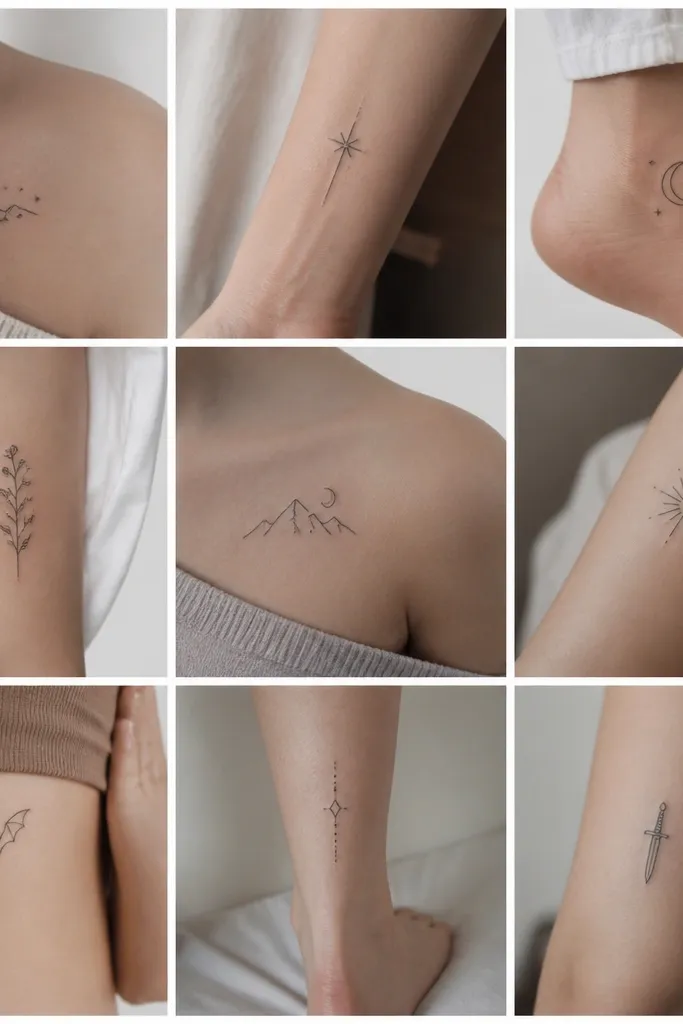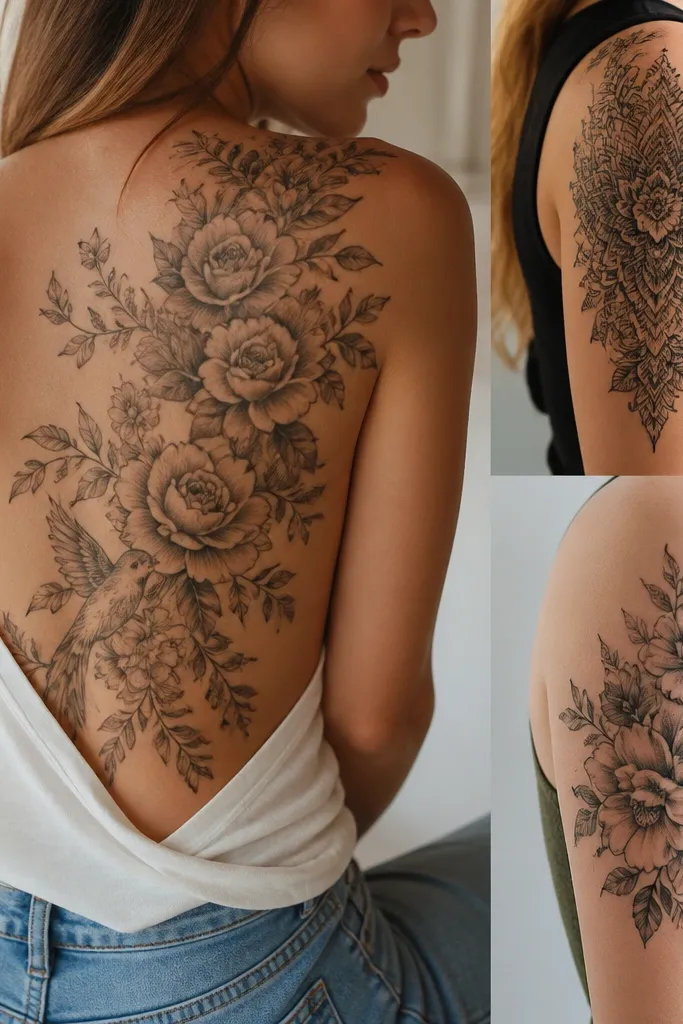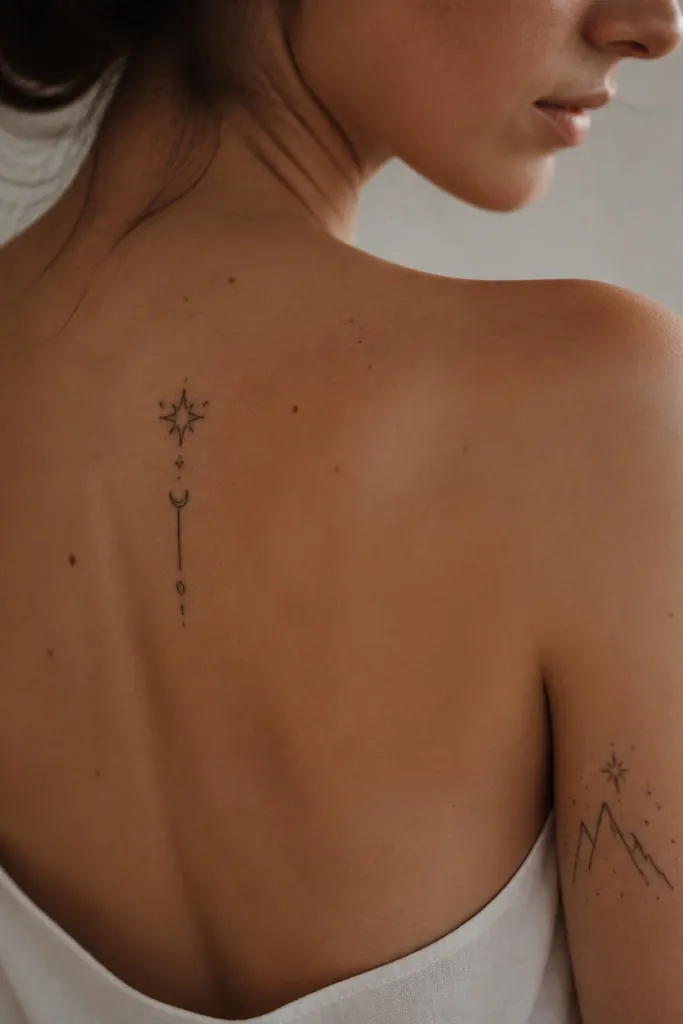
1. Tiny Moon With Micro-Stars
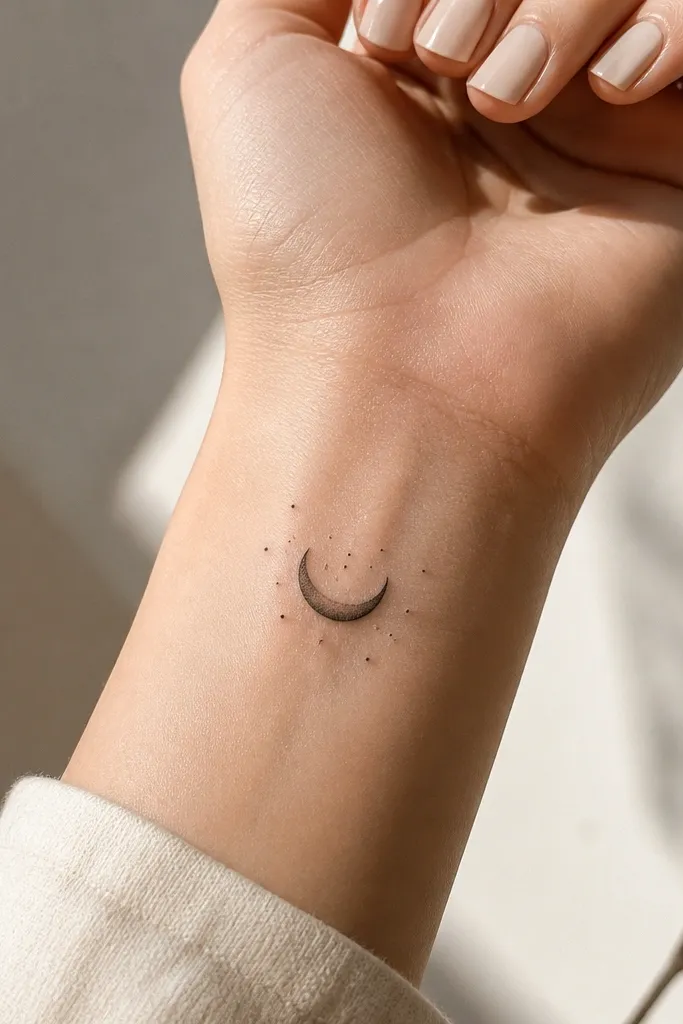
This cover works because the moon's solid fill gives your artist a surface to darken and blend over old lines. The micro-stars break up the old tattoo's edges so you don't see a single "ghost" shape underneath. I like the shading to be medium contrast - enough density to cover, not so heavy that it turns into a black sticker on thin skin.
Keep the moon about 28-35 mm wide and place it slightly above the pulse line. The stars should be tiny - no bigger than pinhead size - and spaced so they don't form a second outline. If your old tattoo is very dark, ask for the moon fill to start slightly heavier on the inner curve, where coverage matters most.
Pro tipBring a reference photo where the moon is not perfectly centered. A slight off-center look hides uneven old ink better.
AvoidAvoid a moon that's just a thin outline - it won't bury darker ink and it ages into a halo.
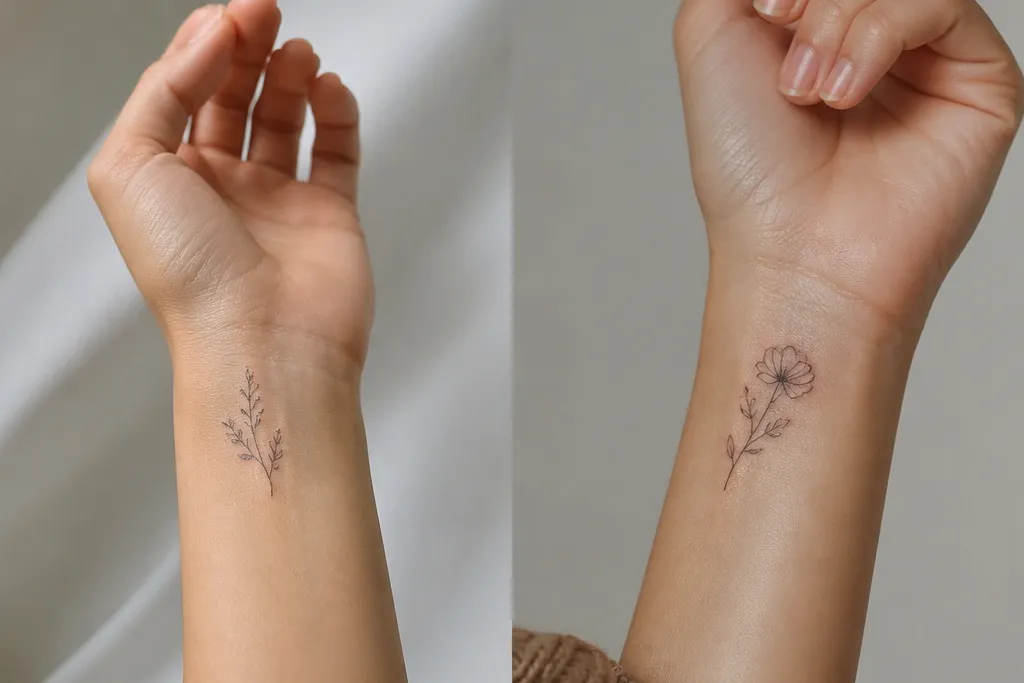
2. Single-Branch Botanical Vine
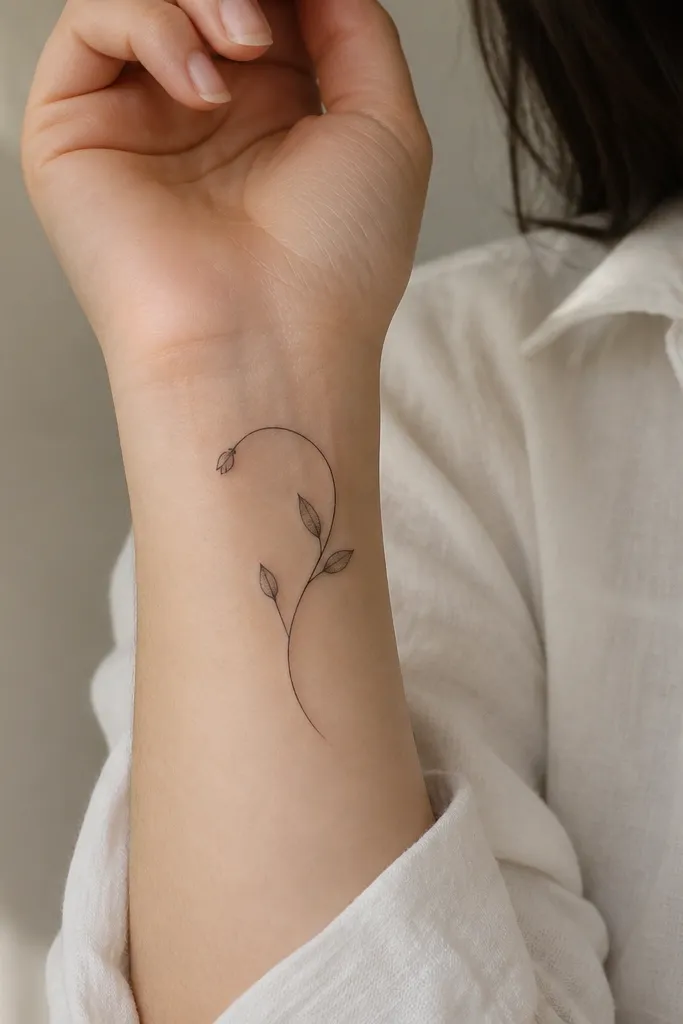
A one-branch vine is great when the original tattoo is a simple symbol or thin script. Leaves create natural "coverage pockets" because each leaf can get a filled center and stippled texture. The fine stem keeps it feminine, but the leaves do the real work by adding controlled density.
Place the stem lengthwise along the inner wrist and keep the leaves within a 1.2 inch span. Use stipple shading rather than solid black fill if you want a softer look, but make sure each leaf has at least a small shaded core. Color-wise, you can request a muted olive-brown tint in the leaf centers if you're covering blue-gray ink.
Pro tipAsk for the stipple to be heavier at the base of each leaf, where it meets the stem. That hides the transition area best.
AvoidSkip overly symmetrical leaf pairs - they can make any leftover ghosting look like part of the design.
3. Stacked Dot Mandala Strip
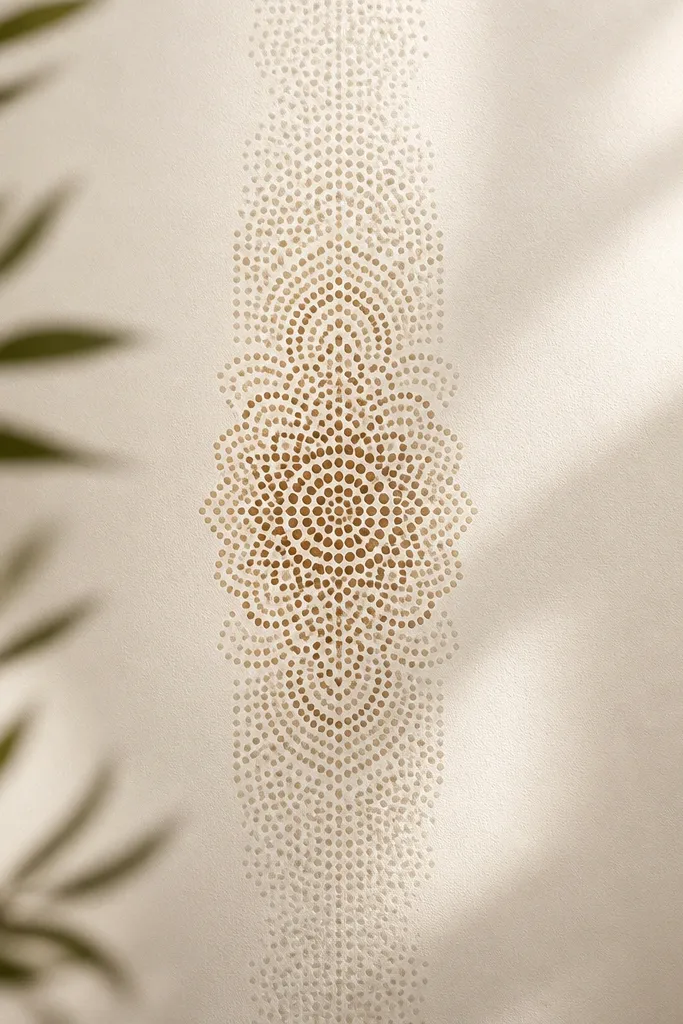
Dot mandala layouts cover well because dots disperse pigment and blur old edges. The stacked dot rows also let the artist adjust density in small zones, which matters when your original tattoo is uneven. I've had the best results when the center is darkest and the outer dots fade, so the cover looks intentional instead of patched.
Size it to about 22-30 mm tall and 8-12 mm wide. The densest dot cluster should sit in the center - that's where most old tattoos show through. If you want it to feel simple, keep the outer rows minimal and avoid adding too many extra symbols.
Pro tipRequest a dot gradient that fades toward the lower end. Inner wrist tattoos often get more wear near the crease, so the fade buys you time.
AvoidAvoid heavy solid black in a tiny band - it can look like a bruise after it heals.
4. Small Hamsa Hand Outline With Center Fill
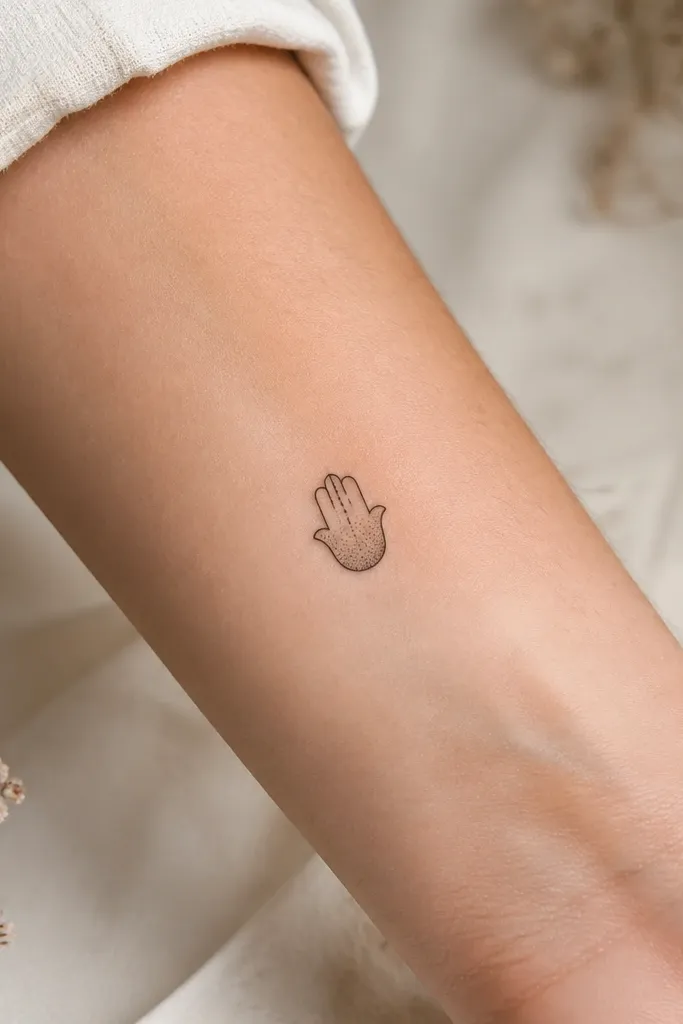
This works when your old tattoo is a dark blot or a faded icon. The hamsa's outline gives you a clean shape to anchor coverage, while the center fill lets the artist bury the old ink without turning the whole piece into one thick blob. Keep the fill stippled, not fully solid, so it stays airy and doesn't look heavy on the inner wrist.
Aim for 25-38 mm in height. Place it so the top finger area sits above the wrist crease, then let the bottom sit closer to the crease without crossing it. If your cover needs extra help, ask for a slightly darker stipple in the palm area where the old ink is strongest.
Pro tipChoose a reference where the hand has negative space around the outline. Negative space helps the design look crisp even when skin texture changes.
AvoidDon't go ultra-thin everywhere. Thin lines alone won't hide a dark existing tattoo.
5. Feather With Burnt-Umber Wash
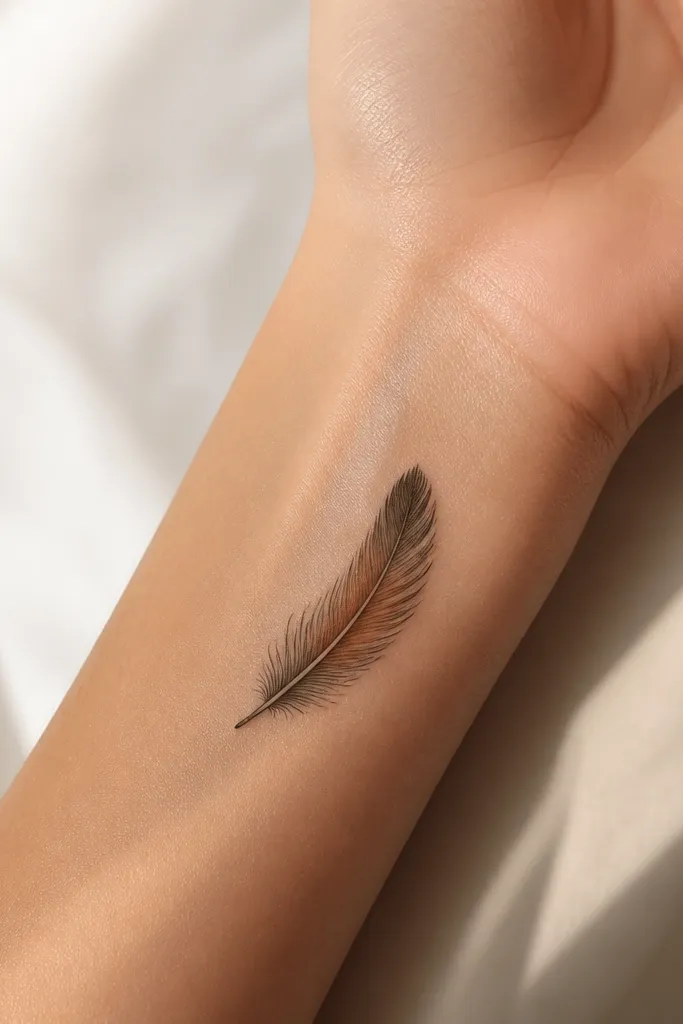
Feathers cover well because the shaft can be shaded densely while the barbs create breaks in the old pigment. The warm burnt-umber wash helps warm up blue-gray aging ink, which makes ghosting less obvious. I like this design when the old tattoo has been there long enough to fade unevenly.
Keep it narrow, about 30-45 mm long and 10-14 mm wide. Ask for the shaft to have a gradient - heavier in the middle, lighter near the tip. If you're not doing color, use micro-shading in gray-black but keep the center darker than the edges.
Pro tipIf your old tattoo is a circle or blob, place the feather so the shaft covers that center, not the barbs.
AvoidAvoid a feather that's all solid black fill - it turns into a thick stamp and loses the delicate feel.
6. Tiny Serpent Coil
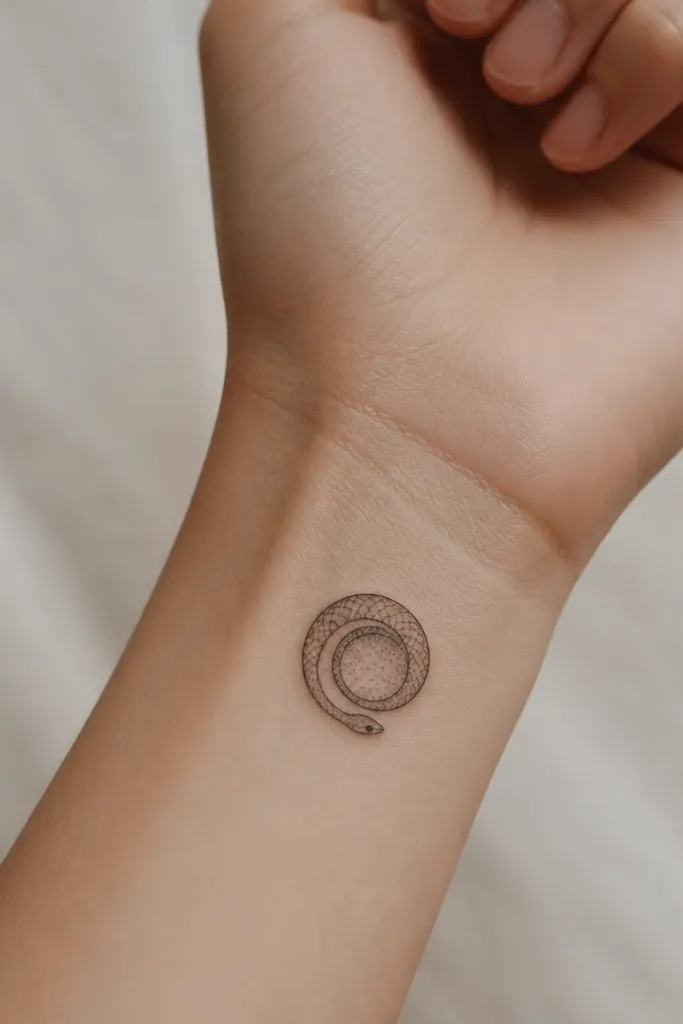
A tight serpent coil is a smart cover because the curve lets an artist "wrap" pigment over older shapes. Scale lines add controlled texture so the cover doesn't look like a single patch of black. The light stipple inside the coil helps blend any darker remnants under the linework.
Size it to about 28-40 mm tall, with the coil sitting near the wrist's inner curve. Keep the head detail small enough that it doesn't force extra width. If your old tattoo is dark, ask for the coil's inner edge to be shaded a touch heavier - that's where old ink often shows through.
Pro tipTell your artist if your old tattoo has a distinct corner or edge. They can hide it under the coil's thickest contour line.
AvoidSkip thick outlines. Thick lines on a small wrist piece can look like it's pasted on top.
7. Minimal Initial With Hidden Keyhole
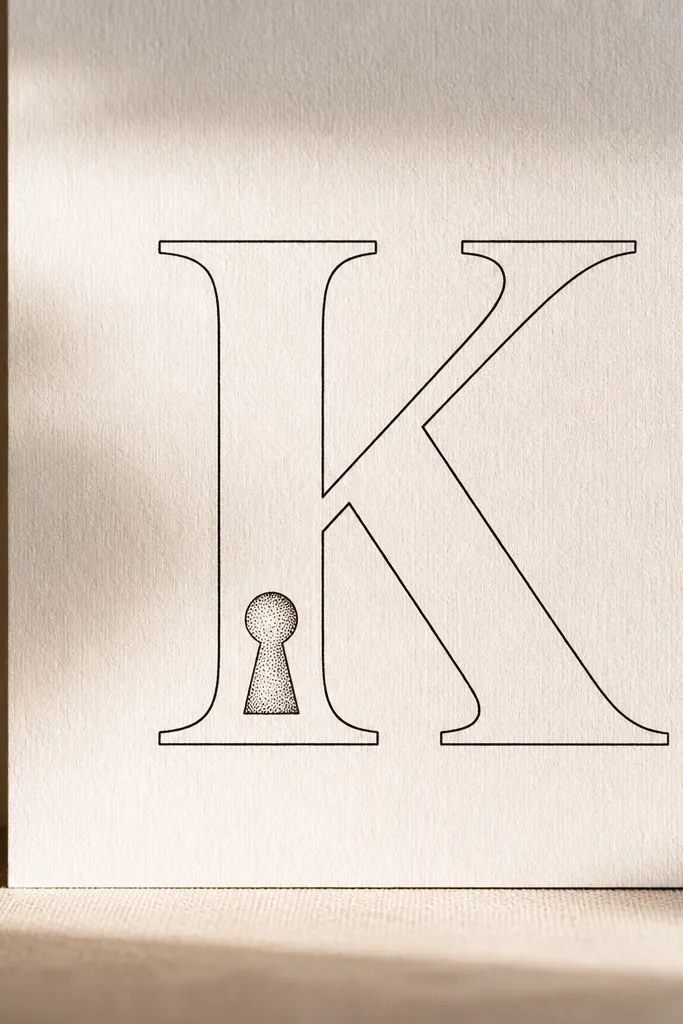
This is a cover idea when you want something personal but your old script looks messy. The keyhole shape gives the artist an area to densify and blend, while the initial keeps the overall look simple. The dot fill inside the keyhole is where the coverage happens without making the letter look bulky.
Keep the letter height around 35-50 mm. The keyhole should be small - around 6-10 mm tall - so it stays elegant and doesn't stretch the design. If the old tattoo is dark behind the letter, ask for dot fill under the keyhole and a slightly thicker baseline stroke.
Pro tipChoose an initial with an inner pocket, like A, R, or D. Those inner pockets hide old ink better than letters with only open curves.
AvoidAvoid a hollow, super-thin letter. It will show the old tattoo through the negative space.
8. Micro Heart Chain Link
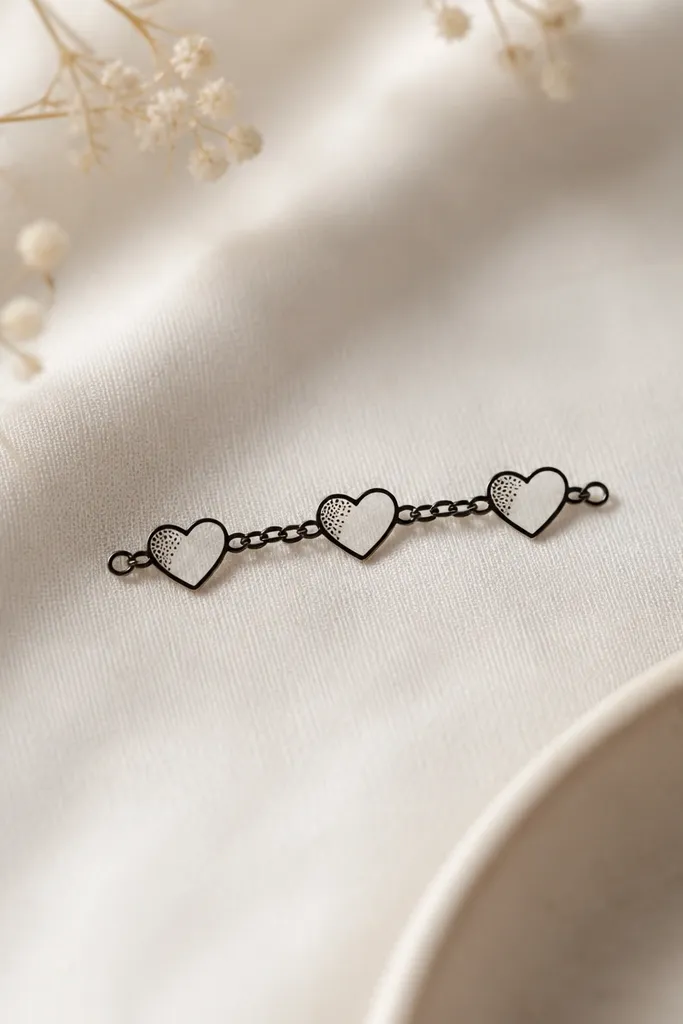
Heart chain designs cover because each heart has two jobs: outline for shape and small shading for density. If your old tattoo is a small symbol, three hearts give the artist enough surface to blend without overworking one area. The minimal dot shading gives a clean, simple look while still burying remnants.
Size it to about 25-38 mm wide depending on your wrist. Put the chain so the middle heart sits closest to the old tattoo center. If your old ink is very dark, ask for slightly heavier dots on the bottom half of each heart where coverage needs to be strongest.
Pro tipBring your old tattoo photo. I've seen artists adjust dot placement in minutes when they can see the exact ghosting shape.
AvoidSkip fully filled hearts. They look cute at first but heal too dark and thick on the inner wrist.
9. Tiny Compass Rose Corner
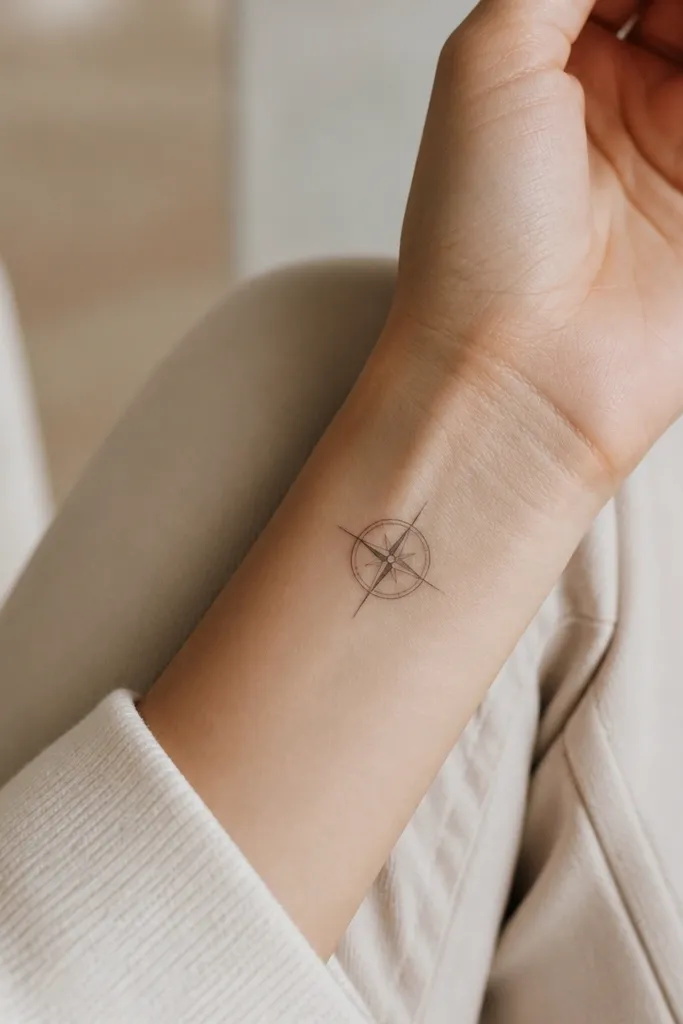
A compass rose is a great cover because the ring and direction marks create multiple line intersections that hide uneven old edges. The radial shading around the center helps blend a dark patch without needing a big fill. I like this for people who want a symbol that looks intentional even when it's small.
Keep the outer ring around 18-26 mm wide. Place it diagonally so the ring crosses the old tattoo area, then let the direction marks extend just enough to break up any ghosting. If you want it softer, ask for gray-black radial shading instead of solid black lines.
Pro tipAsk for the ring thickness to match your old tattoo darkness. If your old ink is bold, the ring needs to be bold too.
AvoidDon't choose a compass that's too detailed. Tiny line clutter turns into a gray smear.
10. Small Butterfly With Solid Center Patch
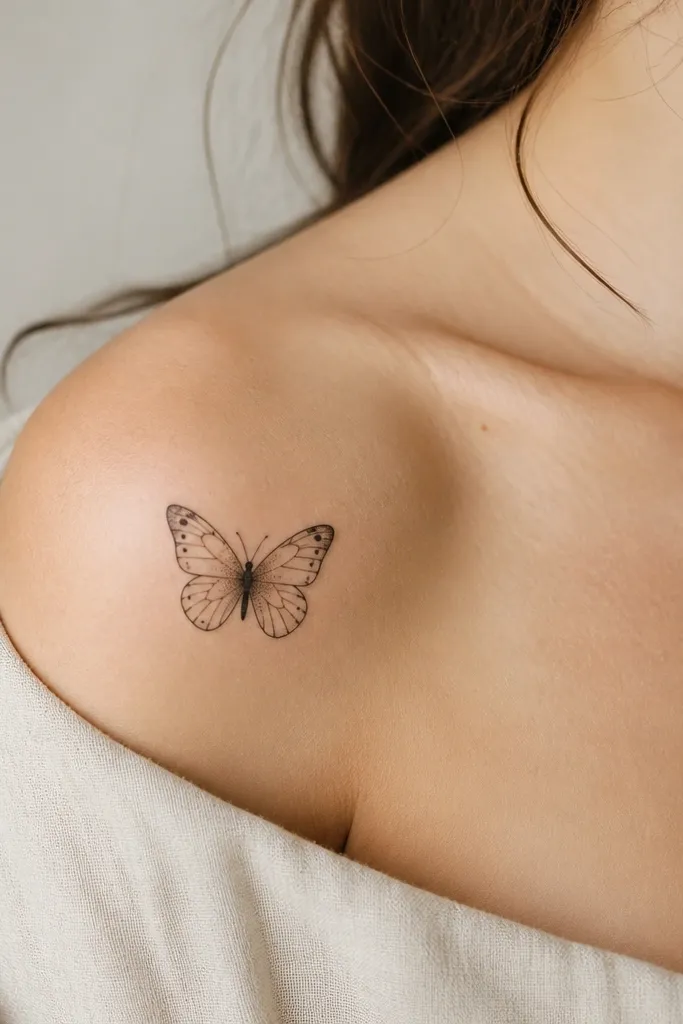
Butterflies cover because the body area can be shaded densely while the wings stay light and airy. That contrast hides dark old ink in the center without making the entire piece heavy. The dot accents on the wings break up lines so you don't see the old tattoo as a single shape.
Size it to about 30-45 mm across, depending on your wrist width. Place the center body directly over the darkest old section. If color helps you, ask for a muted mauve or dusty rose tint in the inner wing lines - it softens blue-gray show-through.
Pro tipIf your old tattoo is a rectangle or script block, position the butterfly so the wings extend beyond it, then cover the center with the patch.
AvoidAvoid a butterfly that's all outline. It will age thin and reveal old ink beneath.
11. Mini Sunburst Rays
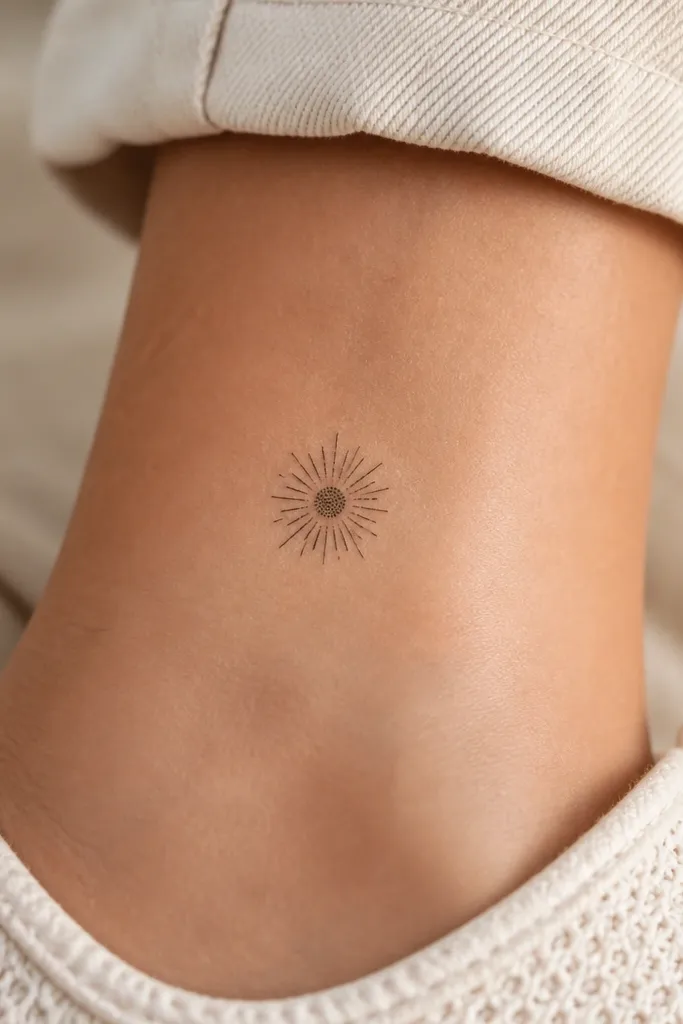
Sunburst designs hide old tattoos because the rays create motion and visual noise over the cover area. The dense dot center is where the artist can bury a darker spot. Short rays look clean on the inner wrist and don't drift into a messy halo as they heal.
Make the center about 8-12 mm wide, with rays total diameter around 25-35 mm. Keep rays short and evenly spaced; too-long rays look crowded on a small surface. If your old ink shows through in one corner, ask for the center dot fill to be heavier on that side.
Pro tipChoose ray direction that follows your wrist crease. It makes the healed tattoo look aligned instead of random.
AvoidSkip long, thin rays. They fade fast and leave a weak ring that shows the old ink.