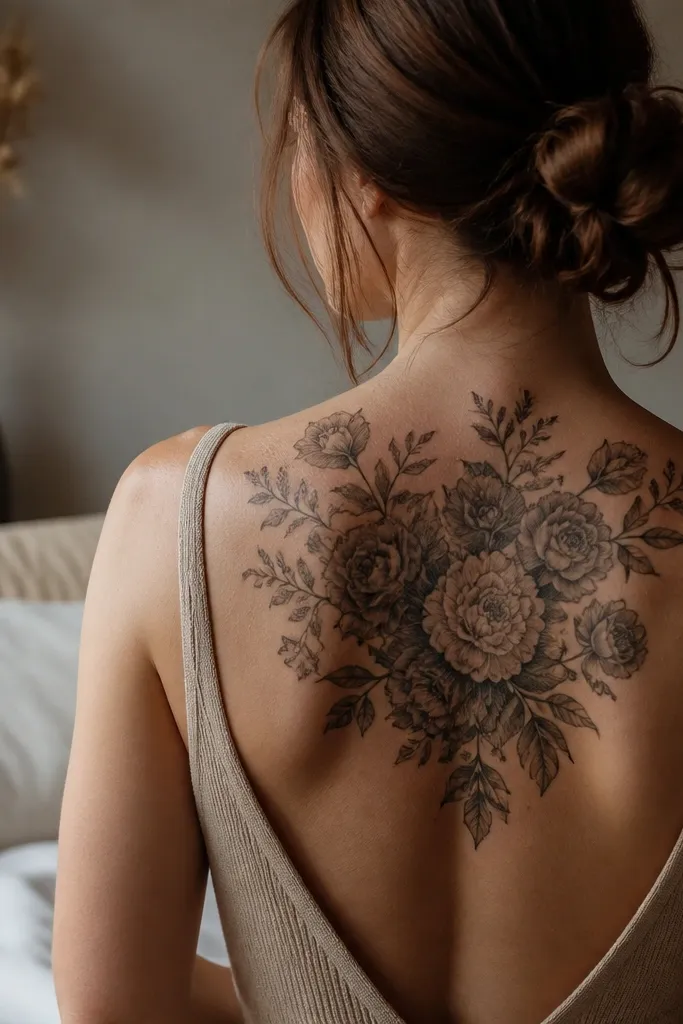
1. Cream Blossom Wreath Over the Shoulder Blade
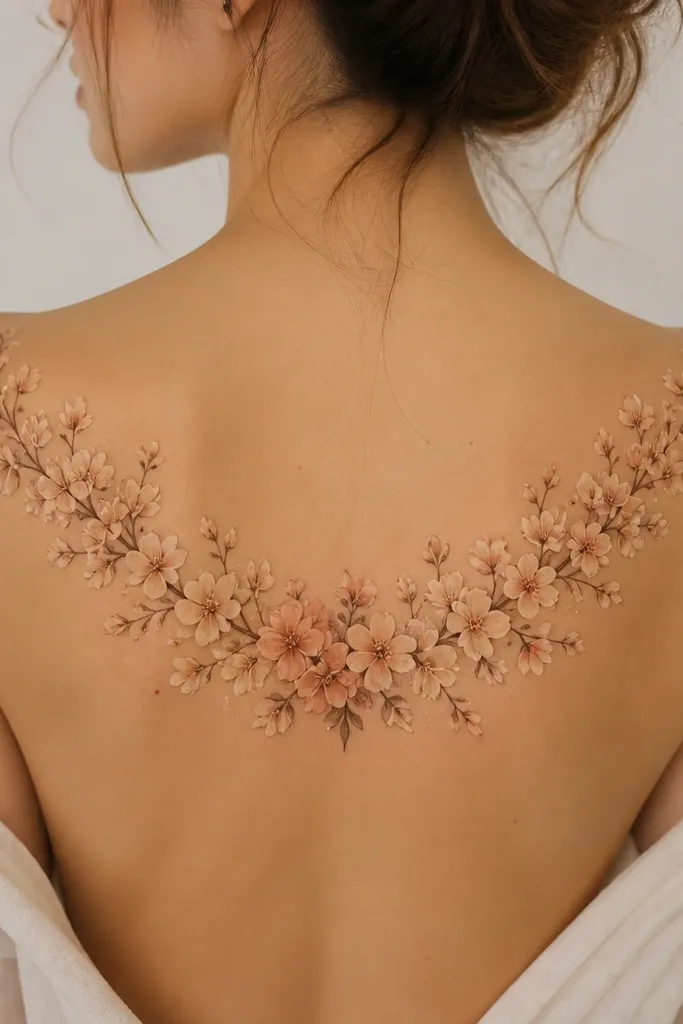
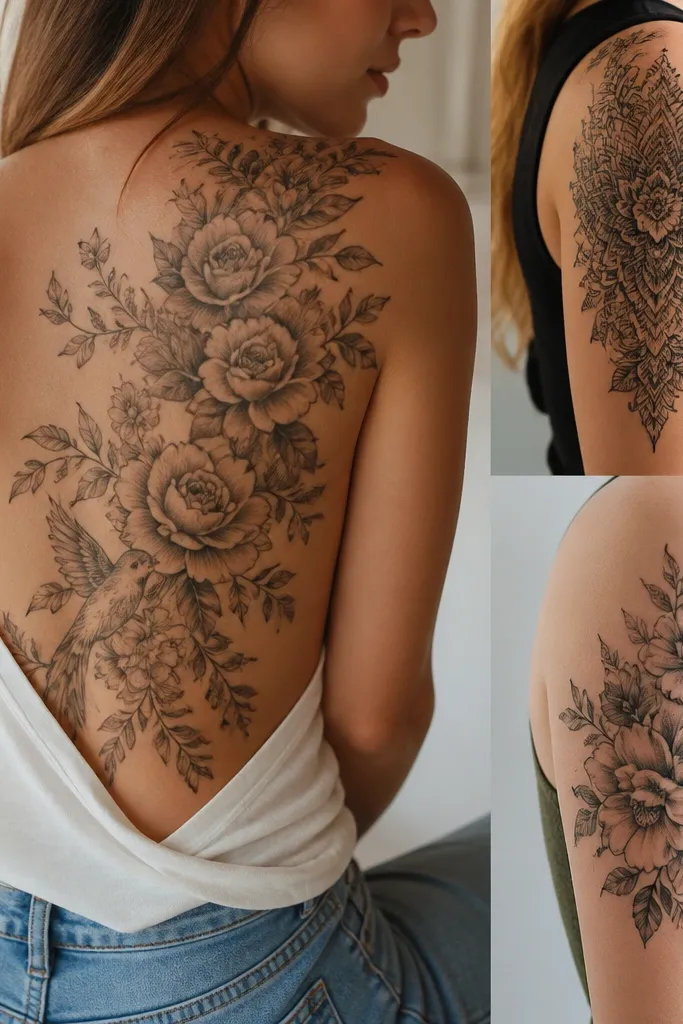
This works because floral coverage lets an artist hide old lines inside petal shapes and shading. Cream and pale peach read cozy against skin, and warm brown linework gives structure without looking like a blackout. The petal-to-petal gradient breaks up the old tattoo's edges so it doesn't look like a patch over patch.
Place the wreath so it sits diagonally from just below the spine toward the outer shoulder, with the largest petals covering the darkest old ink. Ask for stippling and soft airbrush-style gradients inside petals, then reserve the brightest highlights for just the top edges of a few flowers. Keep the stem line thin - thick stems can make it look heavy and mask the blend.
Pro tipBring a reference photo where the flowers have visible midtone shading, not flat color. That helps your artist plan gradients that look warm, not gray.
AvoidDon't request a flat "color fill" wreath with no midtones - it tends to look like a sticker over old ink.
2. Warm Latte Feather Fan With Soft Stipple Covering
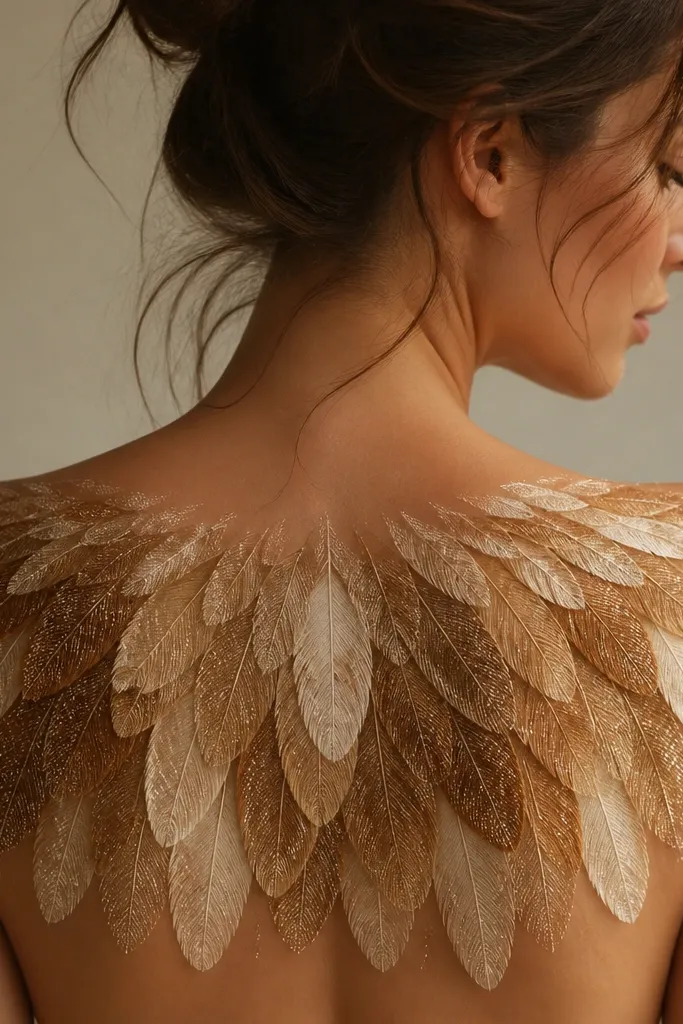
Feathers are great for cover ups because the overlaps naturally bury old outlines. The stippling texture creates a cozy, "hazy" transition that hides uneven old ink density. Using latte, caramel, and cream keeps the piece warm instead of turning into a gray smear.
Have the fan start near the outer shoulder and sweep inward toward the spine, with the widest feather covering the center of the old tattoo. Ask for darker stipple density where the old ink is strongest and lighter speckling toward the tips. Keep the feather borders soft so the old ink doesn't peek through at edges.
Pro tipIf your old tattoo has thick black lines, ask your artist to place the darkest stipple under the feather overlaps, not along the outer perimeter.
AvoidAvoid crisp, hard feather outlines - they make old linework contrast jump out.
3. Cozy Knit Scarf Motif With Hidden Patchwork
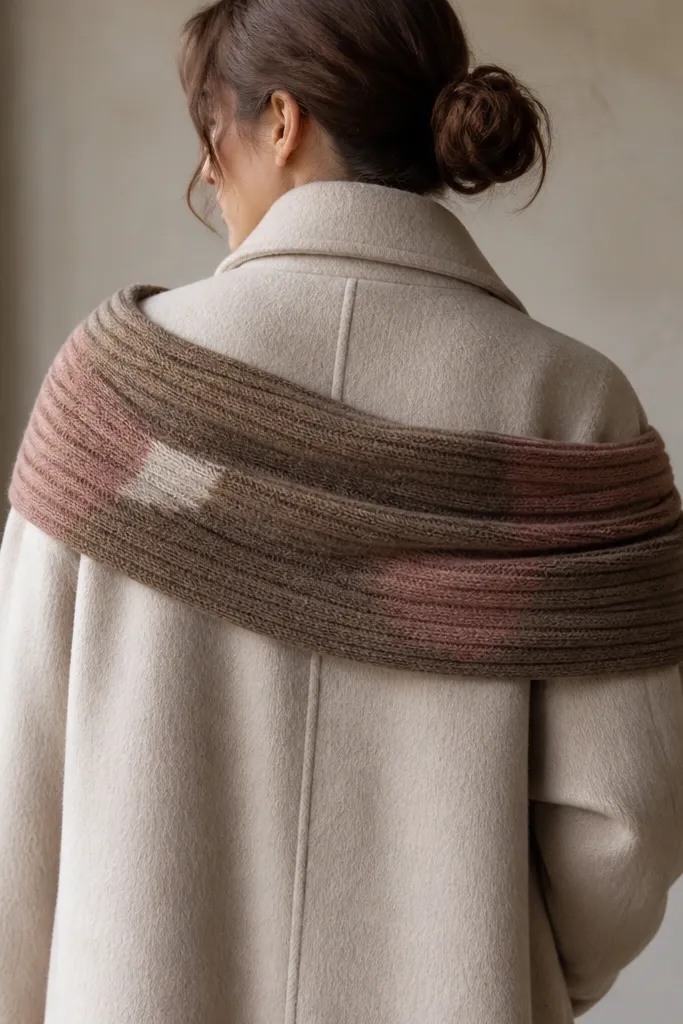
This design works when you want warmth and a "covered-but-cute" look. Knit ribbing gives your artist a grid of lines to weave over old ink, and the patchwork sections break up the darkest areas into intentional shapes. Dusty rose and cream patches make the piece feel cozy rather than purely dark.
Size the scarf band to fully cover the old tattoo, then add at least a 1 cm border of knit texture around it so edges don't look cut off. Ask for shadowing under the ribbing - a light gray-brown shadow makes the knit look dimensional. Keep patchwork areas slightly smaller than the old ink blocks, so the ribbing continues through the coverage.
Pro tipChoose ribbing lines that curve gently with the shoulder blade. Straight horizontal lines across a curved body often look off.
AvoidDon't do only thick black knit lines - it turns into a heavy graphic instead of a soft textile.
4. Sunset Rosebud Cluster With Peach-to-Coral Fade
Roses cover well because the petal layers overlap and hide old outlines inside folds. A peach-to-coral fade reads cozy and warm, especially if your artist blends midtones instead of using only one pink. The tiny dot accents mimic light on petals and keep the tattoo from looking flat.
Place the cluster slightly off-center toward the outer shoulder so it doesn't feel cramped near the spine. Ask for a darker warm center only where the old tattoo is densest, then fade outward with lighter petal edges. Keep stems thin and let the petals do most of the coverage.
Pro tipAsk your artist to map the old tattoo's darkest patch into the rose center - it's the easiest place to bury heavy ink without ruining the overall softness.
AvoidAvoid neon pinks or high-saturation reds - they can make cover-ups look harsh and dated fast.
5. Honeycomb + Warm Dots Beehive Cover
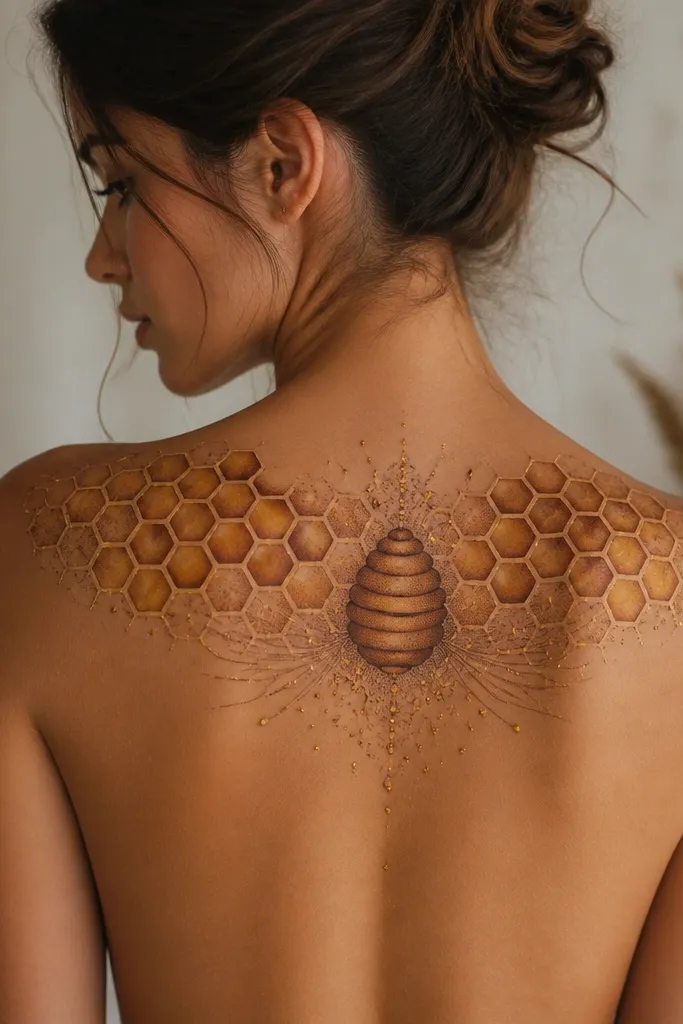
Honeycomb patterns hide older linework because the grid breaks up shapes and spreads coverage evenly. Warm amber tones look cozy, and dotted texture adds depth without needing heavy black fill. The center hive motif gives a focal point so the cover-up reads like art, not masking.
Use a honeycomb size where each cell is small enough to blur old ink edges, but not so small it becomes a dark blob. Ask for darker outlines only inside the densest old ink area; outside, keep outlines lighter and let skin peek through between cells. Add a few tiny dot highlights around the hive for warmth.
Pro tipIf your old tattoo has big black blocks, place them where the hive center is - then soften the rest with dotted amber shading.
AvoidDon't make every line equally dark - uniform darkness makes the tattoo look like a stamp.
6. Vintage Teacup Steam Clouds Over Old Ink
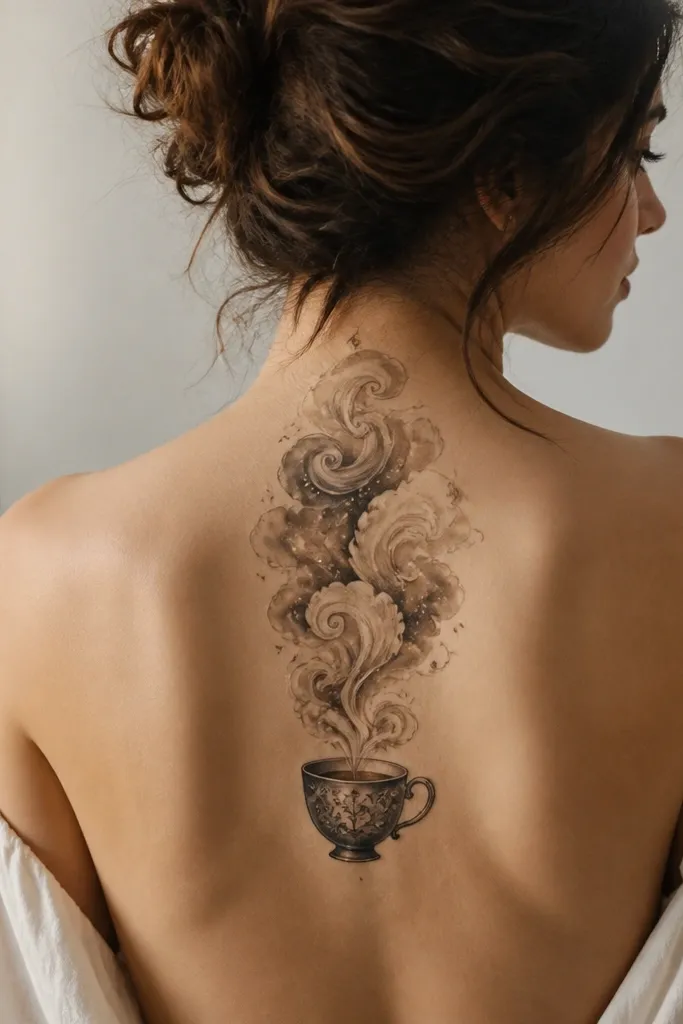
This is cozy because it uses airy steam forms that blend. Swirls give your artist curved surfaces to bury lines, and the teacup outline anchors the design so it feels intentional. Warm gray and cream keep it soft and readable, even when the old tattoo was dark.
Place the teacup near the upper spine area, so the steam fans downward over the old tattoo. Ask for layered steam: one light layer on top, one slightly darker underlayer. Use tiny stipple highlights on the brightest steam curls to make the piece look warm, not smoky.
Pro tipBring a reference where the steam has multiple thickness levels. Thicker curls help cover heavy old ink.
AvoidSkip harsh black steam outlines - they make the old tattoo's edges show through the contrast.
7. Cozy Candle Flame With Soft Wax Drips
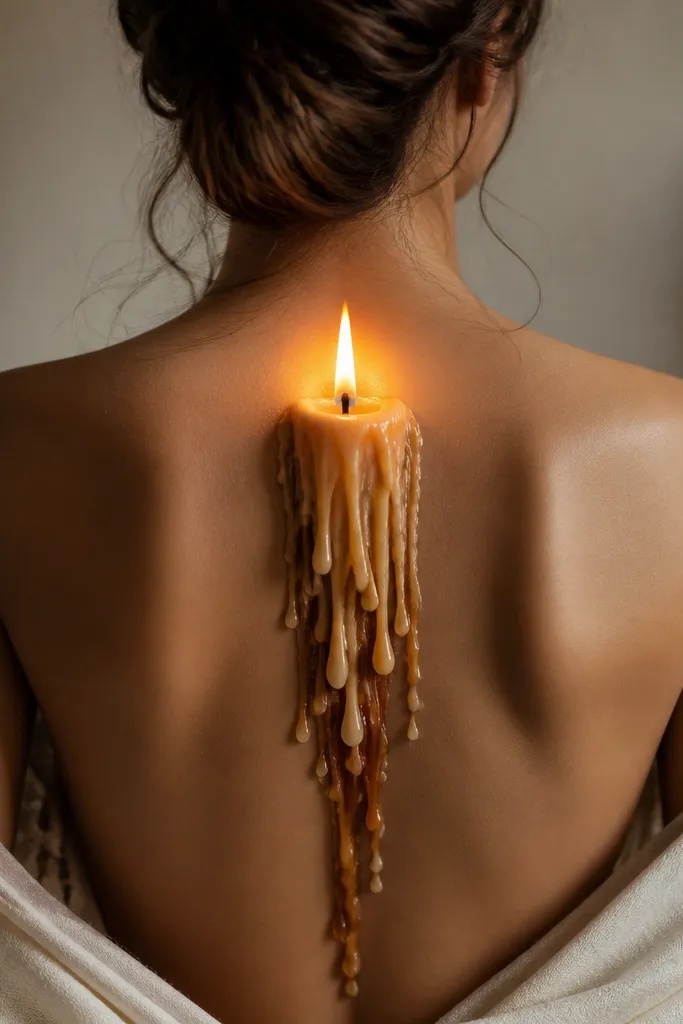
Candle motifs cover well because the flame and drips create natural gradients and layered shapes. The warm palette reads cozy immediately, and wax drips can swallow old lines inside their curves. The darkest density sits at the drip base, where you can hide old black ink without turning the whole piece heavy.
Place the flame slightly above the old tattoo's center so drips cover the full area. Ask for drip edges that fade rather than stop sharply, and request highlight lines along one side of each drip to mimic light. If your old tattoo has a horizontal band, align a wax drip across it to break the line.
Pro tipRequest a subtle background wash behind the drips using a light warm gray - it helps unify the cover-up and reduces harsh contrast.
AvoidDon't go too large on the flame - a tiny flame with huge drips looks balanced; the reverse looks top-heavy.
8. Autumn Leaf Arch With Cocoa Shading
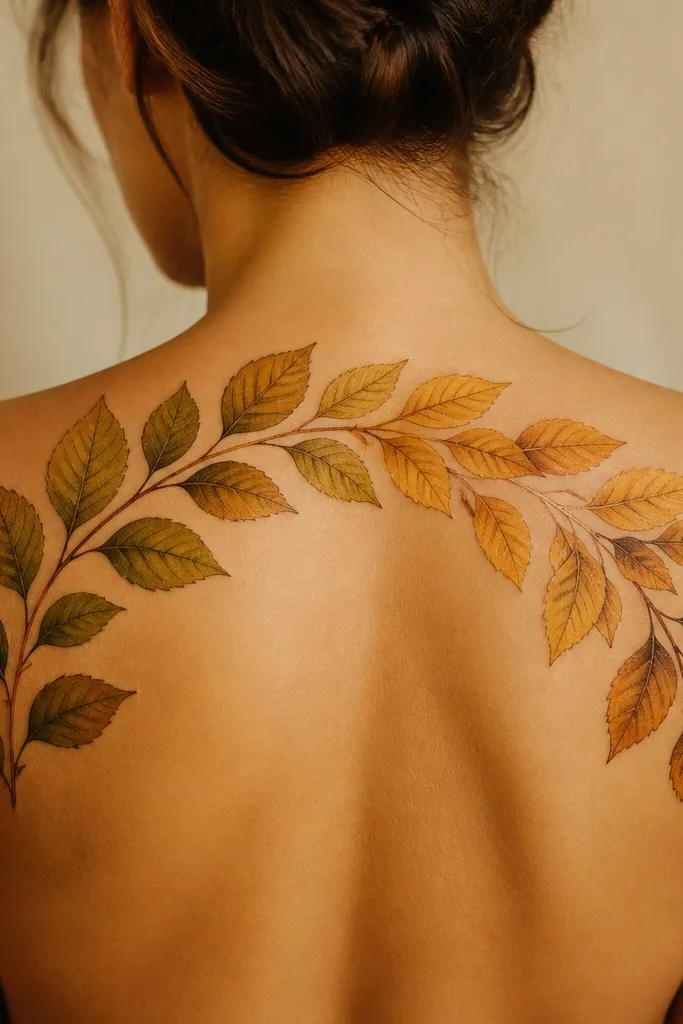
An arch works because it frames the old tattoo and creates a clear boundary for coverage. Leaves have veins and edges that let an artist hide linework inside organic shapes. Warm cocoa shading makes it cozy and grounded, while golden tones keep it from looking like a dark cover-up.
Start the arch near the outer shoulders and let the lowest leaf points cover the densest area of the old tattoo. Ask for vein lines in a warm brown, then blend leaf edges with soft shading so the old ink doesn't show through. Keep the darkest shadows under leaf overlaps, not as a solid background.
Pro tipIf your old tattoo includes curves, match them with leaf veins - it makes the cover-up look planned instead of pasted.
AvoidAvoid flat leaf color with no vein depth - it turns into a sticker effect over older ink.
9. Soft Mandala Halo With Warm Sepia Gradient
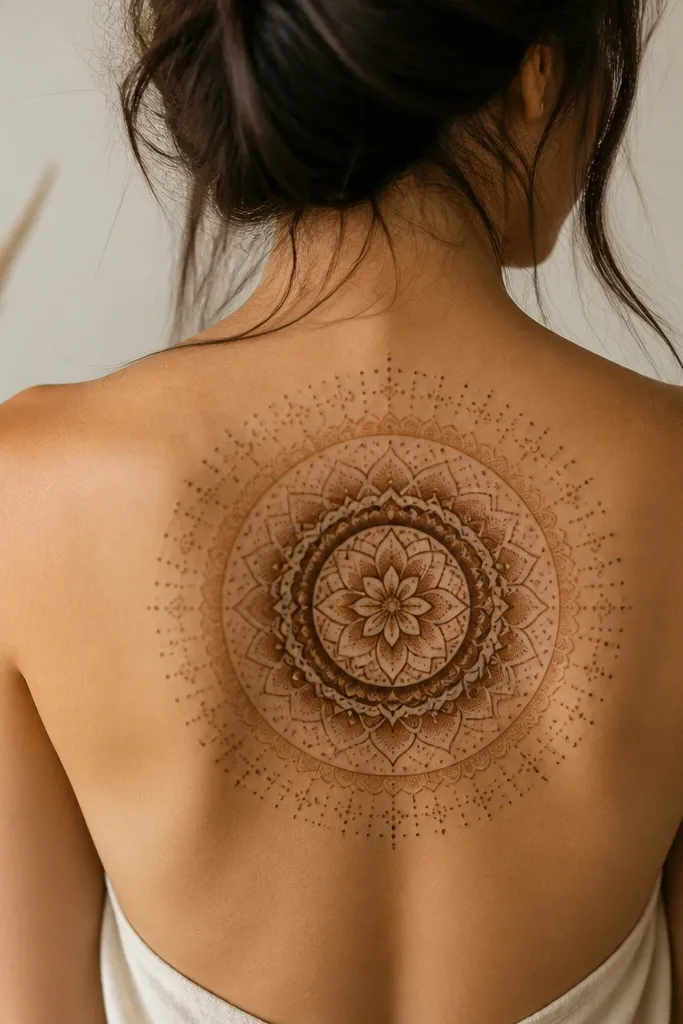
Mandala halos cover because the concentric rings give lots of places to tuck in old lines. A warm sepia gradient keeps it cozy and avoids the cold look of pure black-and-gray. Dot clusters help fill micro-gaps where old ink might otherwise peek.
Place the mandala so the center sits over the thickest old ink, then let the outer ring extend 1 to 2 cm beyond the old tattoo edges. Ask for ring shading that fades outward, not a hard stop. Keep line thickness varied - thicker lines at the center, thinner lines near the edges.
Pro tipIf you're worried about patchy old ink, ask for more dot clusters in the areas where you see uneven fading.
AvoidDon't request a fully black mandala - it can look like a heavy circle instead of a cozy halo.
10. Warming Spellbook Pages With Burnt Paper Edges
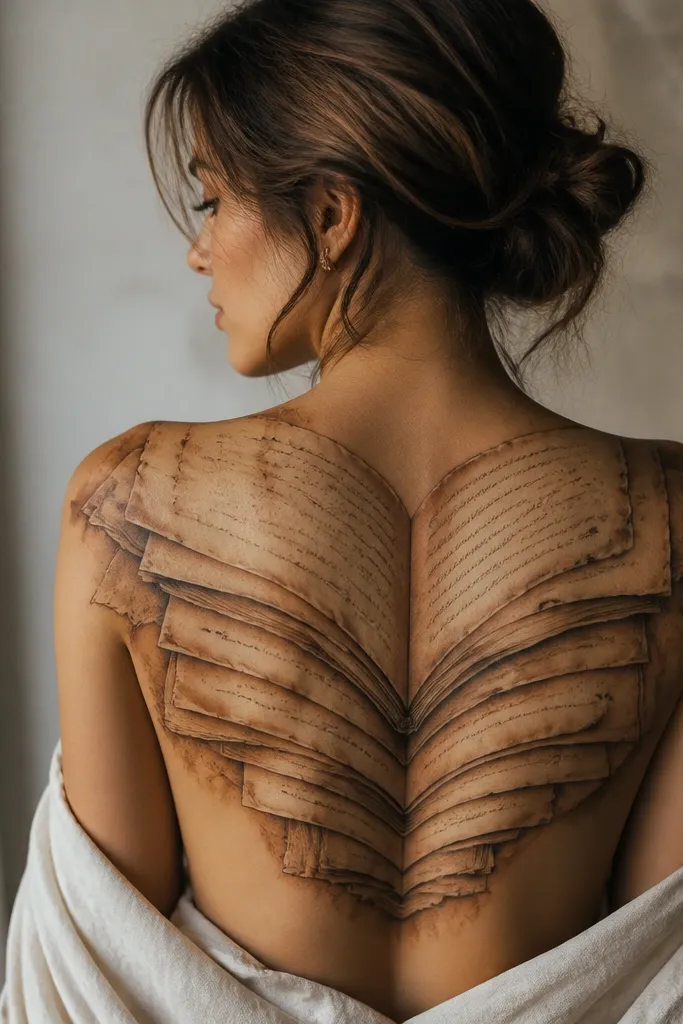
This reads cozy because it looks like aged paper, not a dark symbol. Burnt paper edges help bury older ink while keeping the center lighter and airy. Layered pages let your artist overlap shapes to cover old lines without needing full blackout.
Place the book slightly diagonal across the shoulder blade so the page edges naturally overlap where the old tattoo is darkest. Ask for speckled texture along the burnt edges, and keep the inner "writing" lines faint and thin. Use a warm tan base wash so the whole piece feels like one surface.
Pro tipRequest that the darkest old ink sits under the page shadow - shadows hide better than flat fills.
AvoidAvoid crisp, black "text" lines - they can make the cover-up look like a tattoo copy instead of a new composition.
11. Cloud Sweater Outline With Puffy Stitch Shading
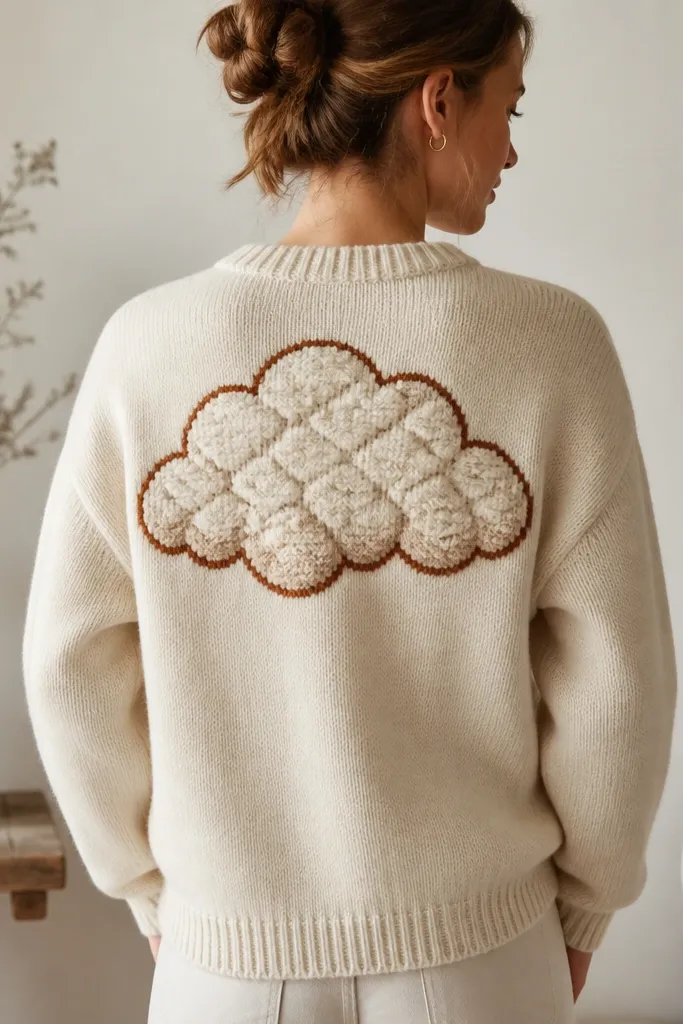
Sweater-stitch texture makes the tattoo feel cozy even when it's dark underneath. The cloud outline gives a clear shape to hide old ink, and the puffy stitch shading creates depth that distracts from whatever you're covering. Warm taupe and cream highlights keep it from looking like a simple black outline.
Choose a cloud size that fully covers the old tattoo, with the outline extending about 1 cm past the edges. Ask for stitch texture in small repeating bumps, but keep the bumps larger in the darkest areas so they bury more. Add a few thicker stitch clusters near the top to balance the composition.
Pro tipIf your old tattoo is patchy, put the brightest cream highlights on the stitches - they help unify the surface visually.
AvoidDon't do tiny, uniform dot stitches everywhere - it can turn into a flat speckle that doesn't cover enough.
12. Cozy Crescent Moon With Starry Dust Fade
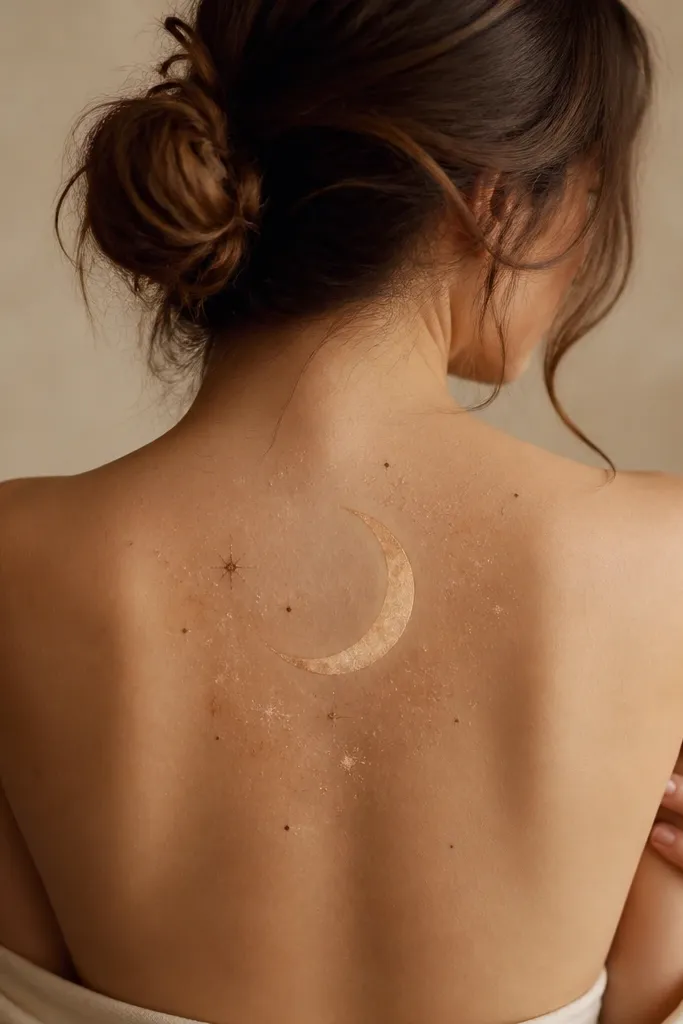
Crescent moons work for cover ups because the curve hides straight lines and old borders. Starry dust uses tiny gradients that blend uneven old ink into the new texture. Warm cream and light gold keep the vibe cozy instead of gothic.
Center the moon over the densest old ink, then let the star dust fade outward so it extends 1 to 2 cm past the old tattoo edges. Ask for star dots that vary in size - bigger dots cover more, small dots soften the edges. Keep the darkest dust concentrated near the inner moon curve.
Pro tipBring a reference where the moon has a smooth gradient - crisp banding makes cover-ups look patchy.
AvoidAvoid a fully black night sky fill - it erases the cozy look and makes the old tattoo harder to disguise.