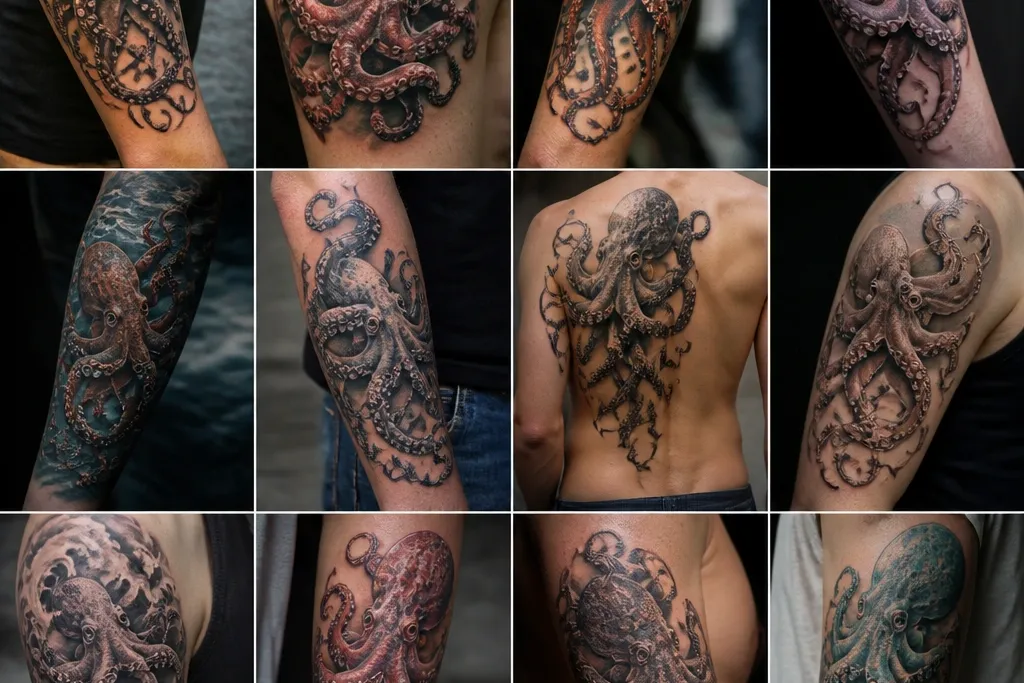
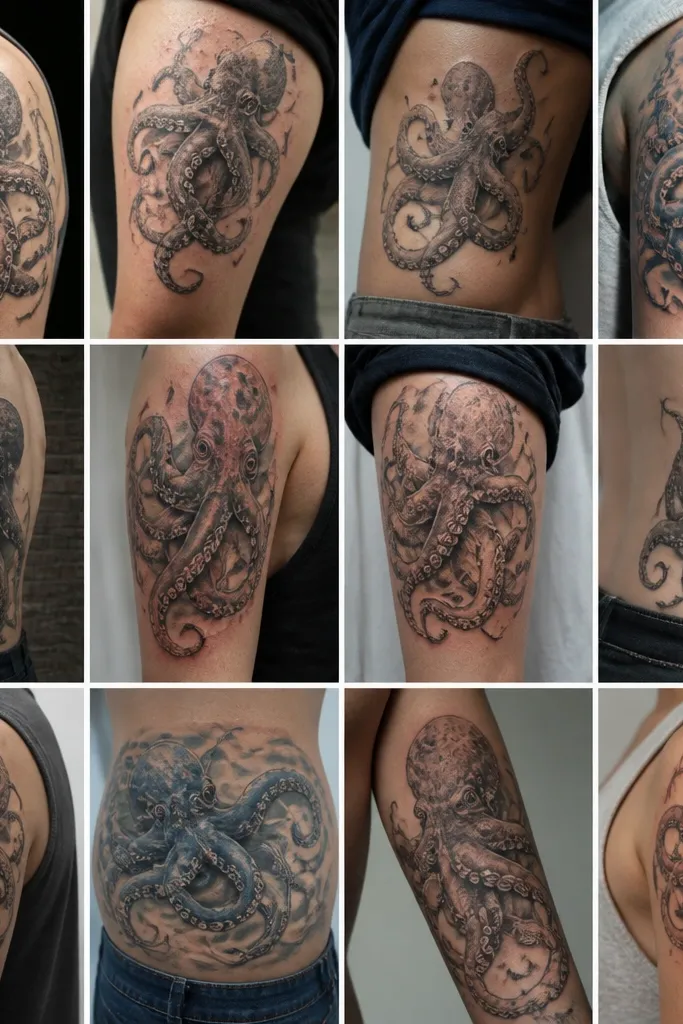
1. Back-of-Upper-Arm Octopus with Wet Ink Tentacles
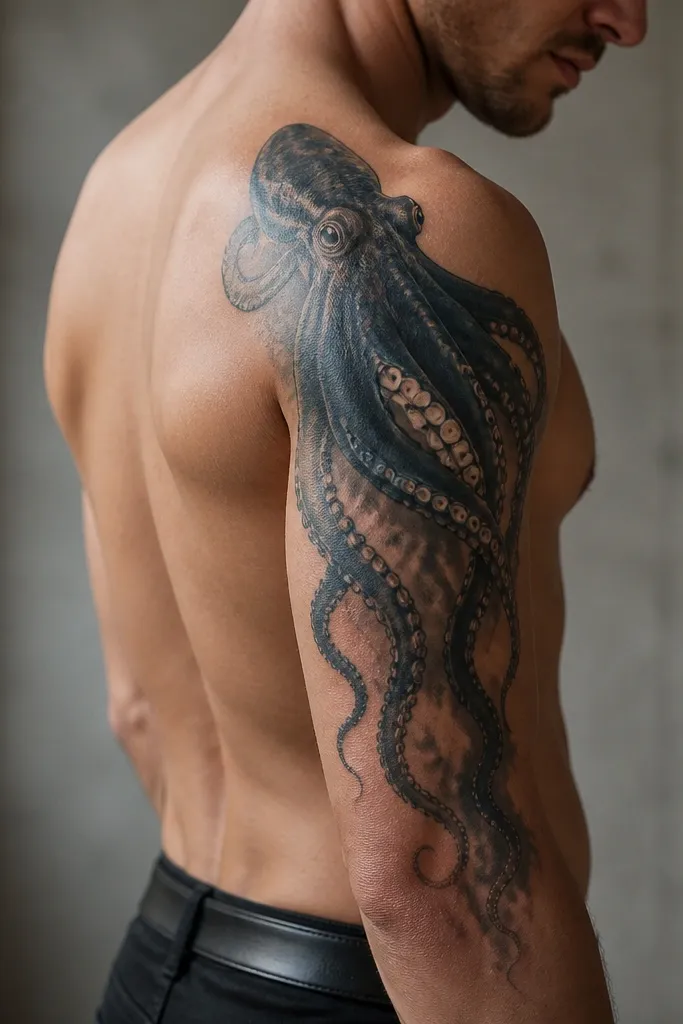
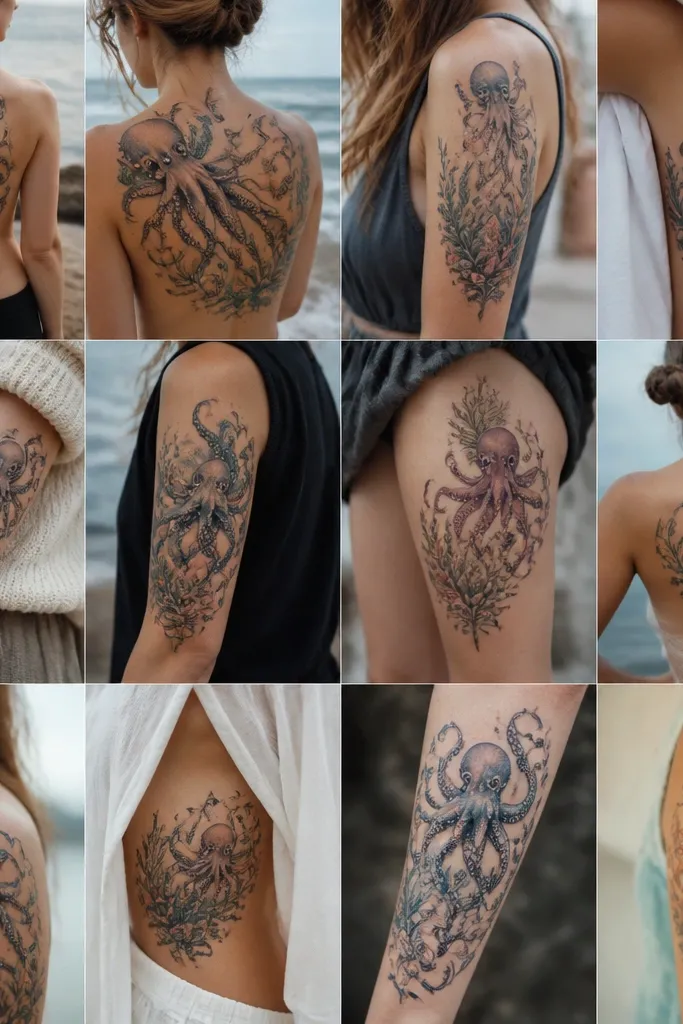
This placement lets the artist wrap tentacles along the arm's natural curve. The glossy look comes from a tight dark outline around the head, then smooth gradients that shift from deep teal-black to muted green-gray. The suckers read as raised because the rim is lighter than the center, and the tentacle edges fade into soft smoke. I like adding a faint "wet" highlight on the tentacles so the whole tattoo looks like it's catching a flashlight beam.
Target size: about 7-9 inches long from shoulder to mid-bicep, with tentacles tapering as they go. Ask for the head to sit slightly higher than center so the tentacles can fan out without crowding the elbow area. If you're doing color, keep it restrained: teal, desaturated purple shadows, and warm off-white for sucker rims.
Pro tipAsk the artist to mark the highlight direction on your skin with a washable pen before tattooing.
AvoidAvoid a design that's too symmetrical - octopus tentacles need slight overlap and stagger to look real.
2. Forearm Octopus Climbing the Radius
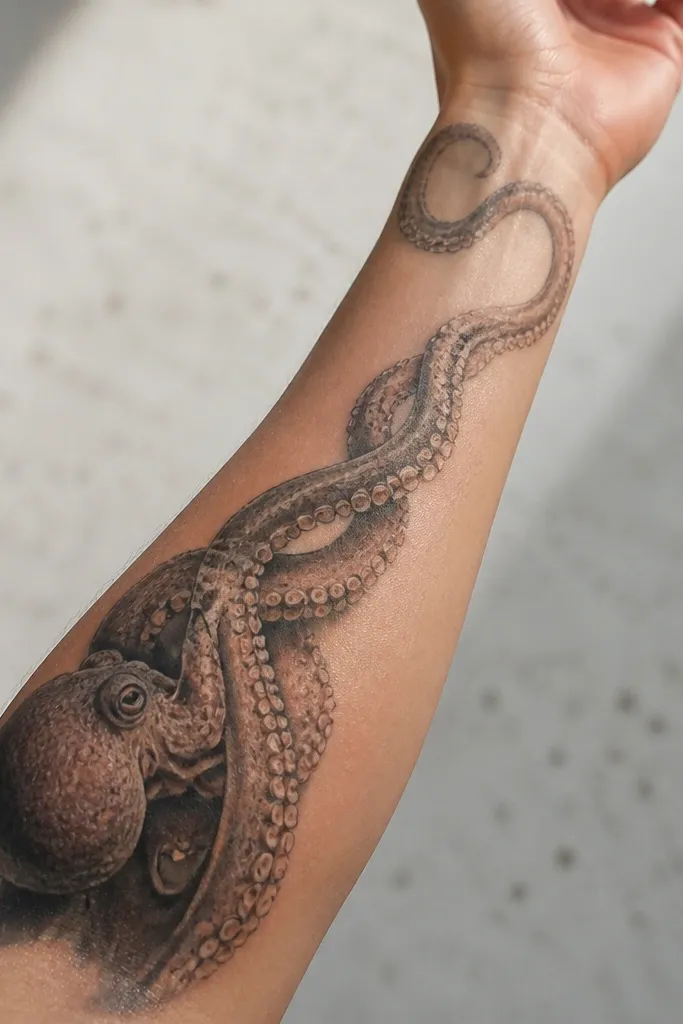
Forearm realism works because the skin has a clean vertical axis. When the artist shades from elbow-side shadows into wrist-side highlights, the octopus looks like it's actually pressing against your skin. Keep the head slightly angled so one side is darker and the other side catches light. This idea also looks great because the tentacles can stretch across multiple muscle planes without looking stretched.
Size it around 6-8 inches, with the tentacle tapering to a thin end near the wrist. The artist should place the head near the middle of the forearm so you don't lose detail at the elbow crease. Use a limited palette: black/gray for structure, plus a subtle green-gray wash for depth.
Pro tipPlan for a slightly "open" spacing between tentacles so the suckers don't blur when your forearm flexes.
AvoidDon't pack every sucker at the same size - realism needs variation in scale as tentacles curve away.
3. Inner-Arm Octopus with Minimal Background Smoke
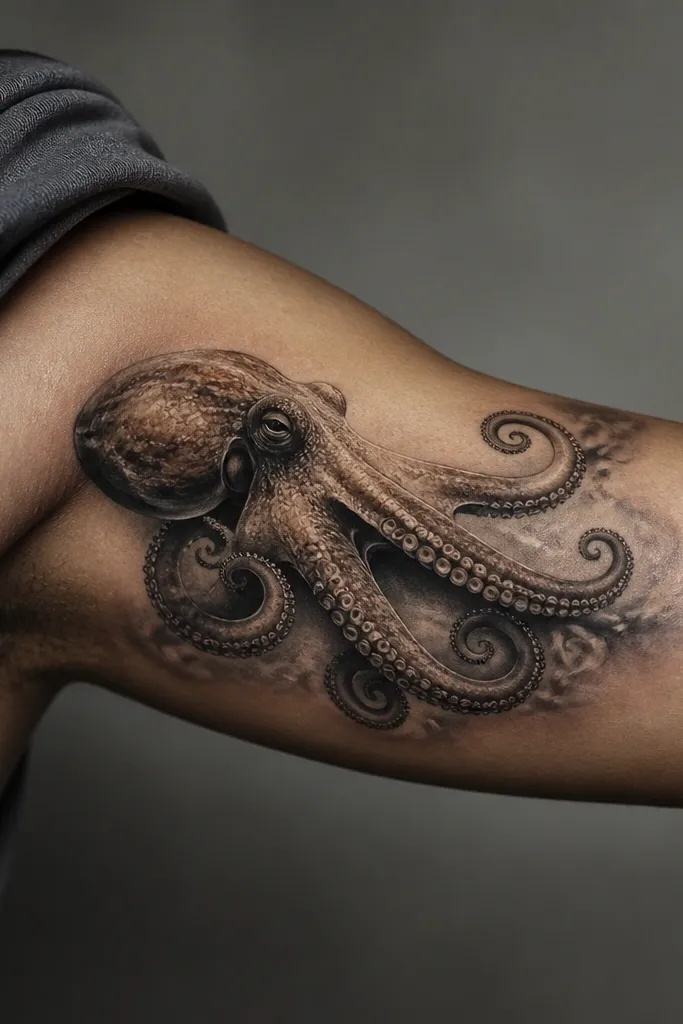
Inner arm placement is about control. With minimal background, the artist can focus on the octopus itself: crisp head edges, smooth tentacle gradients, and clean sucker rims. The smoke should be light and localized so it doesn't turn into a gray haze that flattens the tentacles. This is the kind of design that looks sharp in daylight because the contrast stays readable.
Size: about 5-7 inches on the inner bicep with tentacles curling toward the elbow but not crossing it. Ask for negative space around the head so the silhouette stays crisp. For color, keep it to muted sea-green shadows and a tiny warm highlight on sucker rims.
Pro tipIf you bruise easily, ask the artist to schedule a touch-up session - inner arm detail benefits from crisp second passes.
AvoidAvoid heavy black backgrounds on inner arm - it makes fine suckers look muddy.
4. Ribcage Octopus Draped Like Fabric
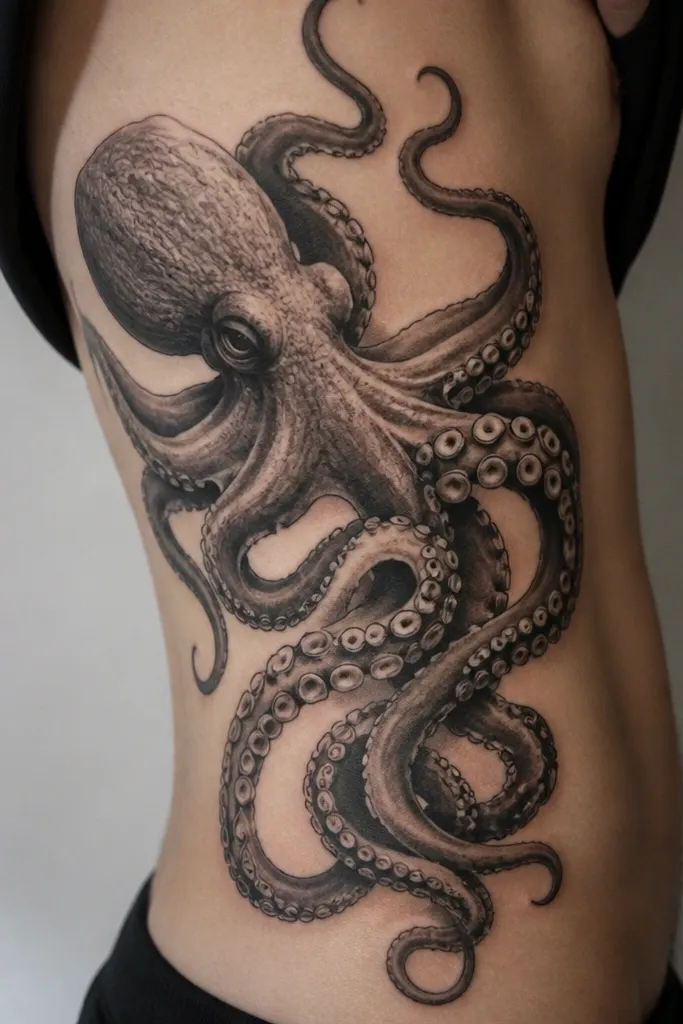
Ribs let the tentacles look like they're draping over structure. The best version has shading that follows rib direction so highlights curve, not straight-line. I like a head-on angle that's slightly tilted so one tentacle crosses the darker rib shadow first. The result reads dimensional even when you move because the gradients match your body's shapes.
Plan a vertical span of 8-12 inches depending on your torso length. The artist should leave room for breathing - don't force the tentacles to land too close to the hip bone. For realism, keep tentacle tips smoky but not fully filled; let some skin show through for depth.
Pro tipWear a tight tank to your appointment - you want the artist to see how the design sits when you're upright.
AvoidSkip a super-detailed sucker map if the design covers too much of the flattest rib area - it blurs as your skin expands and contracts.
5. Side-Shoulder Octopus Peeking Around the Deltoid
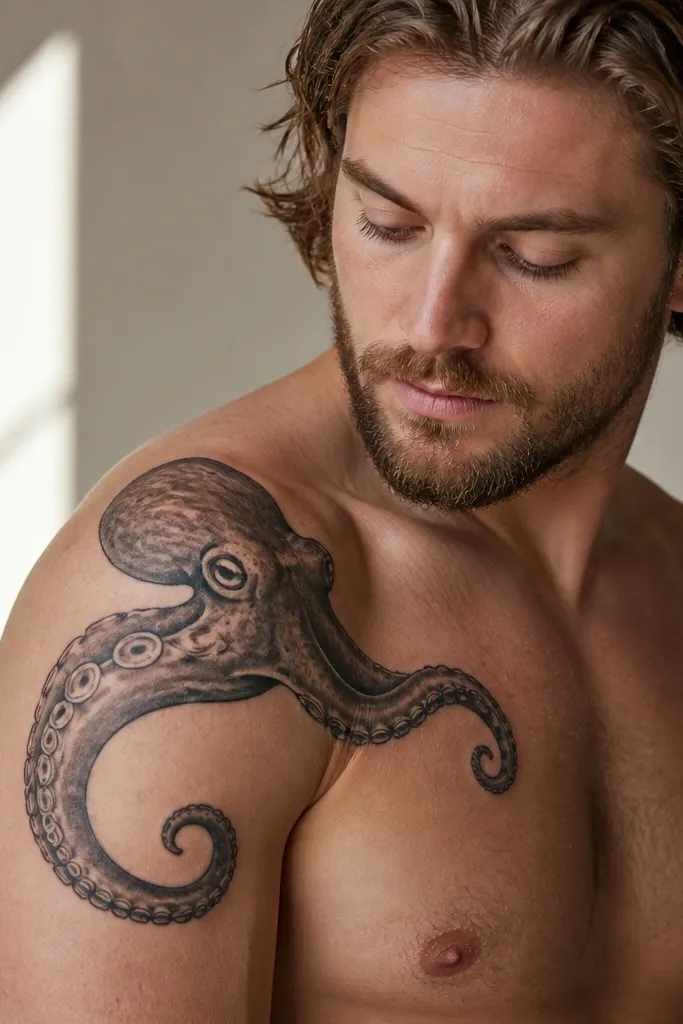
This is a placement sweet spot for realistic "peek" designs. The deltoid curve helps the artist create a believable highlight sweep across the head. Keep the tentacles thicker near the base and thinner as they wrap - that mimics real tissue taper. If you add a faint seaweed-green wash in shadows, the tattoo looks alive without turning cartoonish.
Size around 4-6 inches total, with the head about 2-2.5 inches wide. Place the head so it doesn't sit directly over the shoulder seam - it reduces distortion when you raise your arm. Use black/gray first, then add a small amount of teal in shadow pockets only.
Pro tipAsk for a tiny specular highlight on the head - a small off-white spot makes the whole thing read glossy.
AvoidAvoid straight tentacle lines that don't curve with your shoulder - straight lines kill the illusion.
6. Thigh Octopus with Photoreal Sucker Texture
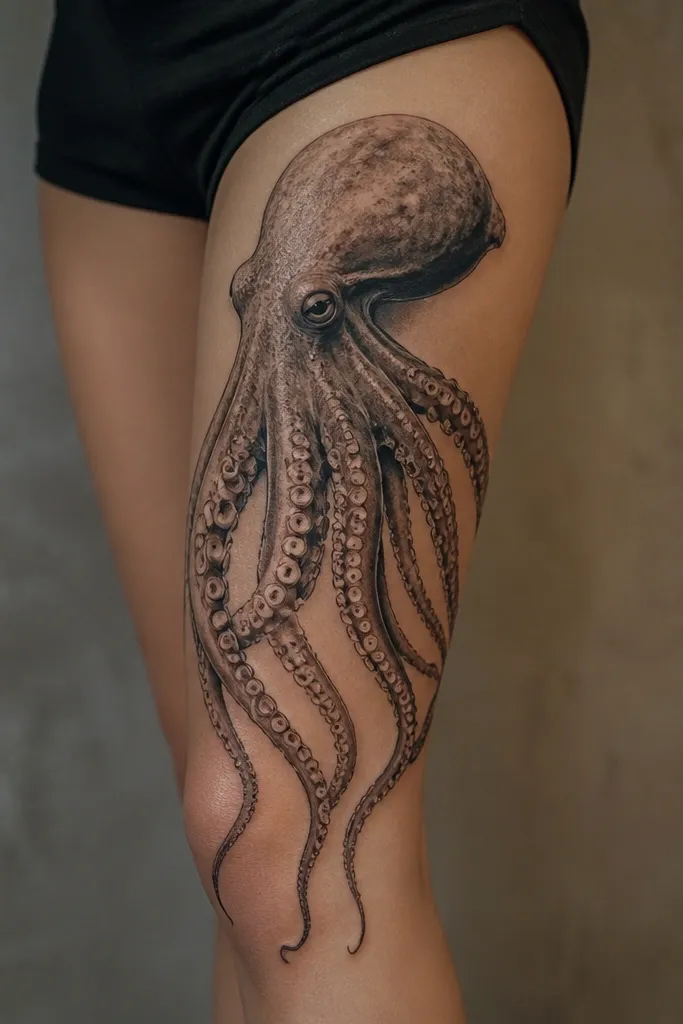
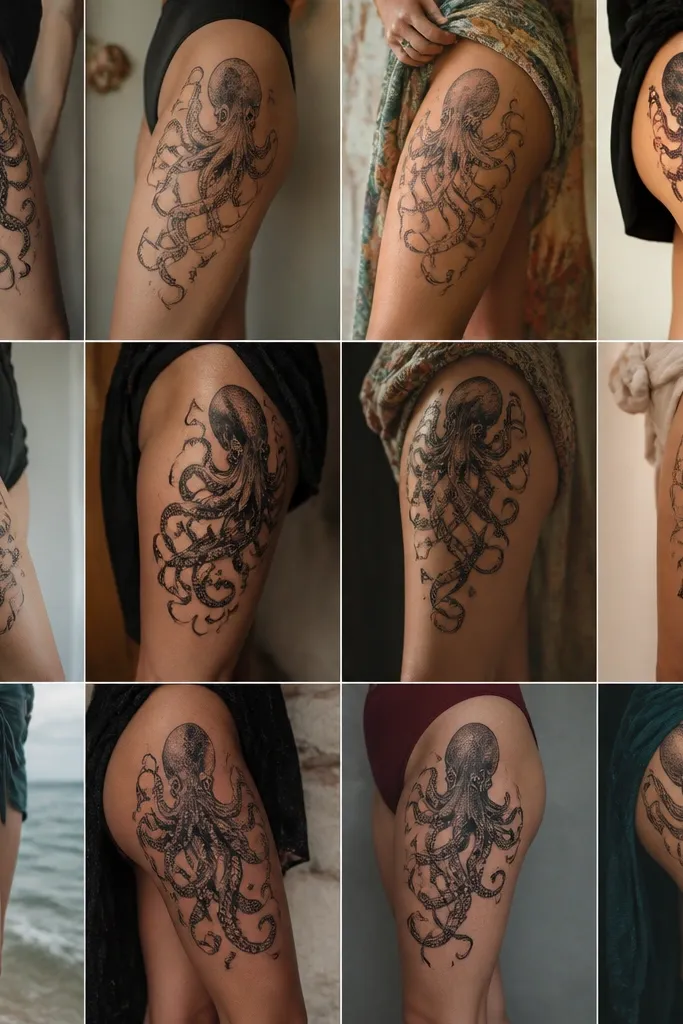
Outer thigh gives you space for true sucker texture. With realism, the suckers need micro-contrast: darker center, lighter rim, and a tiny shadow under each sucker edge. The artist can also build tentacle thickness using smooth midtone transitions, so it looks like it has weight. Add a faint smoky gradient at the far tips to keep the eye moving.
Size: 10-14 inches is where realism really pops on thigh. Position the head slightly higher than you think so the tentacles have room to fan without flattening. For color, use desaturated teal/green only where light wouldn't hit directly - it makes shadows feel underwater.
Pro tipPlan your underwear line before tattooing - you want the lowest tentacle tips to avoid constant friction.
AvoidDon't cram the suckers too tightly - when they're shoulder-to-shoulder they turn into a gray texture blob.
7. Knee-to-Thigh Octopus Wrap (No Background, High Detail)
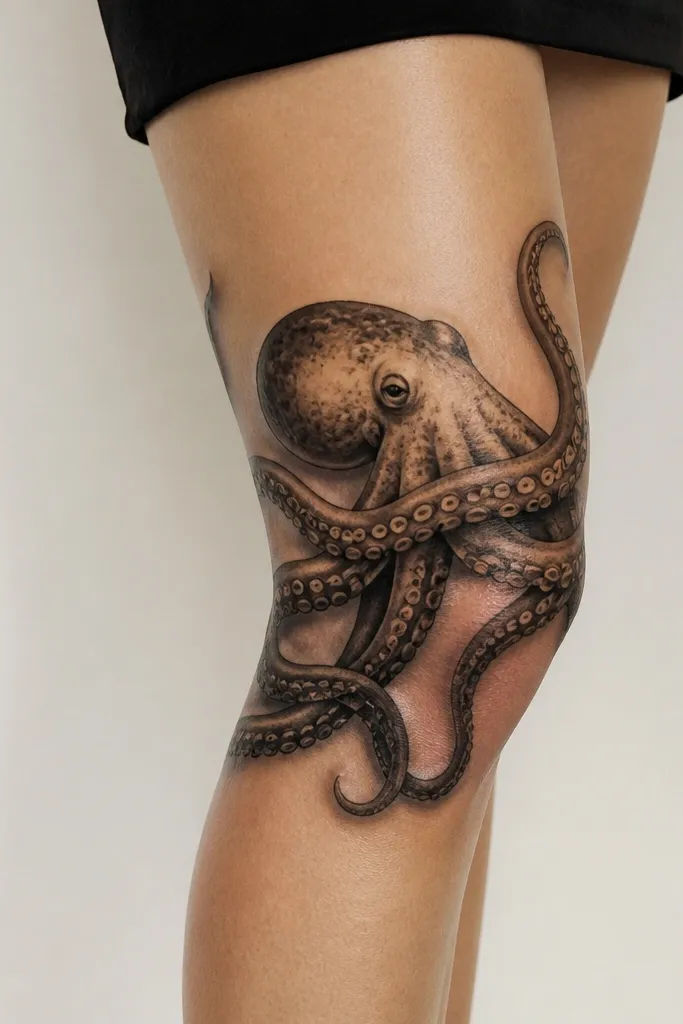
This works because the thigh just above the knee has a lot of movement but still a strong contour for gradients. High-detail realism needs clean edges and tight shading control. The overlapping tentacles create depth, and the lack of background keeps the tattoo sharp. If the artist paints the underside shadows darker, the tentacle layers look stacked like wet strands.
Size: 7-10 inches, with the tentacles wrapping around but not hitting the kneecap directly. Avoid placing the highest detail exactly where you crease hard when sitting. Use mostly black/gray with a small amount of cool-toned teal in deeper shadows.
Pro tipChoose a reference photo with your leg slightly bent - it helps the artist place overlaps where they won't distort.
AvoidAvoid a heavy black outline around the entire octopus - it looks like a sticker on moving skin.
8. Calf Octopus with Backlit Tentacle Tips
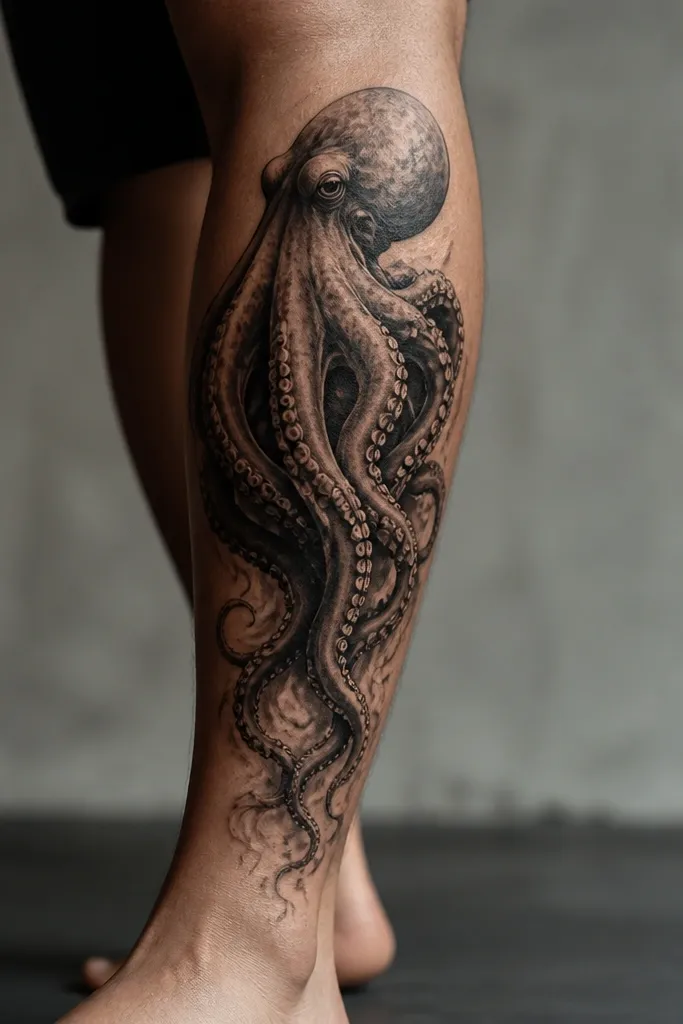
Calf placement is perfect for backlit effects because the skin has a gentle curve and strong light-catching surfaces. Backlit tentacles look real when the artist leaves a thin, lighter edge around tentacles and then deepens the underside shadows. The suckers pop because each rim has a highlight, and the inside shading stays darker. The smoke at the tips should be airy so it doesn't turn into a gray block.
Size: 8-11 inches, head about 2.5-3 inches wide. Place the octopus so tentacles align with calf muscle direction. Ask for a faint teal or blue-gray in shadows only; keep highlights warm off-white so skin tone doesn't look washed out.
Pro tipWear shorts to your consult so the artist can judge how the tattoo reads when your calf is flexed.
AvoidSkip flat, uniform gray tentacles - backlit realism needs a highlight edge and a darker underside.
9. Chest Octopus Head with Soft Underwater Gradient
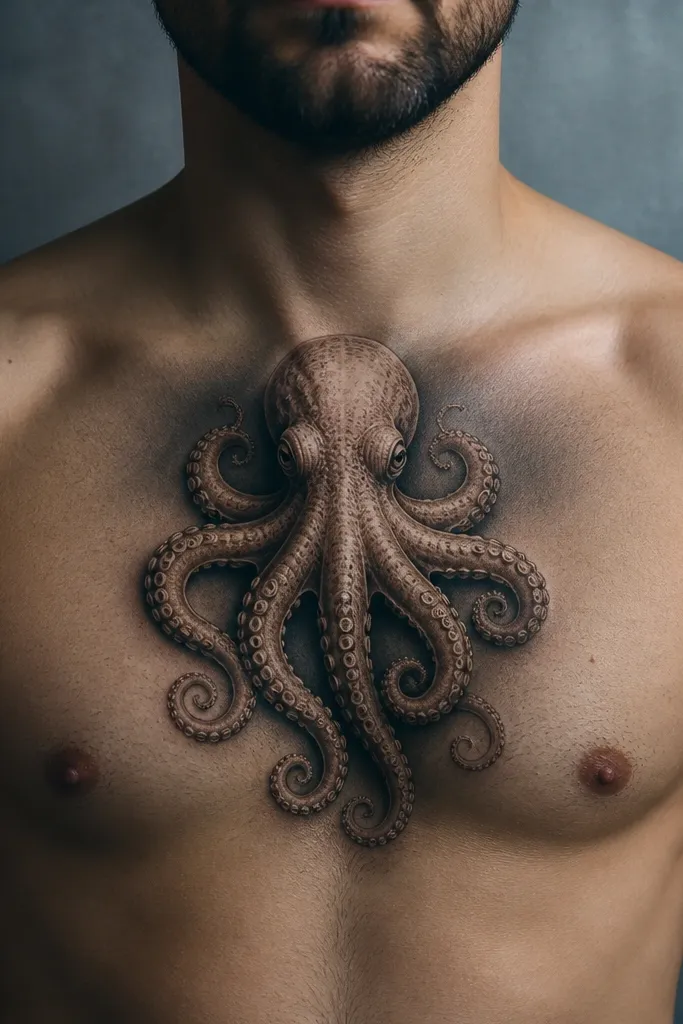
Chest placement lets you build a gentle underwater gradient that makes the octopus feel submerged. I like a centered head with tentacles curling down like a slow breath. The head should have a smooth tonal map - highlight on one side, shadow on the other - so it reads as a form, not a drawing. A blue-gray background wash gives depth without stealing attention from the suckers.
Size: 5-8 inches tall depending on your chest width. Keep the tentacle tips from going too low if you want crisp suckers after months of movement. Use black/gray for structure, then add a thin blue-gray wash in the background only.
Pro tipAsk the artist to do one test patch of shading on a small scrap area if they're new to underwater gradients.
AvoidAvoid a full black chest background - it can make the octopus look heavy and flat.
10. Upper-Back Octopus in a Horizontal Swim Pose
Horizontal back placement helps the artist sell motion - the tentacles look like they're flowing in a current. The shoulder blades give you natural contour breaks, so the shading can wrap without smearing. Keep the head slightly off-center and tilt the body so one tentacle comes forward. This makes it look like it's swimming toward you rather than sitting flat.
Size: 9-13 inches wide, with the head about 3-3.5 inches across. The artist should avoid aligning tentacles perfectly with your spine line - slight offsets look more natural. For realism, request a foggy gray fade on the farthest tentacle edges only.
Pro tipIf you plan to wear backless outfits, ask for the "front read" version so it still looks dimensional from 45 degrees.
AvoidAvoid tiny suckers on a wide placement - they disappear at distance and make the tattoo look busy.
11. Outer Forearm Octopus with Stone-Underwater Background
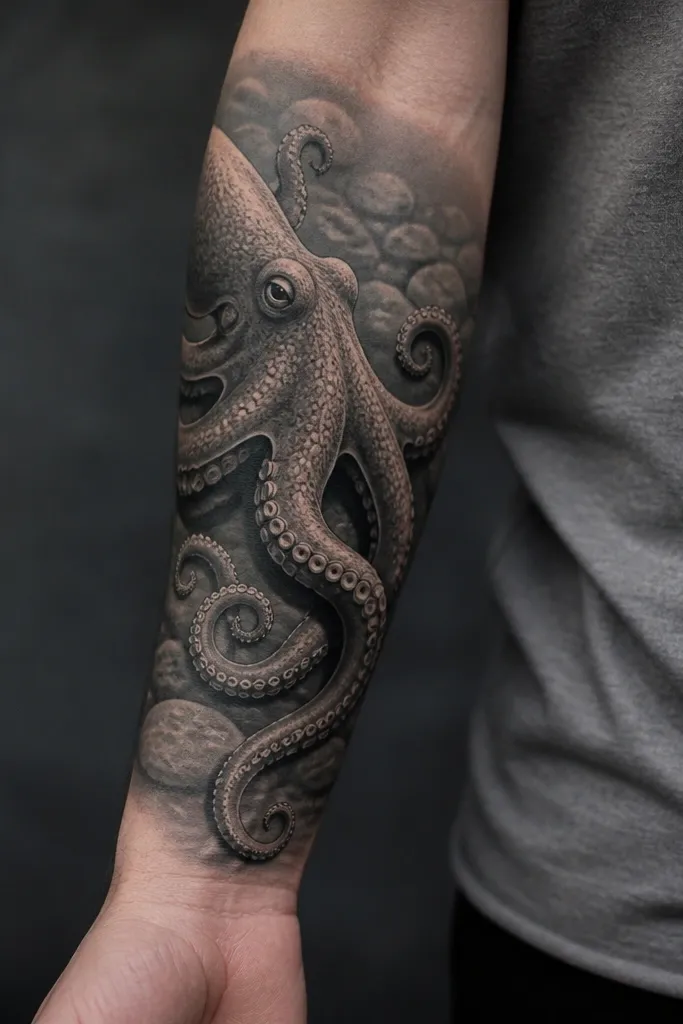
This one works because the background stays secondary. The stones add realism cues - tiny value changes - but the octopus needs the crispest lines and highest contrast. I like a cool gray stone field with soft edges so it doesn't compete with suckers. The tentacles should remain the sharpest element, especially around the head silhouette.
Size: 6-9 inches, place the head near the mid-forearm. Ask for the stones to be blurred with stippled shading, not outlined. Use black/gray first, then add a light teal wash behind tentacles where the stones would be darkest.
Pro tipTell your artist you want the octopus "in front," not "mixed into the background."
AvoidAvoid outlining the stones - outlines make the background look like a separate drawing.
12. Inner Wrist to Forearm Octopus Curl
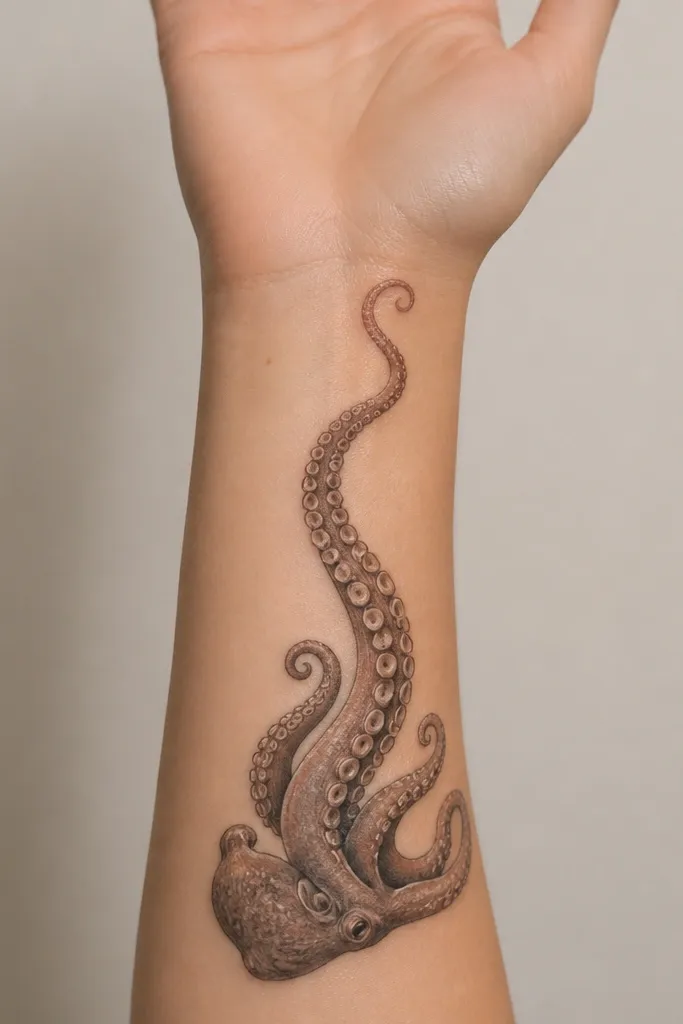
Wrist-to-forearm placement is for people who want detail close up. Realism here comes from careful scaling: the head stays small and the suckers are simplified but still have rim highlights. Because the wrist skin is smooth, gradients can look glossy if the artist keeps transitions tight. Clean background keeps the tattoo readable even when it's partially covered.
Size: 3.5-5.5 inches total. Place the head just above the wrist crease so it doesn't distort when you bend your hand. Use mostly black/gray with a tiny amount of warm off-white for sucker rims.
Pro tipAsk for fewer suckers than you think - spacing matters more than quantity for wrist realism.
AvoidSkip ultra-small dotwork suckers that rely on barely-there ink - they fade fast on wrist skin.