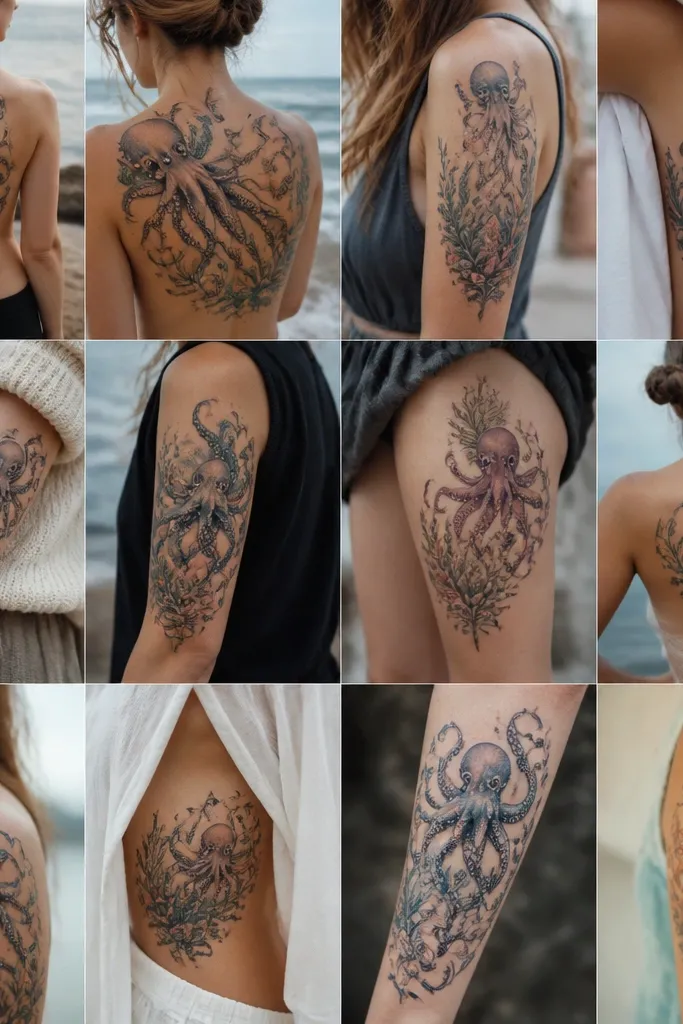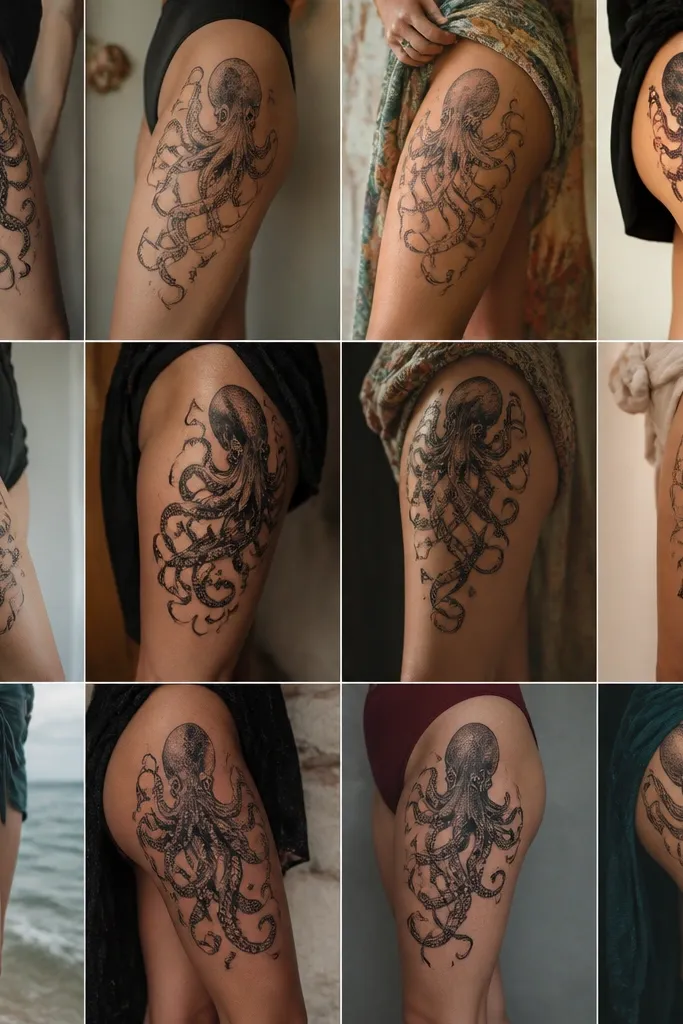
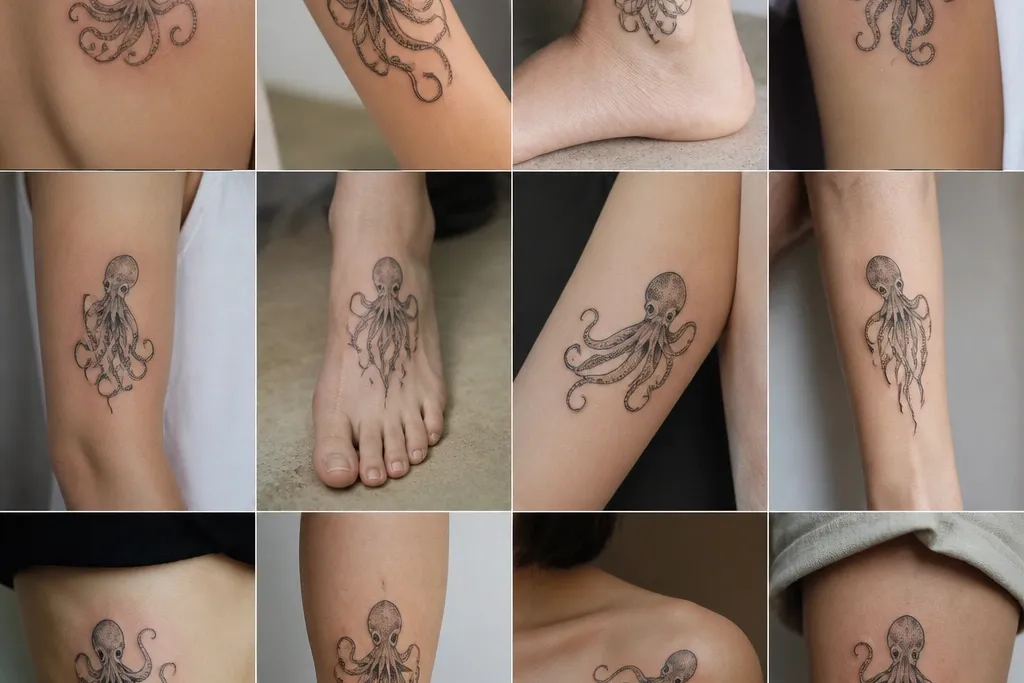
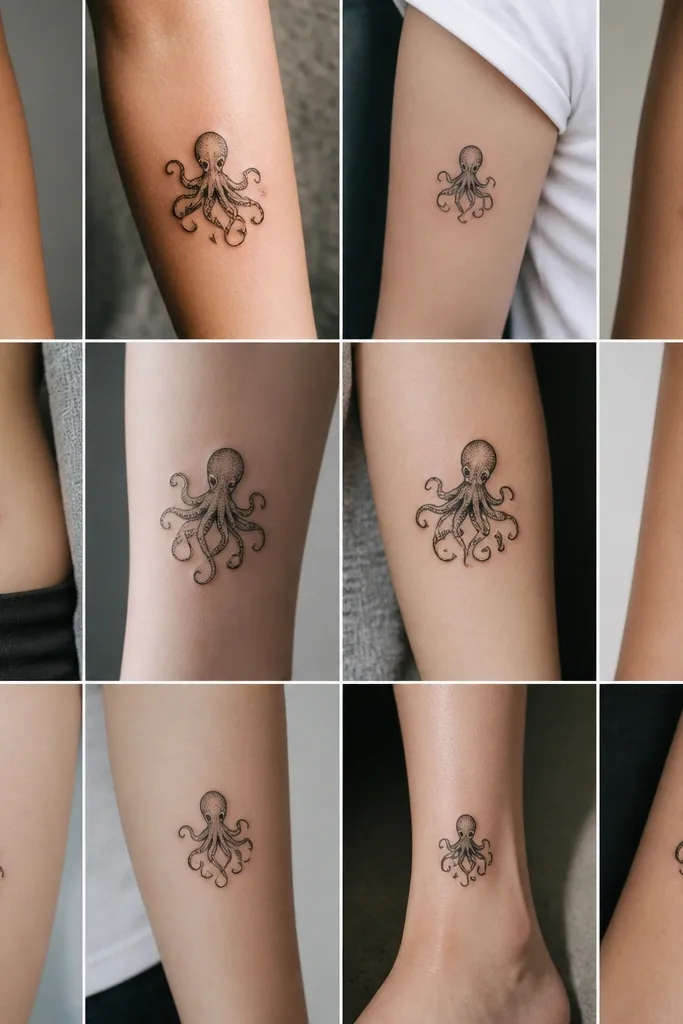
1. Forearm Inner Minimal Octopus with One Wave Band
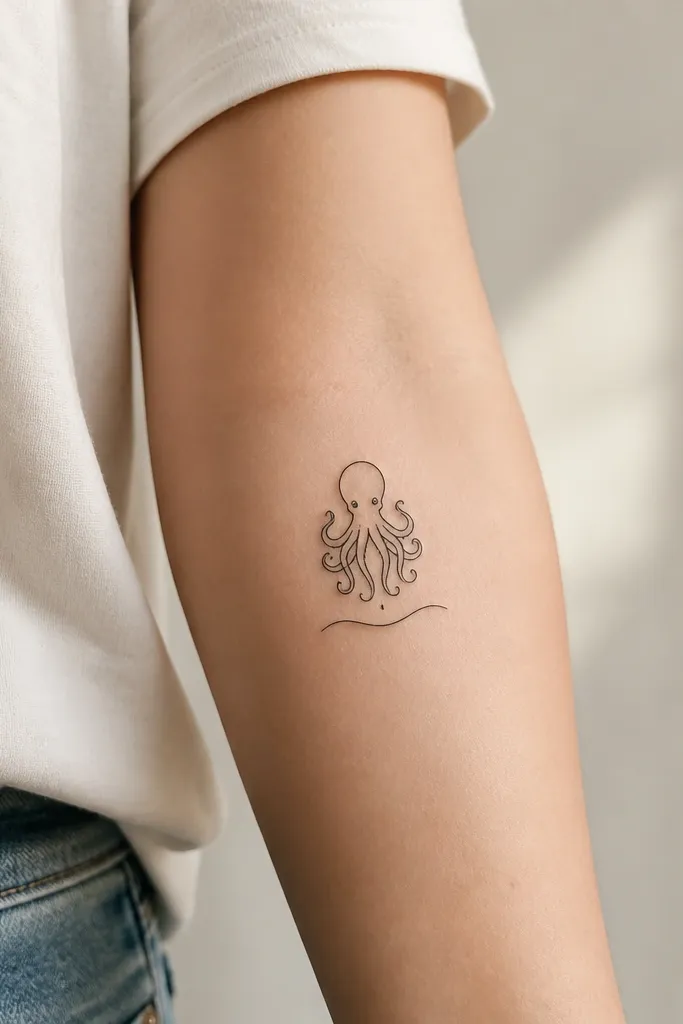
This design works because the wave band gives you one clear base line, so the tentacles don't drift. The head is tight and round, which keeps the tattoo looking graphic instead of busy. Fine black line keeps it simple, and the open space between tentacles stops suckers from turning into a gray blob.
Place it mid-forearm on the inner side where the skin is flatter. Keep the head about the size of a large coin - roughly 2 to 2.5 cm wide - and let the tentacles taper so the bottom ends spread into a gentle V shape. Ask your artist to do suckers as small ovals in a few rows, not dozens of tiny dots.
Pro tipUse a thin line for the wave band only, and avoid adding extra bubbles - one wave line looks cleaner on healing.
AvoidDon't pack suckers evenly across every tentacle - that pattern turns into a shaded mass over time.
2. Upper Arm Outer Octopus with Curled Tentacles Frame
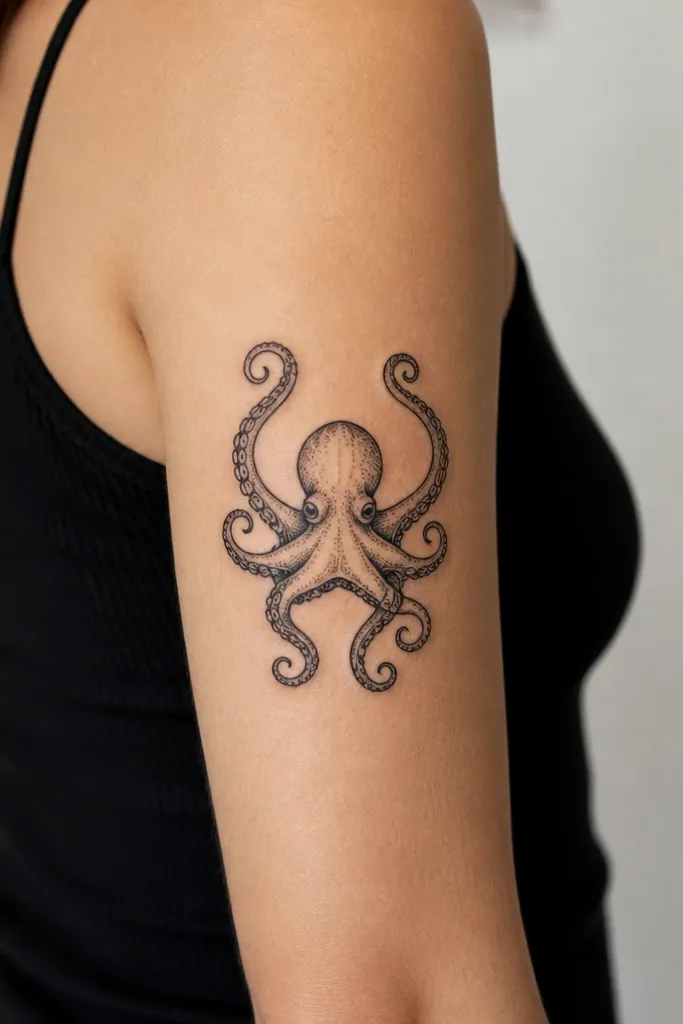
The outer upper arm gives the tattoo room to breathe. Curling tentacles outward creates a border effect, so the design reads like a badge even when it's small. Clean linework plus sparse suckers keeps the "simple" look, and the frame shape makes it flattering when your arm flexes.
Aim for a placement around the middle third of the upper arm, slightly toward the back so it follows the curve. Keep tentacles symmetrical enough that the head feels centered - one tentacle can be slightly longer for a natural look. Request line weight just a touch heavier than the inner forearm style if you want it to hold up over time.
Pro tipHave your artist sketch it on your skin first with a washable marker - you're looking for a balanced frame, not a lopsided blob.
AvoidSkip background elements like seaweed fields - they clutter the space and make the octopus look heavier.
3. Bicep Cap Octopus with Micro Suckers Only on the Front Tentacles
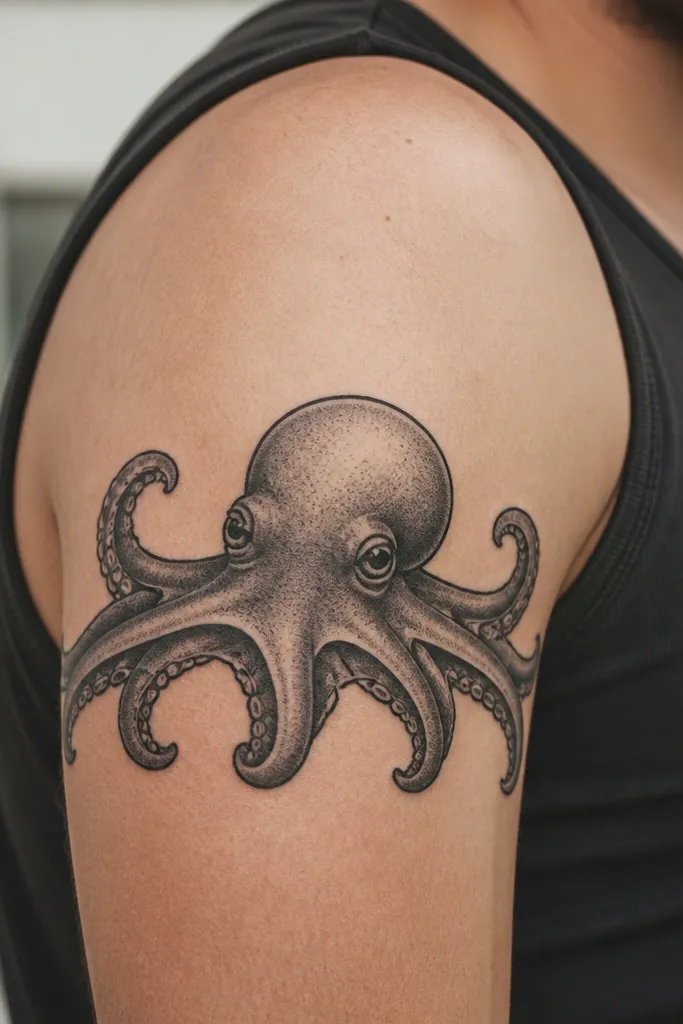
This is the cleanest way to get "detail" without losing simplicity. By limiting micro-suckers to the front tentacles, you create depth cues while keeping the rest graphic. The cap placement also hides uneven healing because the tattoo sits on a thicker muscle area.
Place it high on the bicep where the muscle bulges when you flex. Keep the head at about 2 cm and the entire piece spanning maybe 6 to 8 cm tall. Ask for fewer sucker marks on the back tentacles - think "suggested" rather than fully drawn.
Pro tipTell your artist you want the front tentacles to look crisp and the back tentacles to look cleaner - that contrast is what keeps it from going muddy.
AvoidDon't add gray wash shading to make it look fuller - the octopus already has texture through suckers.
4. Side Rib Octopus with Negative Space Tentacles
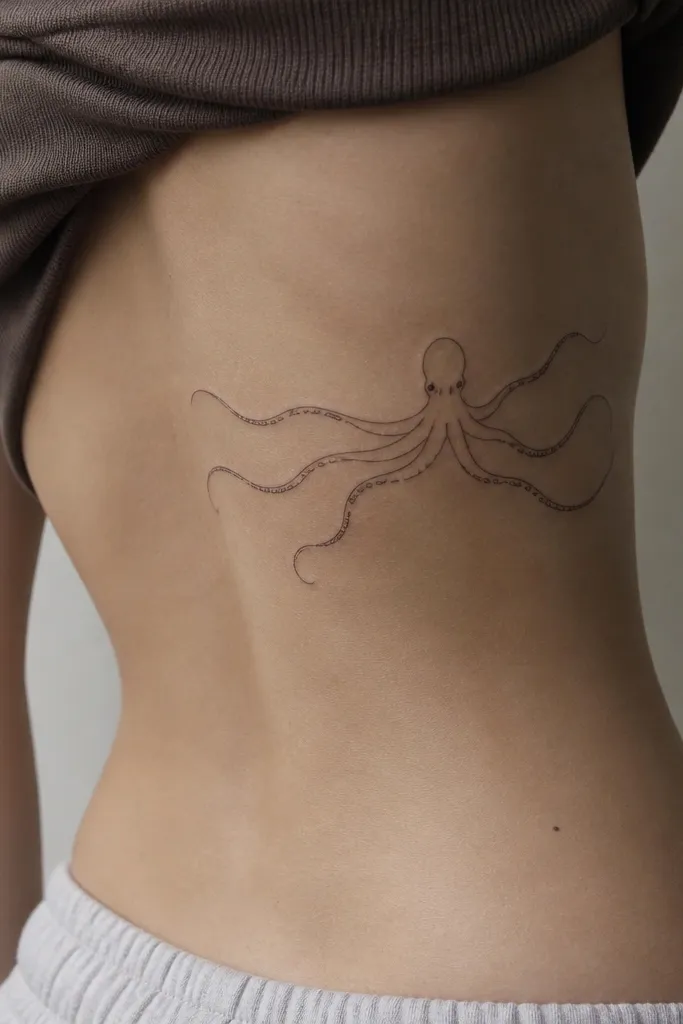
Ribs move, so this tattoo stays simple by using negative space as a design element. The tentacles stretch across the curve instead of drooping, so the lines don't bunch up. Clean gaps make the suckers look intentional rather than like noise.
Place it on the side rib area, not the front abdomen, and keep the design roughly 10 cm across. Use a slightly thicker line than you would for forearm work, and keep suckers to two to three rows per tentacle. If you want the octopus to feel airy, ask for no bubbles or extra sea lines.
Pro tipWear a fitted shirt to your appointment and ask your artist to check the design under that exact lighting - rib tattoos can look different in daylight vs indoor light.
AvoidAvoid dense shading near the ribs - it spreads faster with motion and can blur into a gray patch.
5. Shoulder Dotwork Octopus with One Curved Dot Halo
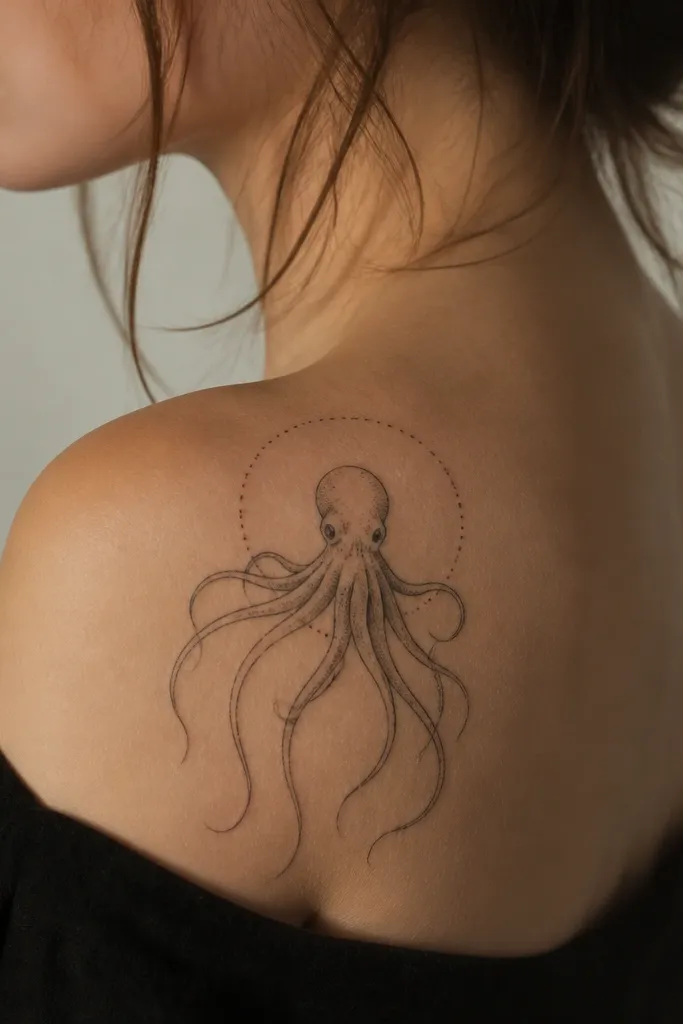
Dotwork halo behind the head gives the tattoo a focal point without turning it into a full background scene. The tentacles stay clean and readable, while the dot arc adds texture that heals with a softer look. It's stylish because it feels graphic - like a logo - not like a detailed illustration.
Place it on the outer shoulder where the skin has less stretch than the inner bicep. Keep the halo arc about the width of the head and stop it early so it doesn't frame every tentacle. Use dotwork in small clusters rather than a full ring.
Pro tipAsk for dot size consistency - if the dots vary wildly, the halo looks patchy after healing.
AvoidDon't add a second halo or extra dot clouds - it kills the clean, simple read.
6. Wrist Side Minimal Octopus with Thick Outline and Few Suckers
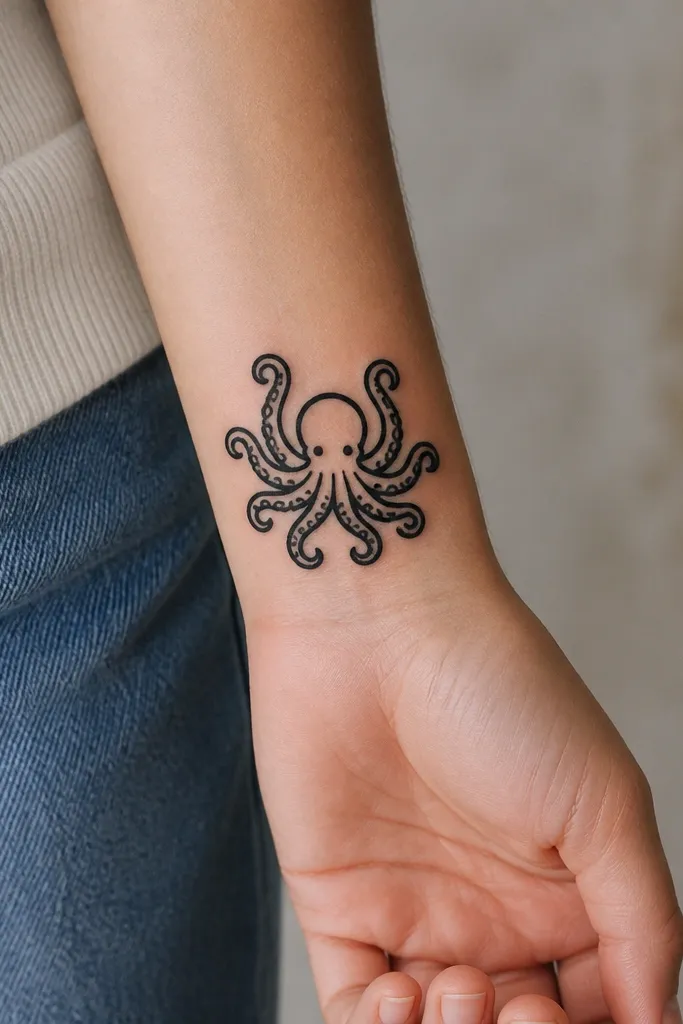
Wrist skin moves constantly, so the clean version needs thicker lines and fewer micro details. This idea stays simple by using bold outline and limiting sucker count. The tentacles curl so the design doesn't stretch too much when your wrist bends.
Place it on the side of the wrist, not dead center over the joint. Keep it small - about 3 to 4 cm tall - and use a compact head. Ask for 2 to 3 sucker ovals per tentacle section rather than a full row of tiny shapes.
Pro tipChoose a placement that's visible when your hand is relaxed, not when it's clenched - wrist tattoos look different depending on tension.
AvoidSkip fine line only on wrists - it often fades or blurs into gray.
7. Ankle Outer Octopus with Minimal Sucker Pattern and Curved Base
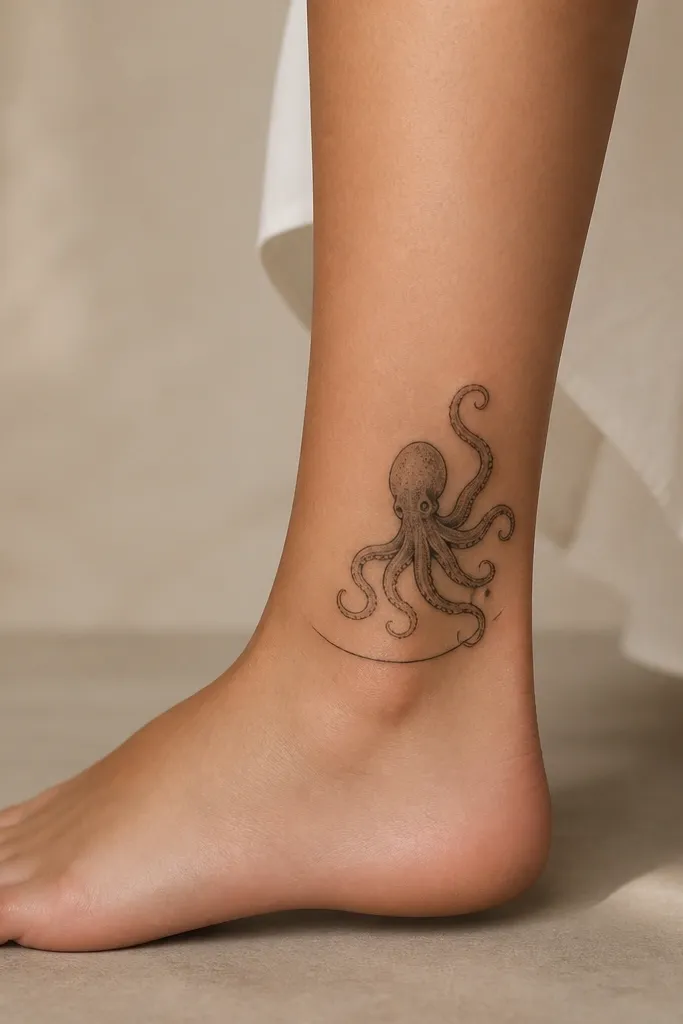
Ankle placement works when you treat it like a curved sticker. The tentacles wrap the ankle shape, and the curved base line gives a clean ending point. Fewer suckers keep the design from turning into a textured smear where skin stretches.
Place it slightly above the bony bump, on the outer ankle curve. Keep the design about 4 to 6 cm, with tentacles that arc around rather than reaching straight down. Ask for slightly thicker lines than forearm fine line.
Pro tipWear a tight sock to your touch-up check - it shows how the tattoo will look under real fabric and light.
AvoidAvoid shading gradients near the ankle - they blur and look uneven after healing.
8. Calf Outer Octopus with Clean Tentacle Ladder Composition
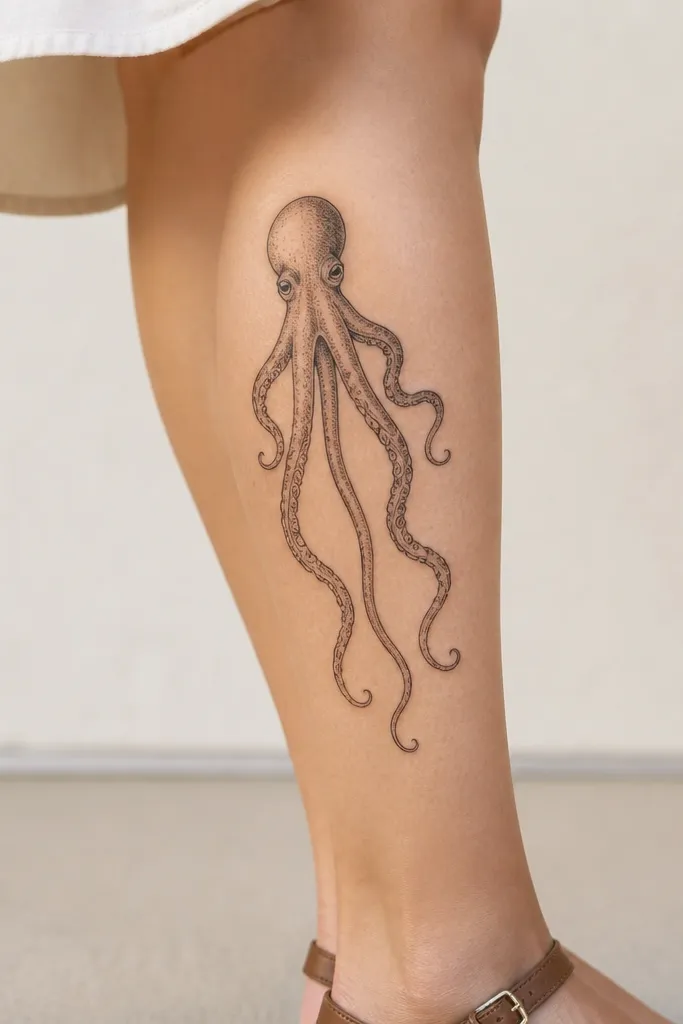
The calf is forgiving, and this composition uses that space to keep everything readable. Even spacing creates rhythm, and the ladder-like tentacles keep it from looking chaotic. The suckers are present but controlled, so the tattoo stays crisp rather than gritty.
Place it on the outer calf mid-height where you have a smooth curve. Make the head about 2.5 cm wide and let the tentacles extend 12 to 16 cm tall. Ask for spacing between tentacles to be as important as the lines themselves.
Pro tipIf you want it extra clean, ask for no bubbles - just the octopus and a tiny curved base line under the head.
AvoidDon't overlap tentacles heavily - overlapping creates a dark tangle after healing.
9. Chest Center Small Octopus with Two Tentacles Up
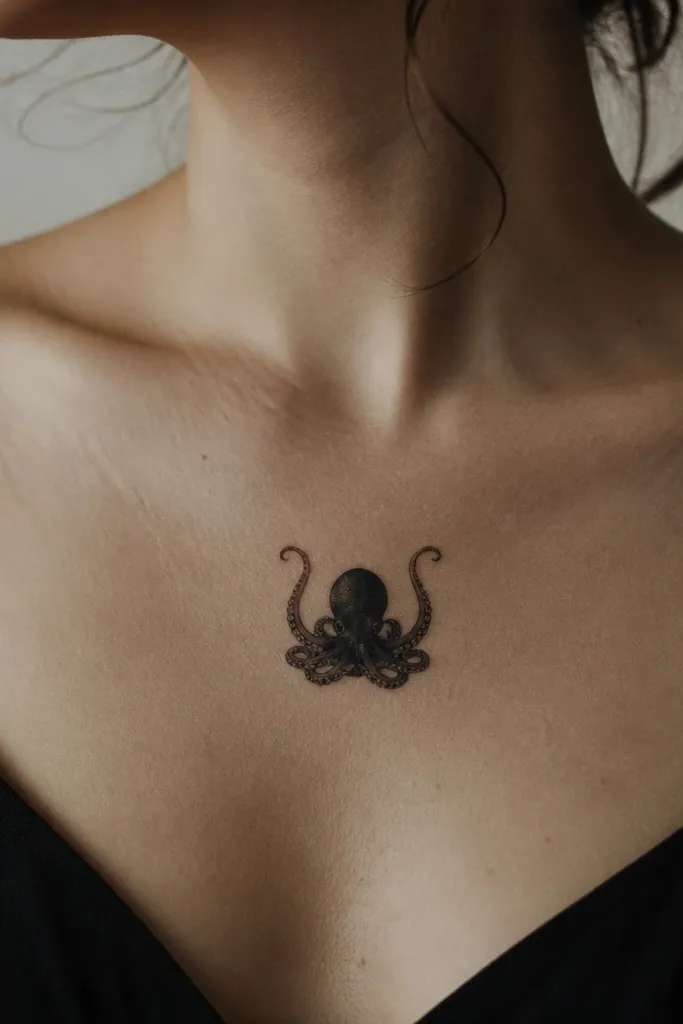
This style looks clean on the chest because the torso is a big canvas and the octopus feels like a focal emblem. Two tentacles up gives movement without clutter. Minimal sucker placement makes the tattoo look intentional even when it's small.
Place it slightly above the sternum so it sits flat. Keep it small, around 5 to 7 cm tall. Ask for shorter tentacles on the sides and a clean head circle, with suckers only on the upward tentacles.
Pro tipTest it with a mirror: if you can't see the head clearly from a few feet away, scale it up by 1 cm.
AvoidAvoid placing it too low over the ribs - motion makes small linework soften fast.
10. Back Shoulder Octopus with Simple Dot Waterline
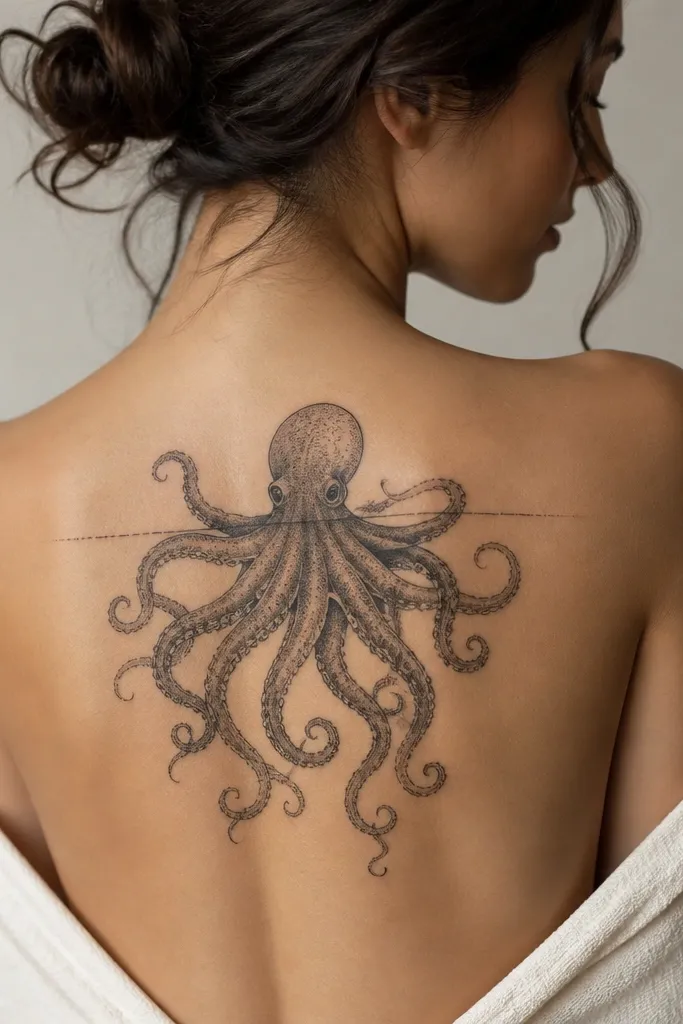
A dotted waterline gives the octopus a setting without turning it into a scene. It reads like a horizon line, so the design stays clean and graphic. The shoulder blade area has a curved surface that helps tentacles look natural and not pasted on.
Place it slightly off the spine on the shoulder blade, not dead center. Keep the design medium-small, about 10 to 12 cm wide. Request a dot waterline that's only as long as the head width plus a little extra - don't stretch it across the whole tattoo.
Pro tipAsk your artist to keep tentacles mostly in black line with zero gray wash - the shoulder shows texture well with line-only ink.
AvoidSkip extra waves behind the tentacles - it makes the whole tattoo feel busy.
11. Half-Sleeve Companion Octopus on Upper Arm with Clean Negative Space Tentacles
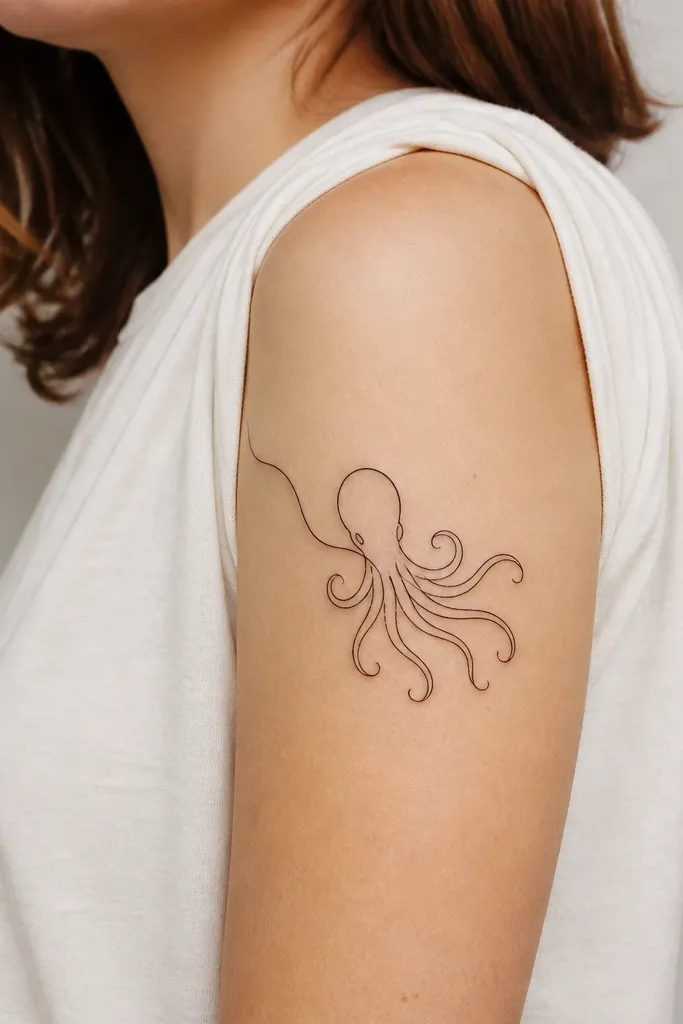
This is for people building a sleeve who still want something simple and readable. The key is connecting it to the sleeve flow with one curved line, not by adding a bunch of extra elements. Negative space keeps it light so it doesn't compete with surrounding work.
Place it where your sleeve has breathing room - usually the outer upper arm or upper inner bicep gap. Keep it 6 to 9 cm tall so it doesn't fight larger motifs. Ask for only a few sucker ovals per tentacle and one clean connector curve.
Pro tipBring a photo of your sleeve plan and ask the artist to match the octopus line weight to the rest of your work.
AvoidDon't shrink it too far - tiny tentacles next to bigger designs look like clutter.
12. Thigh Inner Octopus with Simple Crescent Moon Behind Head
The crescent moon behind the head acts like a clean halo, which makes the octopus look styled without adding sea clutter. Inner thigh skin is flatter in many people, so the line work stays sharp. The contrast between the solid crescent and the open tentacles reads as graphic and modern.
Place it higher on the inner thigh where you have less friction from walking. Keep the octopus head about 2.5 cm wide and the crescent about the same width. Ask for the crescent to be solid black while keeping tentacles line-only.
Pro tipChoose the moon orientation first: if the crescent faces upward, it makes the octopus feel like it's "resting."
AvoidAvoid adding stars or extra symbols - one shape behind the head is enough.