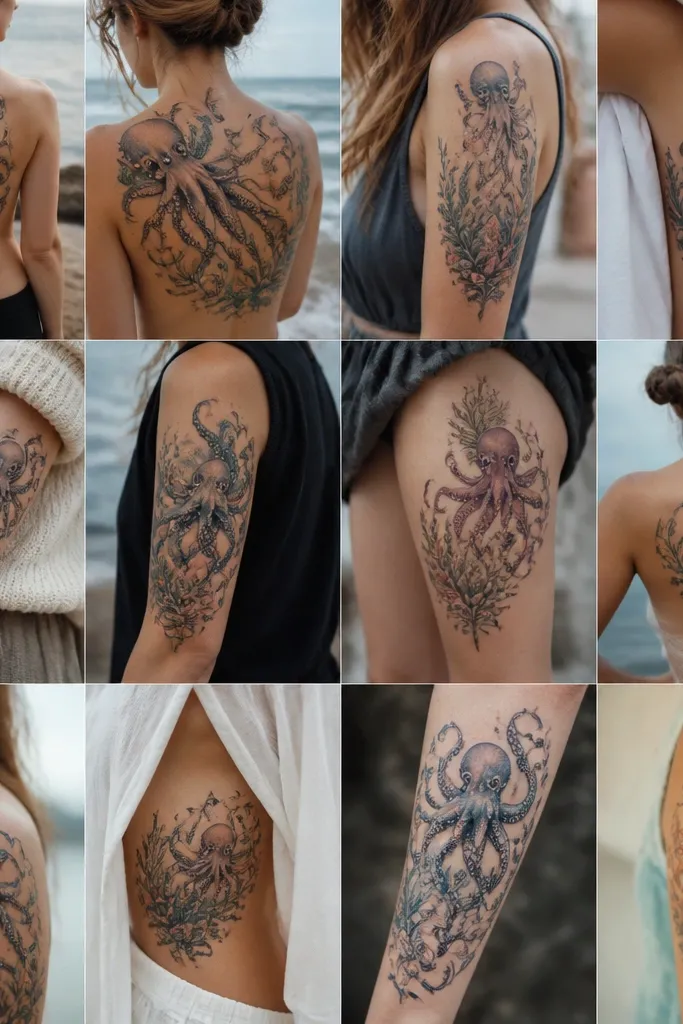
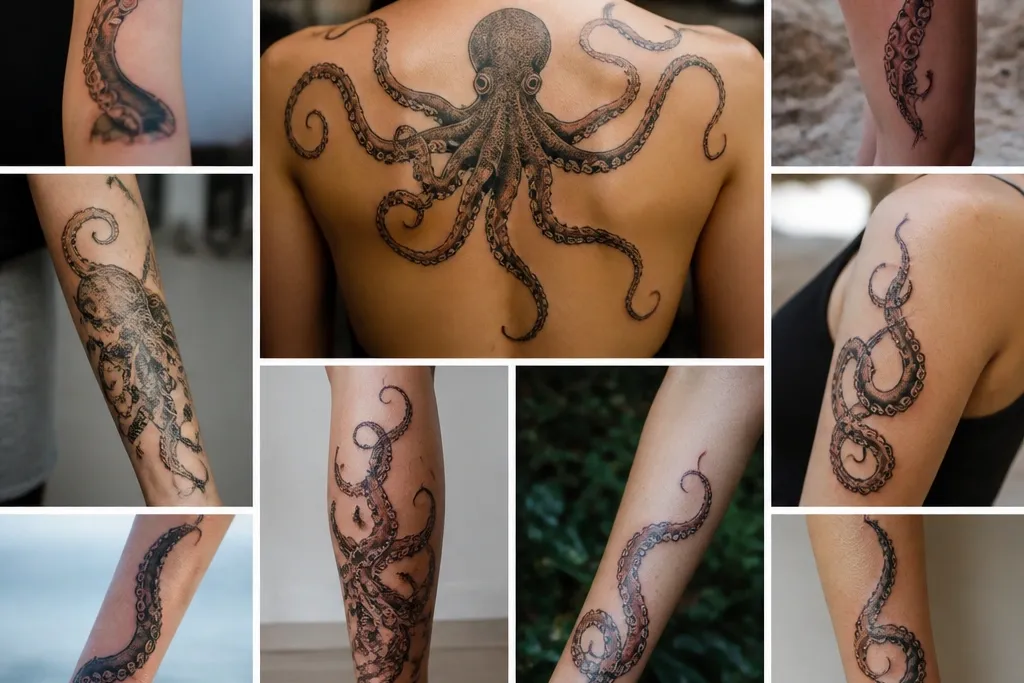
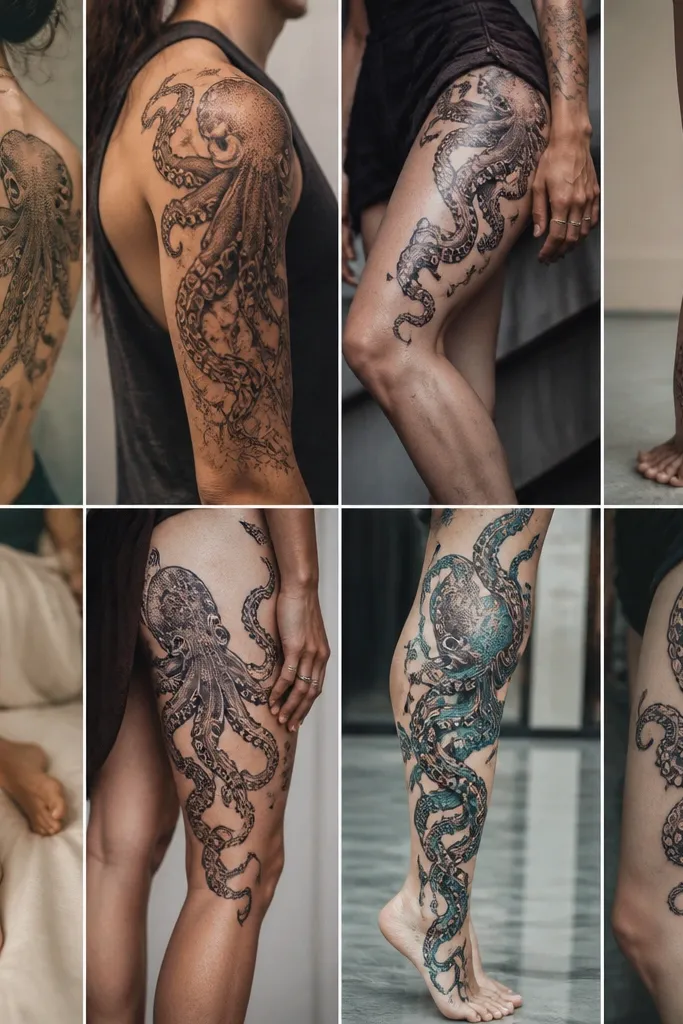
1. Outer Calf Octopus With Vertical Tentacle Flow
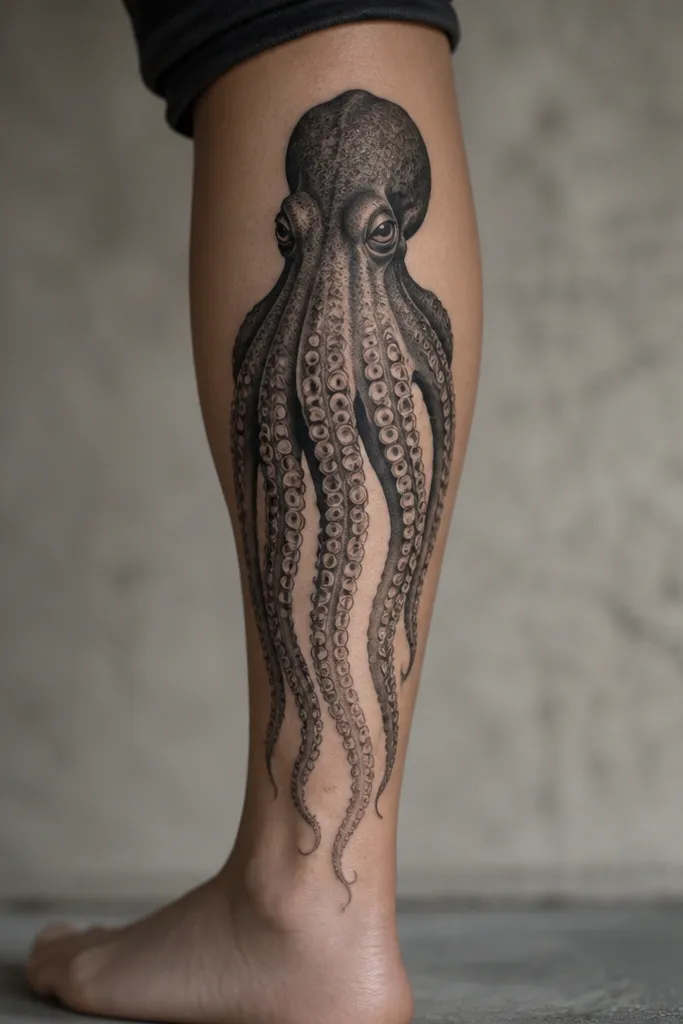
This layout looks bold because the tentacles follow a true vertical path, so the tattoo reads longer than it actually is. The suction cups are done with small, consistent dots and short strokes, which keeps the texture sharp after healing. The gradient is strongest near the calf's outer edge, where light hits as you walk, so it looks like it has depth without heavy color.
Place the head near the outer calf so it sits about 8-10 cm (3-4 in) below the knee. Keep the tentacles about 2-3 cm (0.8-1.2 in) apart at the top, then let them gently taper as they descend. If you want it extra stylish, add a thin dark border line around one or two tentacles for a "graphic" feel.
Pro tipAsk your artist to mock up the flow on your leg while you stand and flex your calf. If the tentacles still look aligned in motion, you're set.
AvoidAvoid wide, heavy tentacles that spread across the calf - they blur faster on curves.
2. Shin Octopus Wrap With Thin-Line Suction Cups
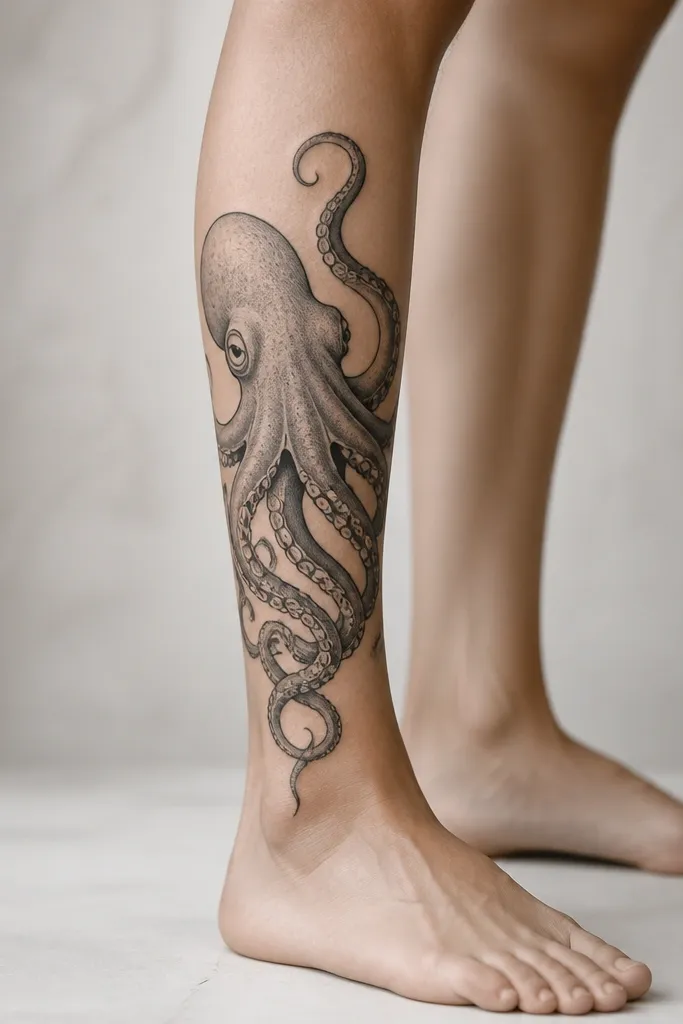
Shin placement makes the tattoo look stylish because the shin is flatter than the calf. Thin-line suction cups look delicate but still bold when the negative space stays crisp. The lighter gray shading gives it a "sketch-to-ink" vibe that stays readable because the suction cup shapes aren't packed together.
Start the octopus head just above the ankle line and build upward about 15-18 cm (6-7 in). Wrap the tentacles around the shin so they curve slightly to the side, not straight forward. Keep linework consistent: thin ovals for cups, thin tapering lines for tentacle edges, and gray only between the lines.
Pro tipWear a fitted sock or tight pants during your fitting and view it in daylight. If the suction cups disappear when fabric covers the shin, the spacing is too tight.
AvoidSkip super-dark full shading on the shin - it turns flat and can look bruised after it heals.
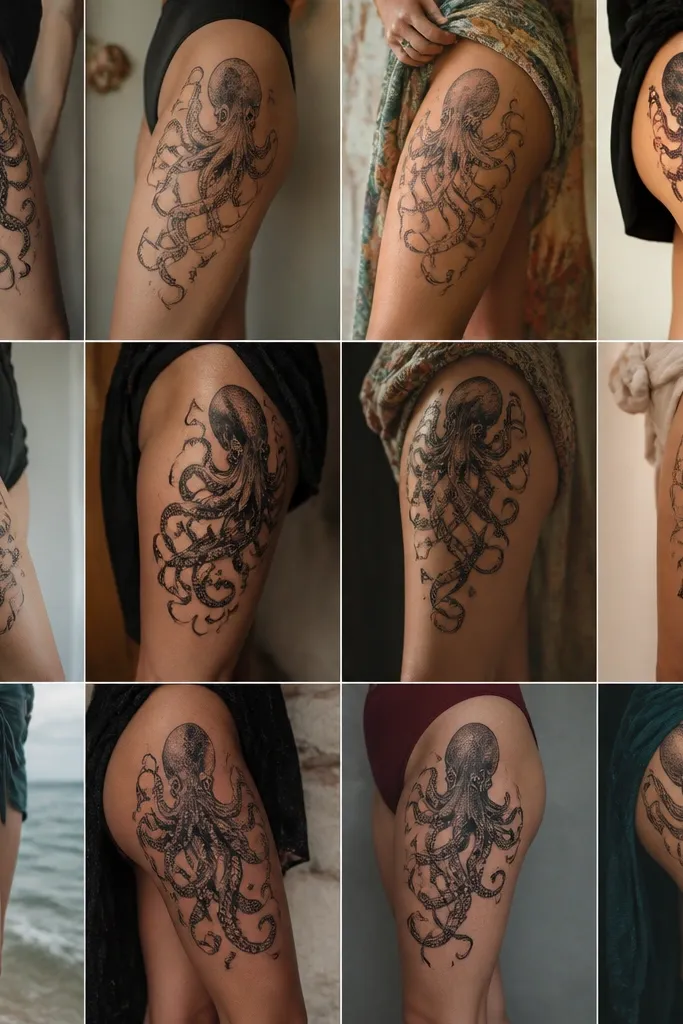
3. Blackwork Octopus Leg With Dotwork Suckers
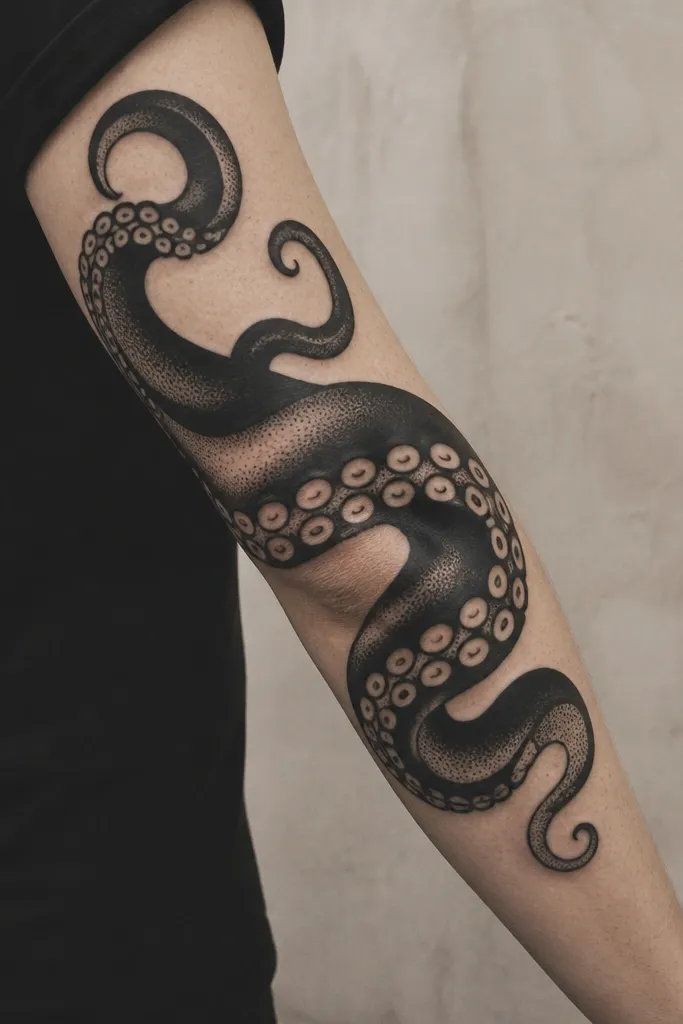
This one is for maximum boldness. Dotwork suction cups stay crisp because they're built from points, not tiny thin lines. The heavy black tentacle shapes create a strong silhouette, and the stippling gradient adds depth without needing color. It looks stylish with simple outfits because it reads like graphic ink from a distance.
Use a larger scale: aim for at least 18-22 cm (7-9 in) of tentacle length. Keep the darkest blacks on the tentacle centers and let the outer edges fade into stippling. If you want it to look sharp in summer, ask for a few micro highlights in gray between dot clusters.
Pro tipChoose a stencil that leaves breathing room between tentacles. Tight spacing makes dotwork merge into one heavy patch.
AvoidDon't ask for every suction cup to be the same size. Variation keeps it from looking like a repeating pattern.
4. Teal Wash Octopus Tentacles With Coral Tips
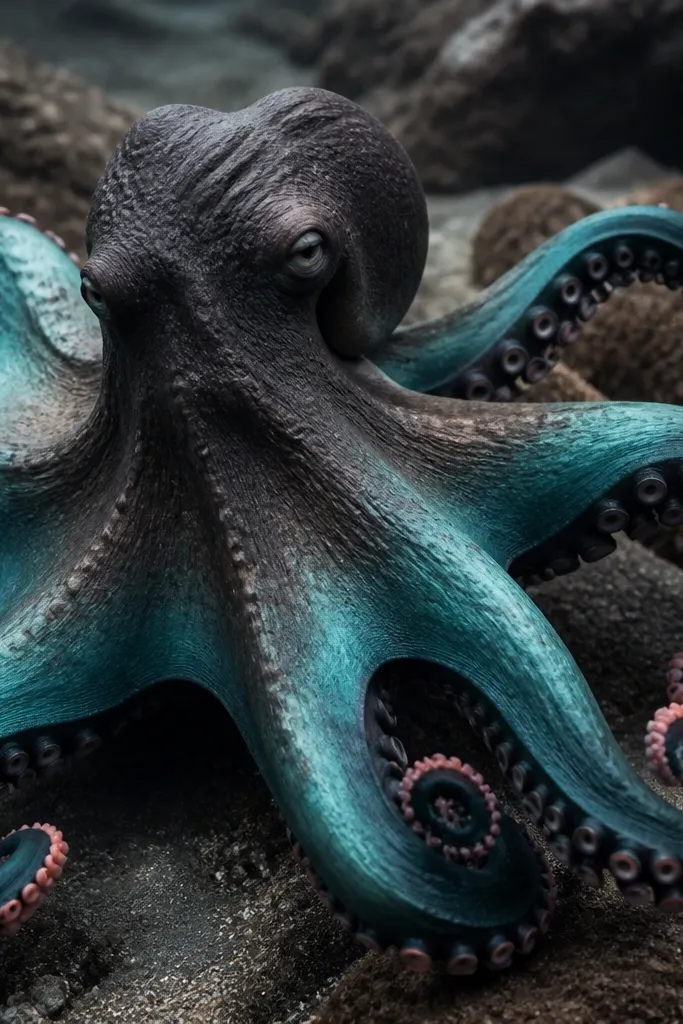
Color works here because it's used like ink, not like paint. The teal wash sits in the tentacle skin while the suction cups stay black, so the texture reads clearly. The coral tips add a warm contrast that makes the tentacles pop when you move, especially against skin and light fabrics.
Keep color to about 20-30% of the design area. Place teal in the mid-tentacle sections and leave suction cups black with thin gray halos. Use coral only at the ends - think small "glow" marks, not full coral tentacles.
Pro tipAsk for a second pass on teal after healing if you want it deeper. Fresh color fades fast, and the second pass keeps it bold.
AvoidAvoid full-color tentacles everywhere - it turns muddy and the suction cup detail gets swallowed.
5. Knee-Start Octopus With Negative-Space Waves
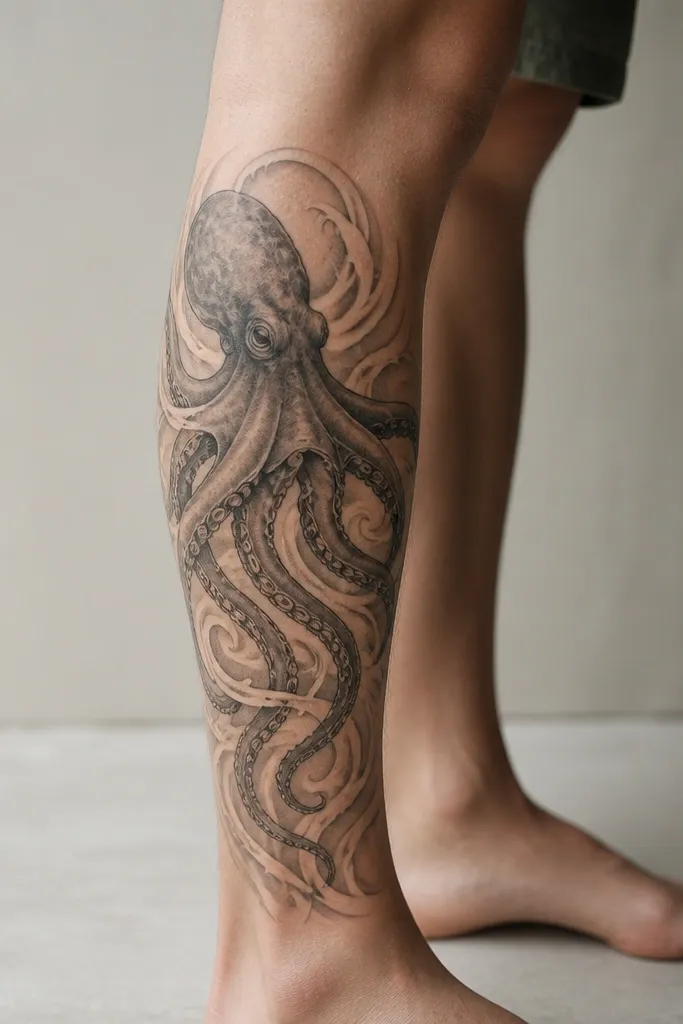
This is stylish because it gives the tattoo motion without adding clutter. Negative-space waves act like a frame around the tentacles, so the eye tracks the flow down your leg. The octopus itself stays bold with dark lines, while the background stays clean - clean backgrounds make leg tattoos look sharper as they age.
Position the head just above the knee crease, then let the tentacles descend 12-16 cm (5-6.5 in). Add 2-3 wave bands in negative space so they don't crowd the tentacles. Keep shading only on the tentacle undersides so the "water" effect looks intentional.
Pro tipBring shorts or a skirt while you get the stencil. Knee placement changes how the negative space reads when your leg bends.
AvoidDon't add too many wave bands. Three bands look graphic; seven bands look busy.
6. Inner Calf Mirror Tentacles With Small Anchor
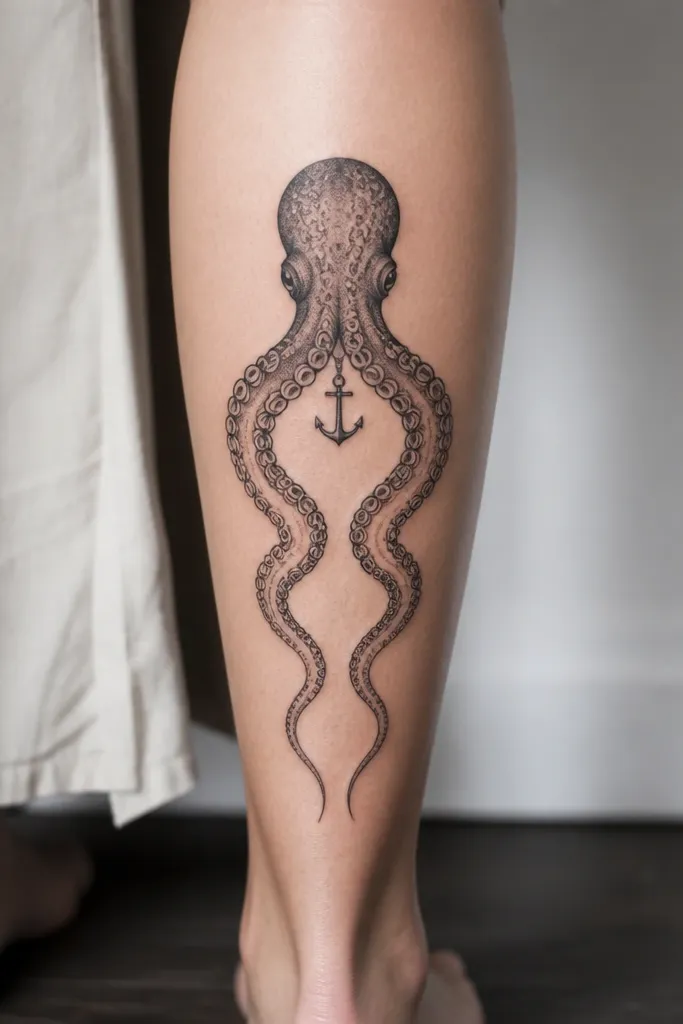
Inner calf placement looks stylish because it's private and crisp - it shows when you wear shorts or roll up sleeves. Mirror tentacles give structure, so the tattoo reads symmetrical and clean. The small anchor near the head gives the design a focal point without stealing attention from the suction cups.
Place the octopus head around the inner calf midpoint, not too high. Keep the two main tentacles roughly equal thickness, then let side tendrils be thinner. If you want it extra sharp, outline the anchor with a thin black border and leave the anchor interior lightly shaded.
Pro tipAsk for symmetry checks in two positions: standing and with your knee slightly bent. Inner calf tattoos shift when the skin stretches.
AvoidAvoid mirror tentacles that start at different heights. That mismatch makes it look rushed.
7. Above-Ankle Octopus With Thin Tendrils and Spark Dot Accents
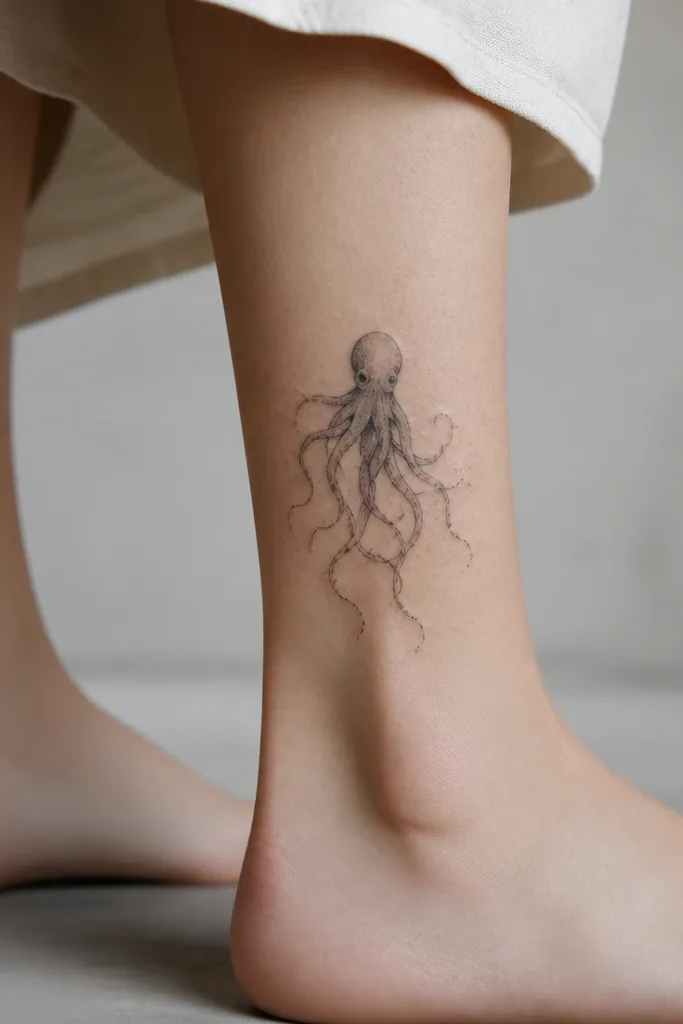
This design looks bold because it's compact and high-contrast. Thin tendrils create a "reach" effect that makes the ankle area look more styled, not just decorated. The spark dots add a subtle sense of light - you get movement without drawing waves or seaweed.
Target a size of about 8-12 cm (3-4.7 in) overall. Place the head slightly to the side of the ankle bone, then send 4-6 thin tendrils downward at different angles. Keep suction cups simplified: small ovals or half-circles so they don't blur at ankle skin thickness.
Pro tipWear shoes and socks you actually use during the fitting. If the tattoo gets hidden, the placement is wrong for your daily life.
AvoidSkip super-small suction cups. Tiny cups smear first at the ankle.
8. Half-Sleeve Style Leg Octopus With Seaweed Side Panels
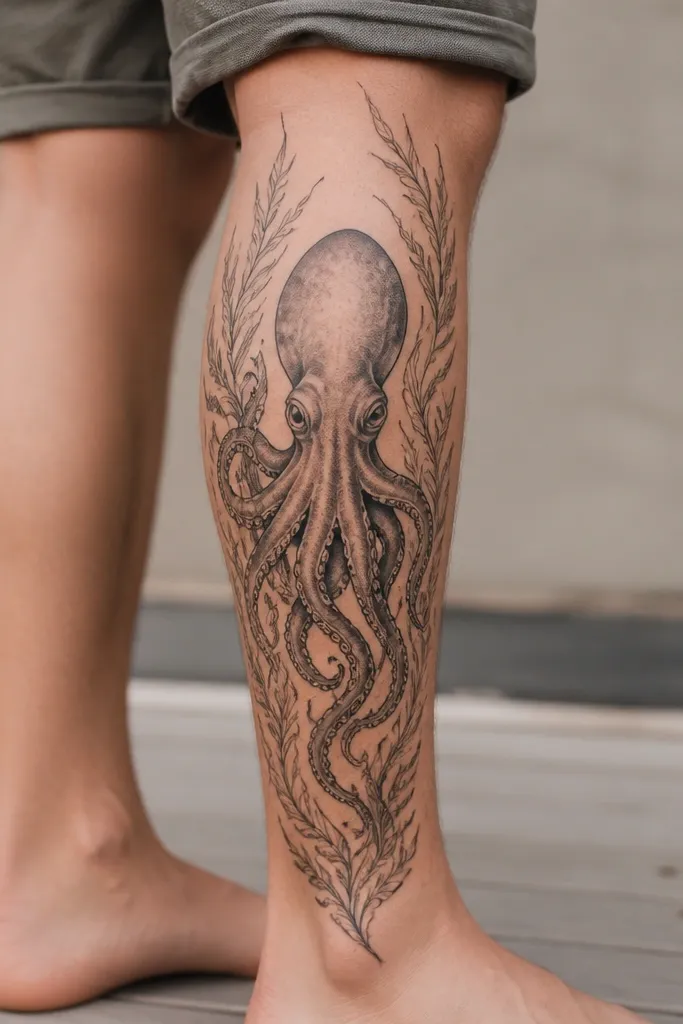
When you go bigger, framing matters. Seaweed side panels keep the octopus from looking like it's floating, and they help the tattoo look intentional even when your body stretches and compresses the skin. The center octopus stays bold with dark tentacle cores, while the side seaweed stays thinner and lighter for depth.
Plan for at least 25-30 cm (10-12 in) of vertical coverage. Build the seaweed panels as thin linework that tapers upward, then let them stop before they touch the tentacle edges. This keeps everything readable and prevents the whole thing from turning into a dark mass.
Pro tipAsk your artist to map where the seaweed panels end at the calf's thickest point. That's where tattoos blur if they're too dense.
AvoidDon't fill the entire leg with full black - the negative space is what makes the tentacles look crisp.
9. Black-and-Gray Octopus With Sliced Highlights
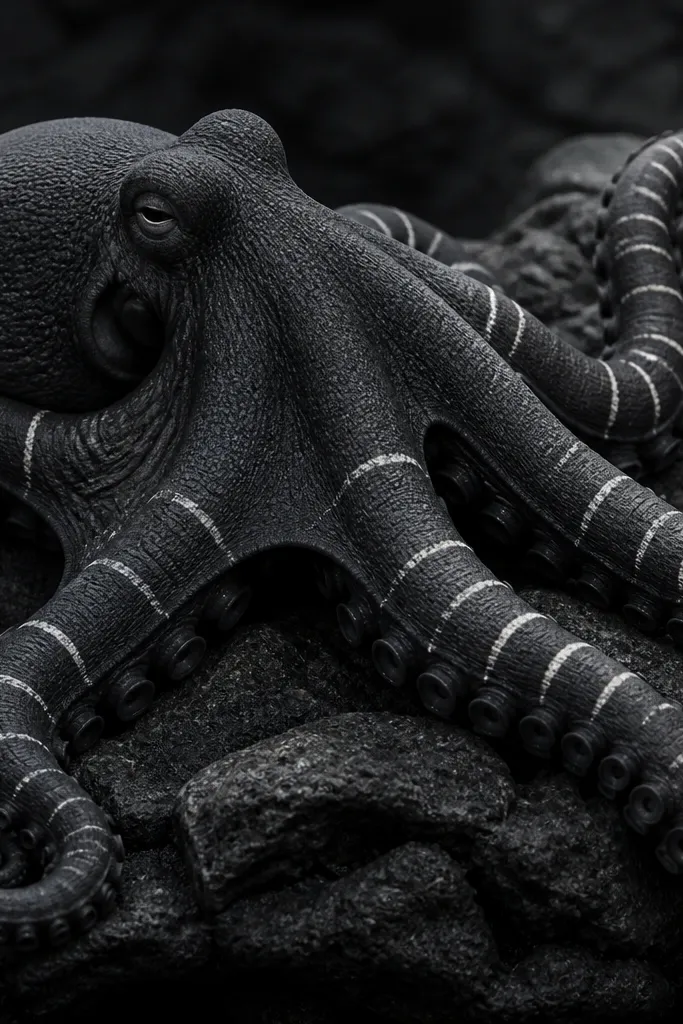
Sliced highlights make the tattoo look styled because they mimic the way light cuts across curved surfaces. Your tentacles look dimensional without needing heavy color. This style also stays readable because the highlight bands are consistent shapes, not random shading that can blur together.
Use a design where tentacles have 2-3 highlight bands each, spaced evenly. Place the strongest highlight bands on the outer tentacles so they catch light when you walk. Keep suction cups dark and clean - the contrast is what sells the illusion.
Pro tipGo for a medium size so there's room for highlight bands. Too small and the slices turn into a gray blur.
AvoidDon't use soft, smoky highlights everywhere. Sliced bands need clear edges to look intentional.
10. Octopus Leg Tattoo With Geometric Bands and Tentacle Curls
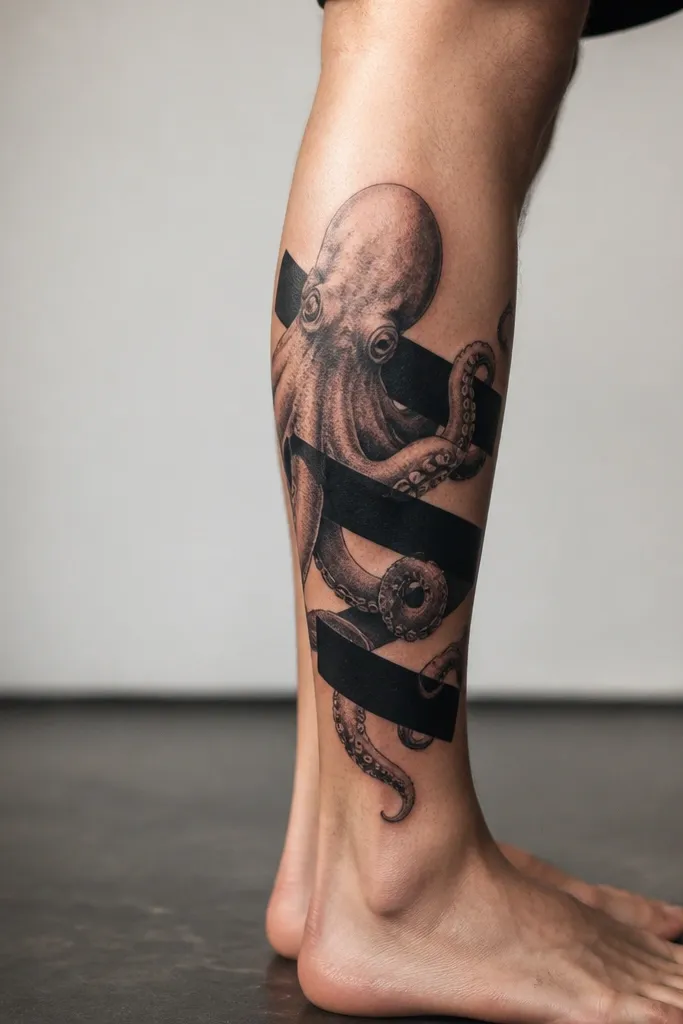
Geometry makes it look bold and stylish fast because it gives your octopus a graphic structure. The straight bands create a contrast against the organic curls, and the suction cups remain the texture anchor. This style is great if you want octopus without ocean clutter - it feels modern and clean.
Pick 2-3 geometric bands that run diagonally down the outer calf. Let one tentacle curl through each band so it looks like the ink is wrapping around the structure. Keep geometric lines thick and clean, and shade only the tentacle interiors.
Pro tipCheck the design from the side in a mirror. If the geometric bands distort too much, reduce the number of bands.
AvoidAvoid thin geometric lines. Thin lines fade faster on the calf.
11. Fine-Line Octopus Tendrils With Shaded Ombre Calf Strip
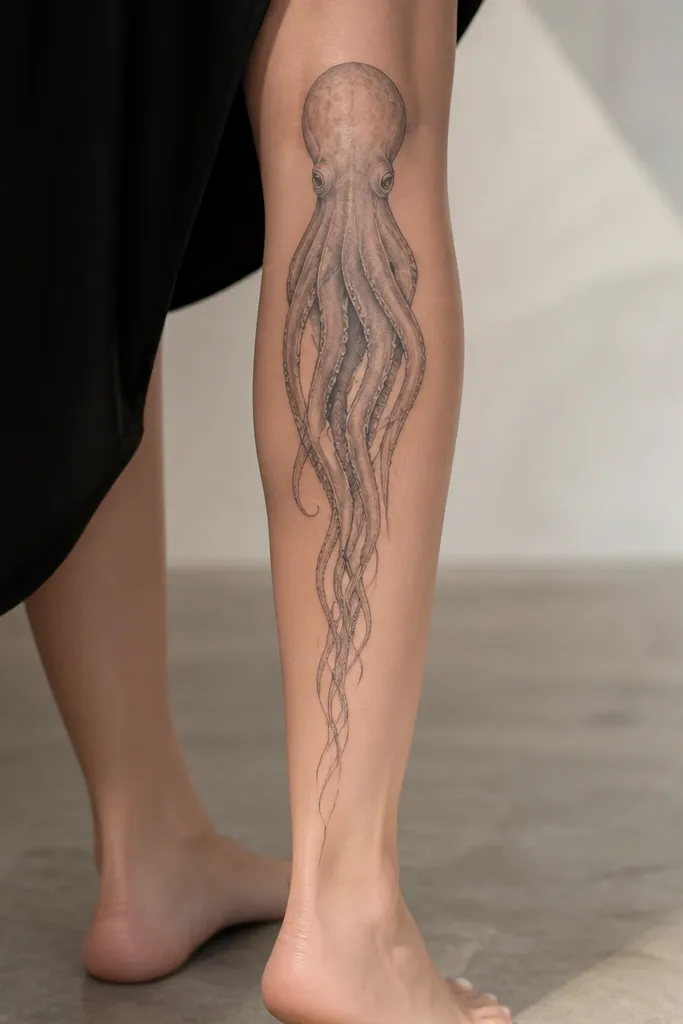
This one looks stylish because it's minimal but still has depth. The fine-line tendrils create movement, and the ombre strip gives you a "curtain" of shading so the tattoo doesn't look like floating lines. It's a good choice if you want an octopus tattoo that stays classy with office outfits.
Keep the linework fine but not hair-thin. The ombre strip should start darker near the calf and fade smoothly over 10-12 cm (4-5 in). Place suction cups as tiny dots or very small ovals so they read without cluttering the composition.
Pro tipAsk for a slightly thicker outline only around the octopus head. That makes the whole tattoo look grounded.
AvoidDon't make the entire tattoo hairline. It will disappear faster than you want.