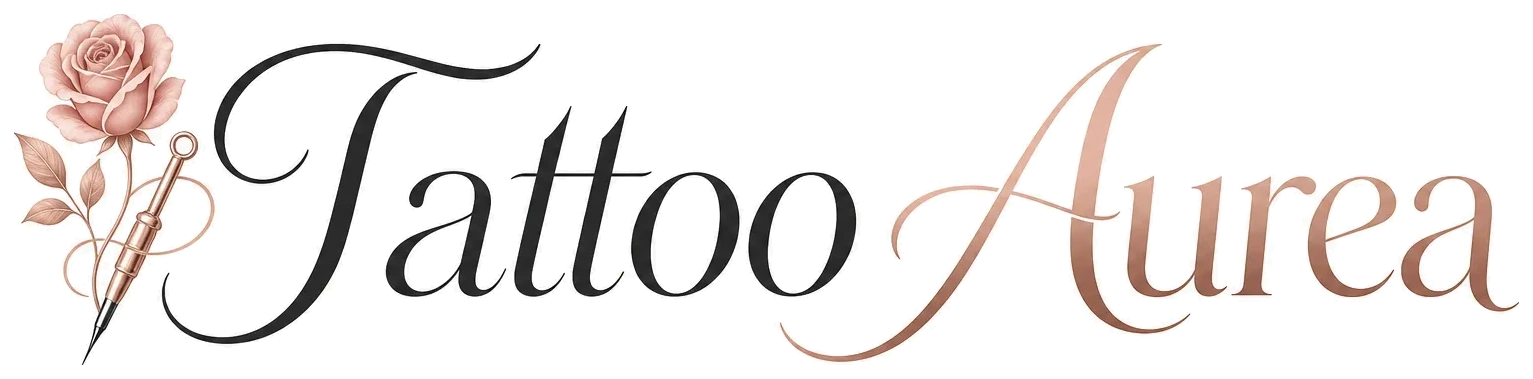
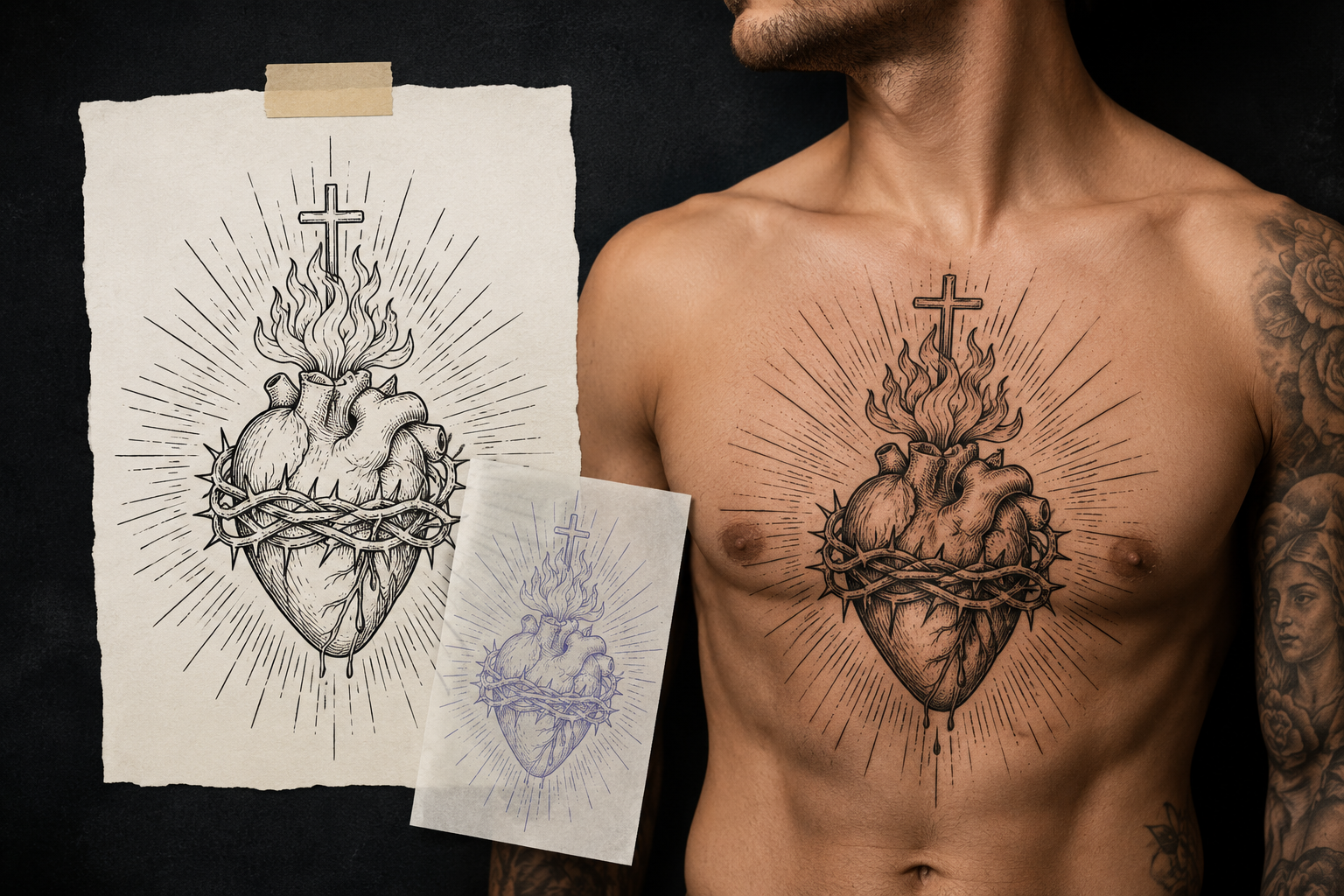
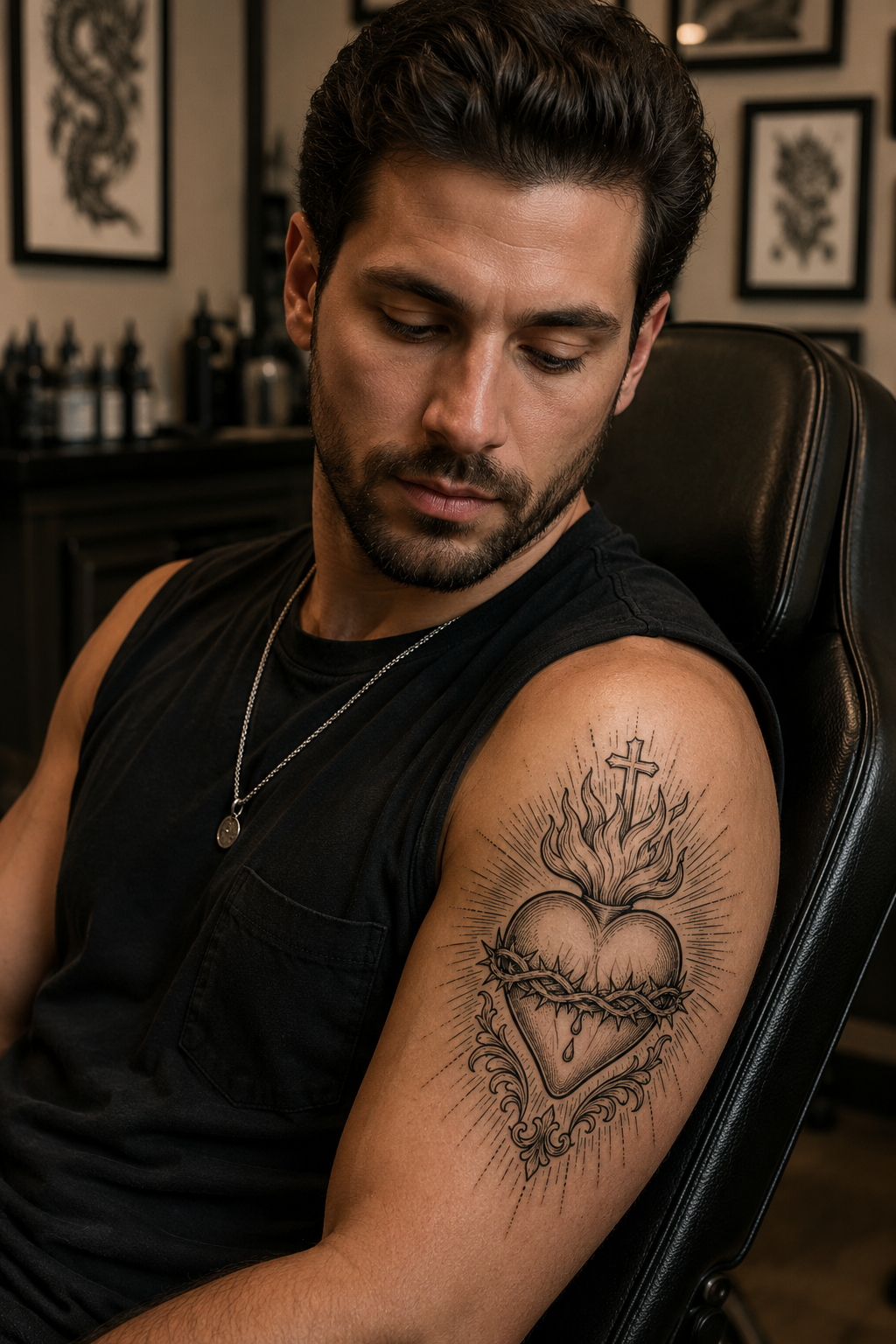
1. Classic Sacred Heart with Oval Halo and Flame Cutout
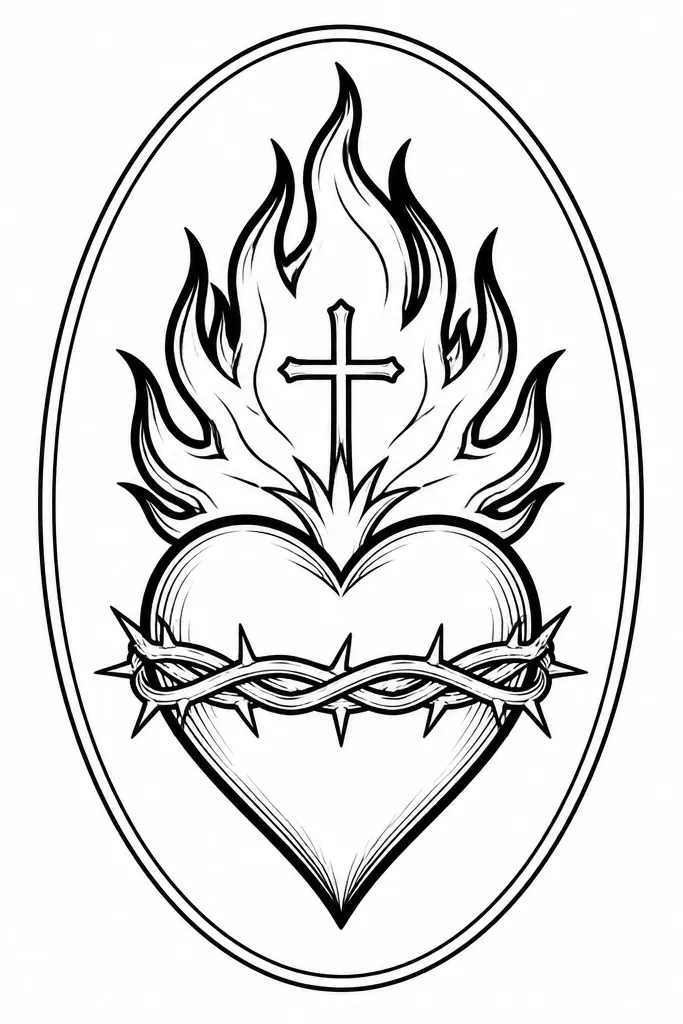
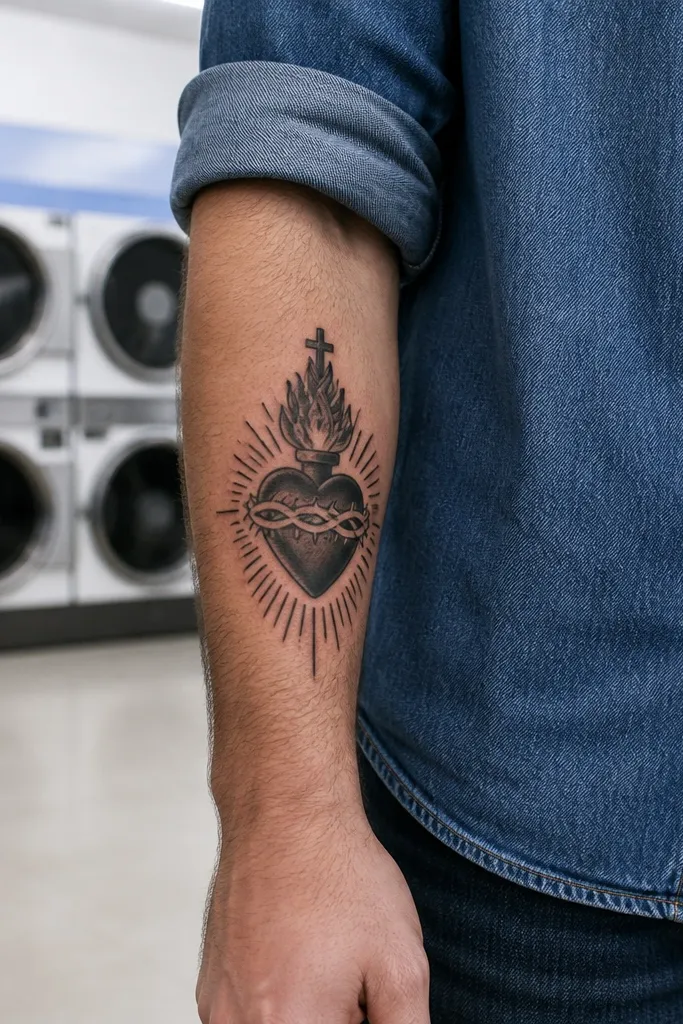
This stencil is the cleanest baseline for a meaningful Sacred Heart Tattoo because it keeps the eye on the heart. The oval halo sits like a frame, which reads well on curved skin and helps the halo stay symmetrical even when the body bends. The flame is drawn as a cutout shape with crisp edges so it doesn’t blur into the heart shading. A tiny crown anchors the top, giving the whole piece a religious feel without overcrowding the rays. It suits forearm, upper arm, and calf placements where you want a strong central focal point.
Start by placing the heart vertically and marking a centerline down the stencil. Then center the oval halo so its long axis matches the placement curve; keep the halo ring thickness uniform. Finally, use light shading only inside the heart and around the inner flame area, leaving the outer halo mostly linework. If your artist plans fine-line, reduce ray count to short spikes; if using traditional, thicken the heart outline and crown edges first. Keep the thorns minimal: 5-7 thorn points are enough for recognition.
Ask your artist to keep the halo ring smooth — no sketchy double lines.
Avoid long, uneven rays that extend past the heart outline; they blur faster than the heart.
2. Sacred Heart with Pointed Rays in a Tight Circle
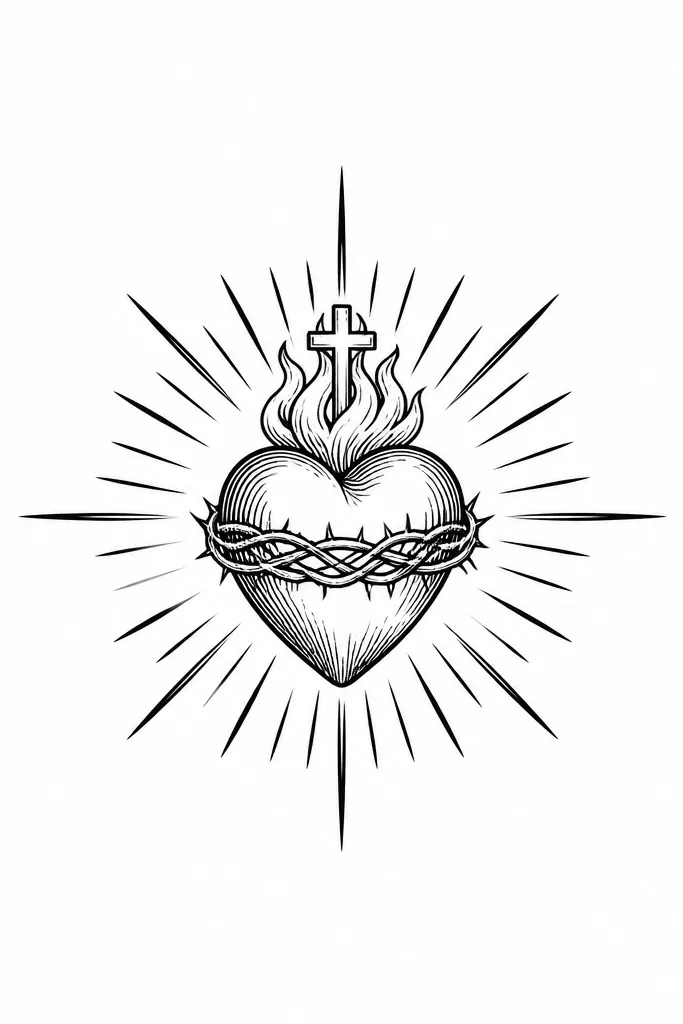
This version looks sharp because the halo is contained and the rays are controlled. The rays are short, evenly spaced points that create a clean “sunburst” effect without turning into a halo smudge. The heart shape stays bold, and the crown and flame are kept small so the design doesn’t compete with the rays. It’s a strong choice for a readable tattoo at a medium size where you still want it to look intentional, not delicate. This stencil is especially photogenic on upper arm and shoulder where the rays catch light.
Place the stencil so the tight circle halo sits at the same height as the heart’s top point. Then keep ray spacing consistent: draw them as equal-length spikes that stop before reaching the maximum design width. Finally, shade the heart with wedge-like tone rather than a full smoky background; the negative space around the rays keeps it clean. Use slightly thicker lines on the ray bases if you’re going fine-line, because rays are the first thing to fade into gray.
If you want extra crispness, request a heavier outline on the ray bases and a thinner outline on the flame.
Don’t add extra small symbols around the rays; it makes the halo look busy.
3. Sacred Heart with Ribbon Banner Across the Bottom
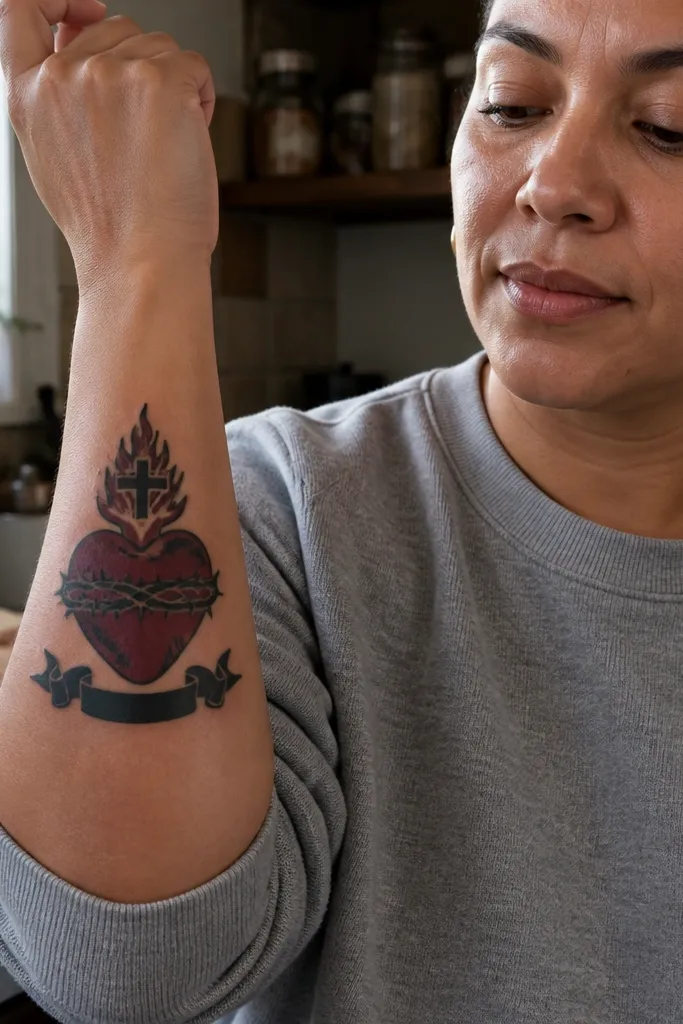
A ribbon banner gives the Sacred Heart tattoo a finished, framed look. The banner curves under the heart, which makes the composition feel balanced and intentional, especially on forearms. For a meaningful Sacred Heart Tattoo, this stencil keeps the religious vibe without turning into a collage of extra text or icons. The ribbon folds are drawn with straight, readable creases so they stay crisp instead of becoming soft blobs. This design looks best when the ribbon is wider than the heart’s base but not so wide that it crowds the placement.
Editor's notePick one banner fold pattern and keep it consistent — two fold styles max.
Start by sketching the heart and halo first, then add the ribbon so it touches the heart only at two anchor points. Keep the ribbon ends pointed or slightly curved, not rounded, so the folds remain graphic. Then place the flame and thorns so they sit above the ribbon line — never partially hidden behind it. If you want clean aging, keep shading limited to the heart interior and use linework for ribbon folds. For placement, forearm works well at 3-4 inches tall; upper arm can scale up to 4.5 inches without losing readability.
One warningAvoid micro-text on the banner unless your artist has a font they can tattoo cleanly.
4. Sacred Heart with Thorn Crown and Minimal Halo
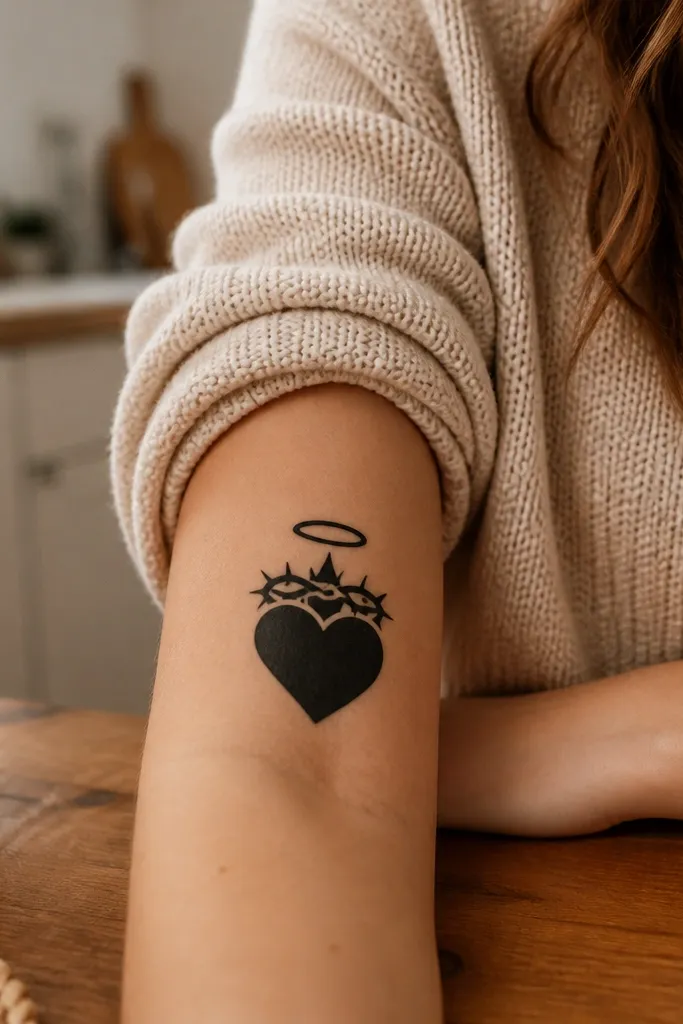
This stencil is for people who want meaning without visual noise. The halo is a simple ring, so it stays sharp, while the thorn crown adds character and symbolism right where your eye naturally looks — the top of the heart. The thorns are drawn as clean, separated points rather than tangled lines, which helps the tattoo read clearly years later. It’s also a good choice if you plan to keep the tattoo smaller. This design looks great on wrists, upper ribs, and the upper forearm where you need a compact Sacred Heart that still feels intentional.
Editor's noteIf you’re going small, prioritize thorn spacing over extra shading.
Start with a clean heart outline and place the flame centered at the heart’s top. Then draw the thorn crown directly over the heart top, keeping each thorn spaced so you can count them. Finally, add only a minimal halo ring — no rays — and keep the ring thickness consistent. Use light shading under the thorns and inside the heart, but leave open negative space around the halo ring. For fine-line, keep line weight consistent across thorns and heart outline; for traditional, thicken only the heart outline and thorn bases.
One warningAvoid adding rays on top of a thorn crown if you want it to stay crisp.
5. Sacred Heart with Crown and Cross-Flag Rays
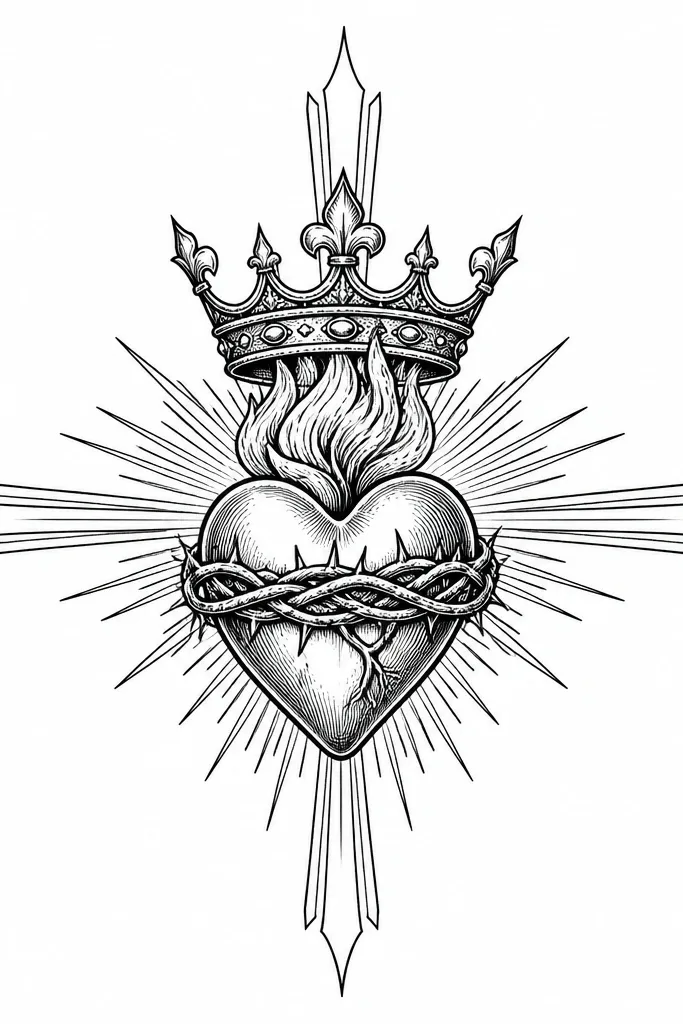
The crown-and-cross-flag ray idea makes the design feel more structured while staying pretty. Instead of typical spikes, the rays are drawn like small flag shapes that create a decorative rhythm around the halo. It’s a meaningful Sacred Heart Tattoo stencil that reads as religious without leaning on heavy shading. The heart stays centered, and the crown gives that “set piece” look. This works especially well for upper arm and shoulder caps where decorative rays can be seen from different angles.
Begin by drawing the heart and flame, then sketch the halo ring as a guide for ray placement. Add flag-shaped rays with identical widths and heights, and keep them evenly spaced around the ring. Next, thicken the crown outline slightly and keep flame lines crisp. For shading, use a small highlight area on the heart so it doesn’t look flat. Keep the flag rays mostly linework — shade only the base edges if you want extra depth.
Ask for ray symmetry checks on the stencil before transferring.
Avoid shading the rays heavily; it makes the halo feel dirty.
6. Sacred Heart with Star Halo and Tiny Dots
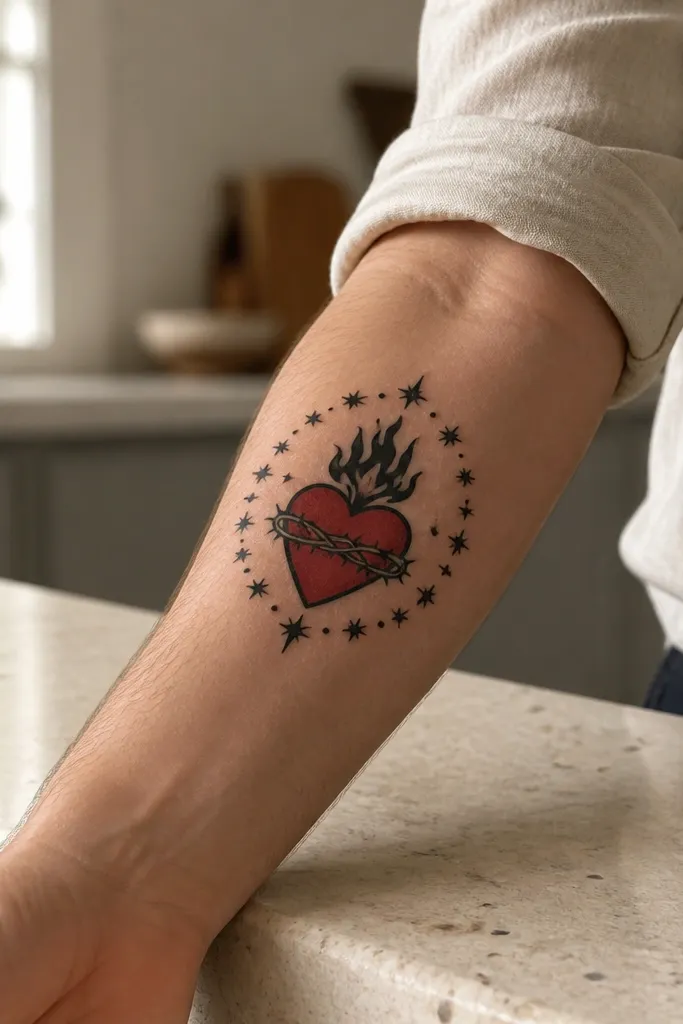
This stencil gives a softer, more modern look while keeping the Sacred Heart as the clear focal point. The halo is built from small star points or star-like segments, and the tiny dot accents add sparkle without turning into clutter. Because the dots are controlled and limited, the tattoo stays clean and photogenic. This style is great if you want a meaningful Sacred Heart Tattoo that feels less “classic church poster” and more like a tidy, aesthetic symbol. It suits upper forearm, ankle, and side-of-ribs placements where small details can shine.
Editor's noteUse 10-18 dots total; more makes the halo look like noise.
Start with a simple heart outline and flame center. Then replace the standard halo ring with a star-segment halo — keep the star points consistent and avoid overlapping. Add only a few dot accents, placed in a ring pattern around the halo, not across the heart. Finally, shade only inside the heart and under the flame, leaving the star halo mostly linework. If you’re doing fine-line, keep dot size uniform and avoid tiny dots that are too close together.
One warningAvoid adding extra icons like angels or lilies if you’re using a star halo.
7. Sacred Heart with Geometric Halo Hexagon
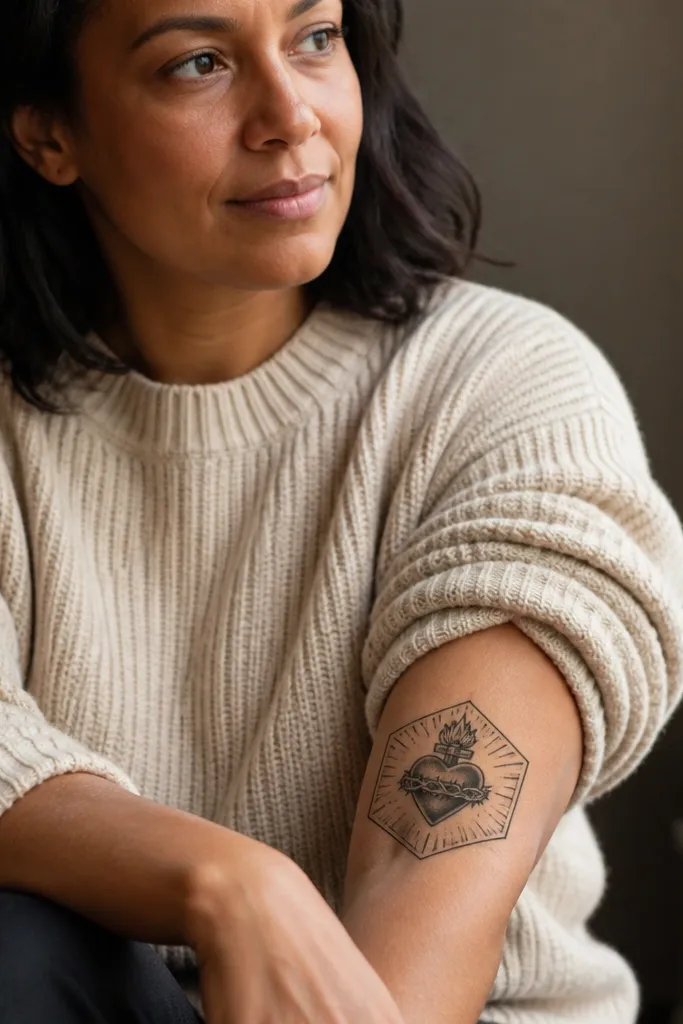
This is the Sacred Heart stencil for clean, graphic lovers. The geometric hexagon halo creates sharp edges that contrast nicely with the organic heart shape. It still reads as a Sacred Heart because the flame, crown, and heart outline are kept traditional. The hexagon also helps with symmetry on curved placements since the angles give your artist a clear guide. This stencil looks great on forearms, biceps, and the upper thigh where you want a symbol that feels modern and intentional.
Start by drawing the heart and flame first, then place a thin hexagon around it with equal margins on all sides. Keep the hexagon line weight slightly lighter than the heart outline so the heart stays the focus. Add the crown on top and keep thorns minimal to avoid clutter inside the geometric space. Shade inside the heart with a couple of wedge tones, and keep the hexagon mostly linework. For aging, avoid heavy gradient shading near the hexagon edges.
Have your artist align the hexagon flat sides with the body’s vertical axis.
Avoid thick shading behind the hexagon; it ruins the clean geometry.
8. Sacred Heart with Stained Glass Halo Panels
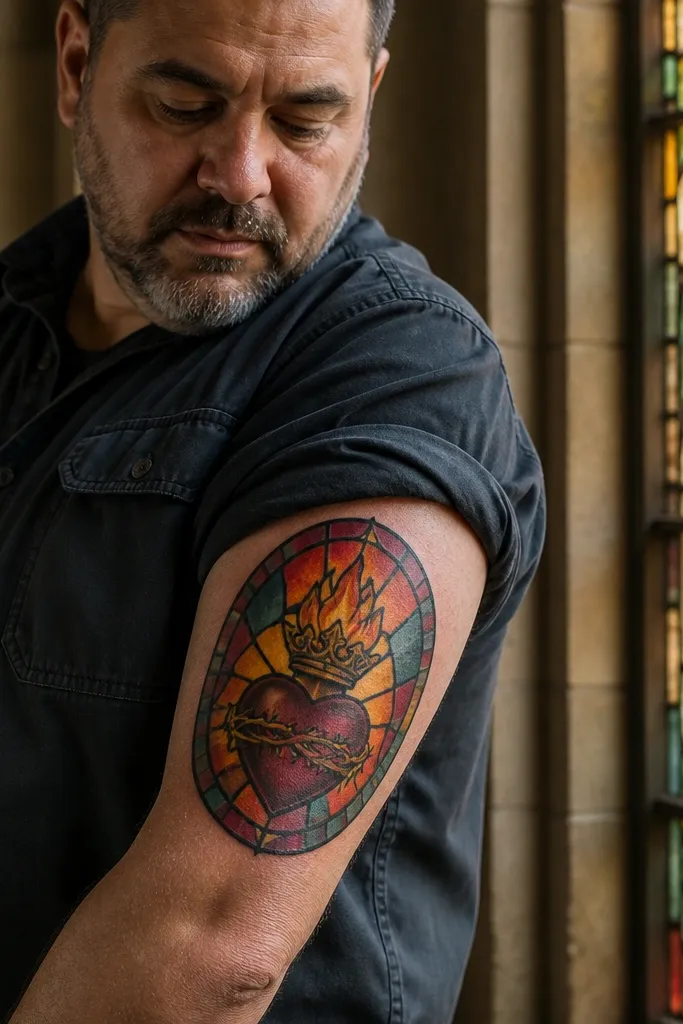
If you want photogenic color potential while staying clean in linework, stained-glass panels are the move. The halo is divided into neat segments, which makes the tattoo look like a window and gives the Sacred Heart a distinct aesthetic. The heart stays centered and traditional, while the halo brings texture through panel lines rather than messy shading. This stencil is perfect if you’re open to color later — even if you start black and gray, the segmented halo gives you built-in structure. Placement looks best on upper arm, shoulder, and calf for that “panel framed” look.
Editor's noteAsk for panel line thickness to match the crown outline — consistent weights look clean.
Draw the heart and flame with clean outlines first, then build the halo as segmented panels around it. Keep panel lines evenly spaced and avoid tiny slivers; use larger segments so the design holds up. Then place the crown and thorns so they don’t cross into too many panels — keep them mostly above the heart. For black and gray, shade only the heart interior and leave panel lines crisp. If adding color, keep it limited: one warm red/orange for the flame and a muted rose or gold for the heart glow.
One warningAvoid a huge number of micro-panel segments; it turns into a gray blur.
9. Sacred Heart with Cross at the Bottom of the Halo

This stencil keeps the composition vertical and grounded. The small cross under the heart adds meaning without taking over the design, and it balances the halo above. The result is a Sacred Heart Tattoo that looks tidy from straight-on and from side angles because the cross anchors the bottom. It’s a strong option for rib placements and forearm vertical tattoos where you want clear top-to-bottom flow. The flame and crown stay crisp, and the halo is kept clean so the entire tattoo reads as one symbol.
Editor's noteIf the tattoo will curve on ribs, keep the cross slightly flatter and narrower.
Start with the heart and halo ring, then draw the cross under the heart with the same width as the heart’s base. Keep the cross arms proportionate: the top arm should be about 60-70% of the heart width. Next, add thorns and the crown only above the heart, not wrapping around the cross. Shade inside the heart and along the flame base, leaving the cross mostly linework. Keep the spacing between halo ring and heart consistent so the symbol doesn’t look stretched.
One warningAvoid placing the cross too far down; it breaks the “one symbol” read.
10. Sacred Heart with Double Halo Ring and Small Rays
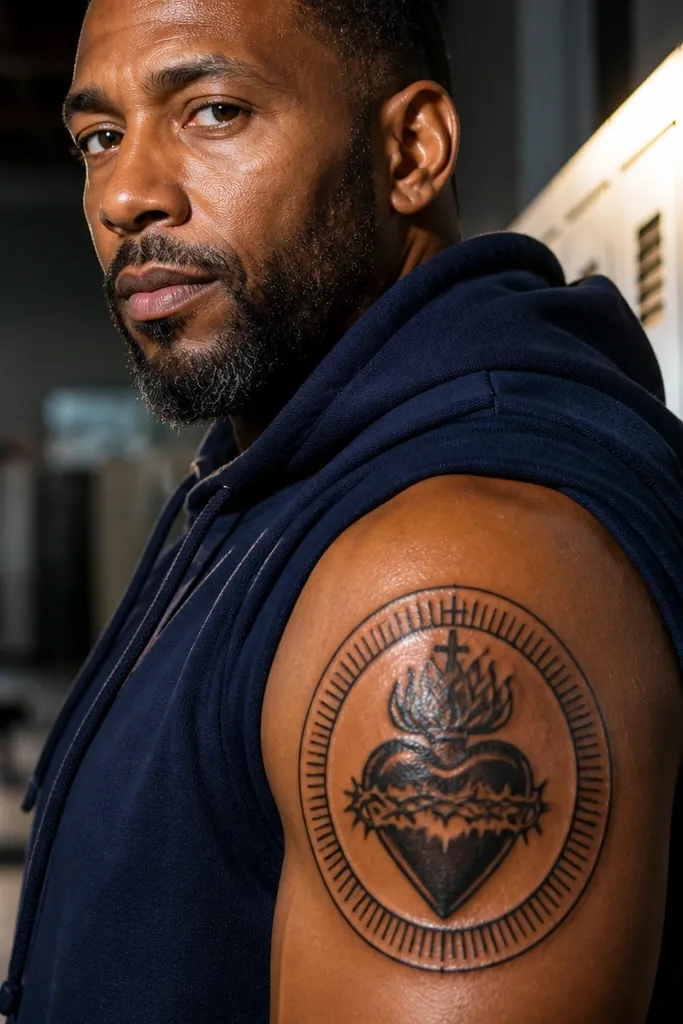
Double halo rings make the Sacred Heart look intentional and layered while still staying clean. The inner ring frames the heart, and the outer ring adds dimension without needing lots of shading. Tiny rays between the rings give the tattoo a decorative glow effect that’s easy to read from a distance. This stencil is a good middle ground if you want more detail than the minimal ring, but you don’t want the mess of full sunburst rays. It looks especially good on upper arm and calf where you can show the layered halo.
Editor's noteKeep ring spacing consistent — measure it with your stencil ruler or phone grid.
Draw the heart outline and flame first, then place an inner halo ring touching the heart’s top area with a small gap. Add a second outer ring, keeping it evenly spaced from the inner ring. Insert short rays only in the space between rings — keep them uniform. Shade inside the heart and under the flame, but don’t shade the halo rings. If using fine-line, keep ring line weight slightly thicker than the ray lines so the halo reads as the frame.
One warningAvoid heavy shading on both rings; it makes the halo look thick and muddy.
11. Sacred Heart with Heart-Lock Shading and Clean Outline

This stencil is about crisp linework plus tight, controlled shading. The heart interior uses a “heart-lock” pattern — clean wedges and small negative-space breaks — so the shading stays structured instead of blending. The flame is drawn as a sharp teardrop shape with a highlight gap, which keeps it from turning into a gray blob. The halo is a simple ring, so the tattoo stays focused on the heart’s symbolism. It’s the best pick if you want a meaningful Sacred Heart Tattoo that looks good in black and gray and ages well.
Start with a thick-enough heart outline for your artist’s line weight target. Then add wedge shading inside the heart with clear borders, leaving small negative spaces where the flame glow would be. Keep thorns and crown lines crisp and separated so they don’t merge with shading. Finally, draw a simple halo ring with consistent thickness and no rays. For placement, this stencil is great on forearm and upper arm because the shading pattern reads clearly at normal viewing distance.
If your artist is doing black and gray, ask for wedge shading that follows the heart’s curve, not random texture.
Avoid full solid black fills in the heart; they can turn into a single dark patch.
12. Sacred Heart with Floral Thorns and Rose Bud Accents

This stencil adds romance without losing the Sacred Heart focus. The thorns look like branches with small rose bud accents, so the tattoo reads as devotion and tenderness at the same time. The halo stays clean and simple so the floral details don’t swallow the central meaning. It’s a meaningful Sacred Heart Tattoo that feels feminine and aesthetic while still grounded in classic symbolism. This design looks best on upper arm, shoulder, and thigh where the thorn branches can curve naturally.
Editor's noteChoose one bud size and repeat it; variation looks messy on skin.
Start with the heart and flame and keep the halo ring simple. Then draw thorn branches that extend slightly outward and add only a few rose buds — 2-4 buds max. Place buds so they don’t overlap the halo ring; keep them in the thorn space. Shade the heart interior and add light shading to thorn curves only if your artist can keep the lines crisp. For clean aging, keep rose bud petals simple with 5-7 lines each, not lots of tiny petal tips.
One warningAvoid adding full roses or heavy leaves; it becomes a floral sleeve, not a Sacred Heart.
13. Sacred Heart with Minimal Halo and Crossed Thorns

Crossed thorns give you drama without clutter. This stencil keeps the halo minimal — just a ring or even a faint oval — and uses crossed thorn lines behind the heart to create visual tension. The heart stays bold and clean, which is what you want for a meaningful Sacred Heart Tattoo that looks sharp in photos. It’s also a great option if you’re worried about ray designs aging poorly, because the thorns are linework with clear separation. Placement that works well: outer forearm, bicep, and calf where the crossed lines can sit behind the heart.
Start by drawing the heart outline and flame, then place the crown on top. Add thorn lines behind the heart in an X pattern, keeping each thorn separated and angled so they don’t merge into one dark mass. Keep the halo ring thin and centered, no rays. Shade only inside the heart and under the flame, leaving thorns as linework. For the stencil, make sure the thorn tips extend slightly beyond the heart but stop before the halo ring so the composition stays readable.
If you’re going small, reduce thorn count to 6-8 tips total.
Avoid drawing thorns that wrap all the way around the heart; it kills the silhouette.
14. Sacred Heart with Rose Flame and Feathered Halo Lines
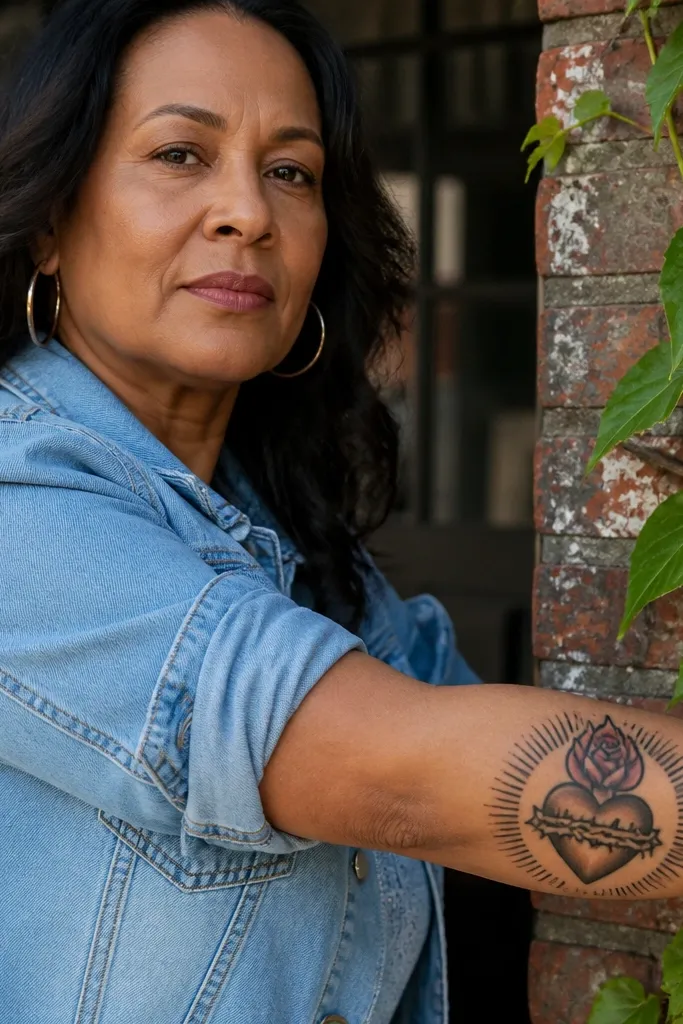
This stencil turns the flame into a rose-like shape for a softer, aesthetic look while keeping the Sacred Heart recognizable. The halo uses feathered line accents — light, tapered strokes around a ring — so it looks airy instead of heavy. The heart outline stays clean and the shading is restrained, which keeps the tattoo from looking smoky. This is a meaningful Sacred Heart Tattoo design for people who want devotion with a gentle vibe. It looks best on upper ribs, inner bicep, and the side of the calf where the feathered halo can sit close to the skin contour.
Begin with a clean heart outline and place the flame rose shape centered above the heart. Draw a thin halo ring, then add feathered halo strokes around it with tapered ends and consistent direction. Keep thorns minimal or skip them if your placement is small; the halo texture does the work here. Shade the heart interior with light gray tone only, leaving clear negative space around the halo ring. If you want color later, reserve it for the flame rose edges and keep the heart mostly black and gray for stability over time.
Ask your artist to keep feather strokes short — long strokes blur first.
Avoid heavy gray wash behind the feather halo; it makes everything look cloudy.
15. Sacred Heart with Arch Halo and Two-Layer Crown
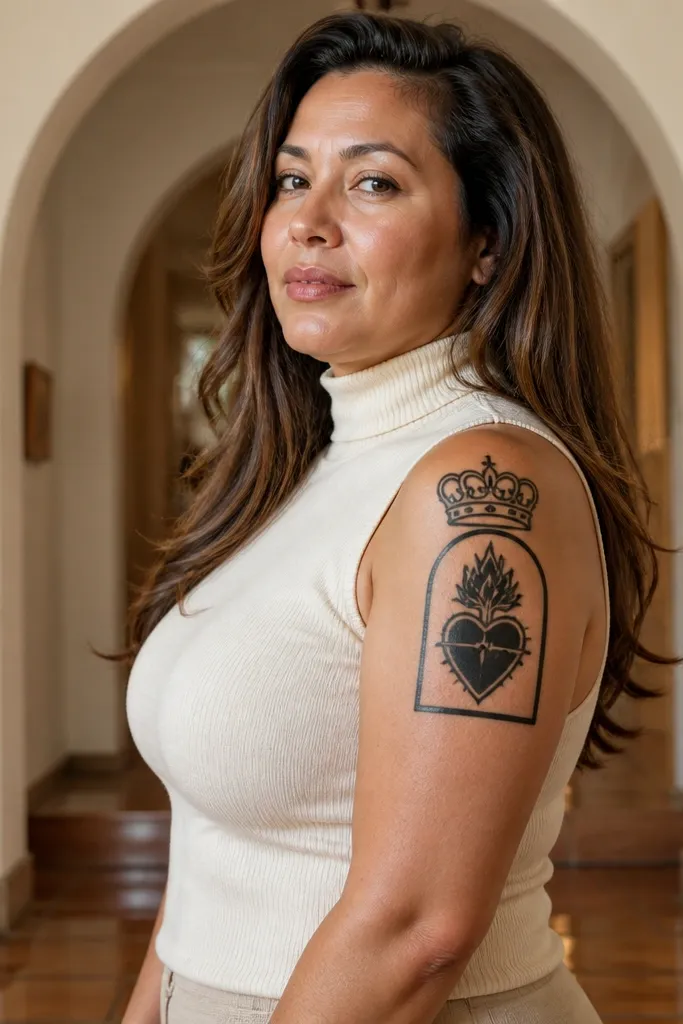
An arch halo makes the Sacred Heart look like it’s framed in a doorway. The arch shape is flattering on many body curves and keeps the design feeling architectural instead of flat. The two-layer crown adds depth through line separation rather than messy shading, so it stays photogenic. This stencil is ideal if you want a meaningful Sacred Heart Tattoo that reads “finished” even without extra text. It’s a great fit for upper arm, shoulder, and outer thigh where an arch can sit naturally.
Editor's noteFor transfer, mark the arch’s highest point so the halo doesn’t look lopsided on skin.
Start with the heart outline and place the flame centered. Then draw the arch halo as two clean curves that meet at the top, keeping the arch width slightly wider than the heart base. Add the two-layer crown with a clear gap between layers so it looks dimensional. Shade inside the heart and under the top crown layer, then leave the arch halo mostly linework. Keep thorn points small and tucked near the heart top so they don’t fight the arch curve.
One warningAvoid thick shading inside the arch; keep it as a frame.