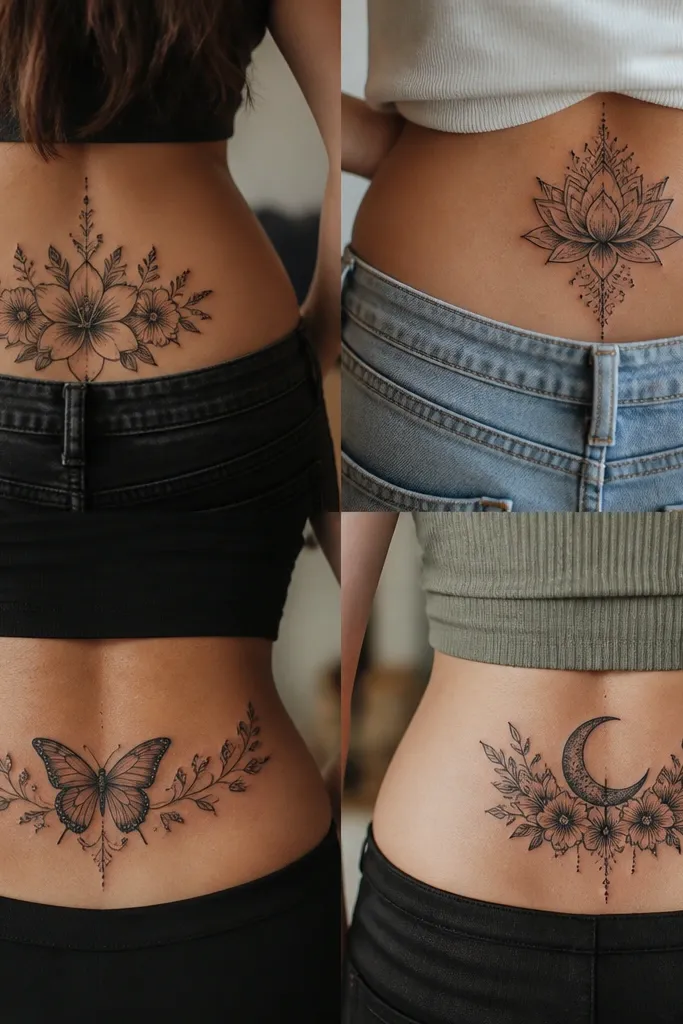
1. Blackout bow band with crisp outline
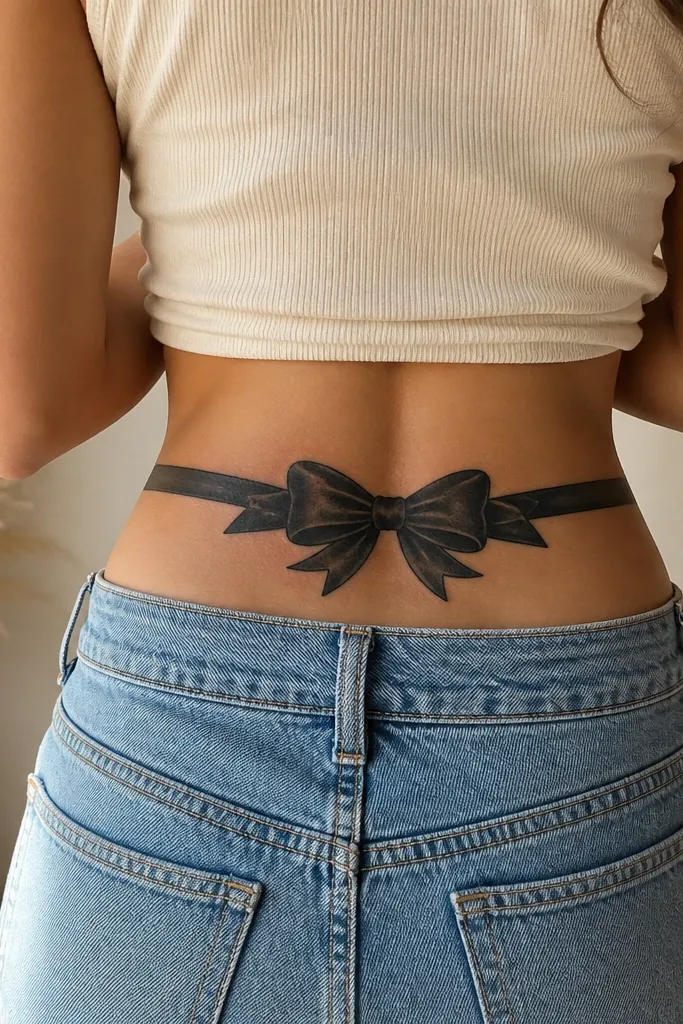
This works because a tramp stamp sits on moving skin, and thick black shapes hold up better than thin gradients. The bow shape gives you a clear silhouette so the cover-up doesn't look like "random black." I like adding a crisp outline so the band reads even when the tattoo slightly softens with healing.
Have the artist place the band just below your waistband area so the stretch doesn't distort the center knot. Keep the band height around 3 to 4.5 cm and use a knot thickness that matches the old tattoo's darkest region. The outline should be solid, not dotted.
Editor's noteAsk for a test layout on your skin with marker first so the bow ends land evenly on both hips.
One warningAvoid a thin outline with a gray fill - it heals patchy and shows the old ink through.
2. Midnight rose with dark underlayer petals
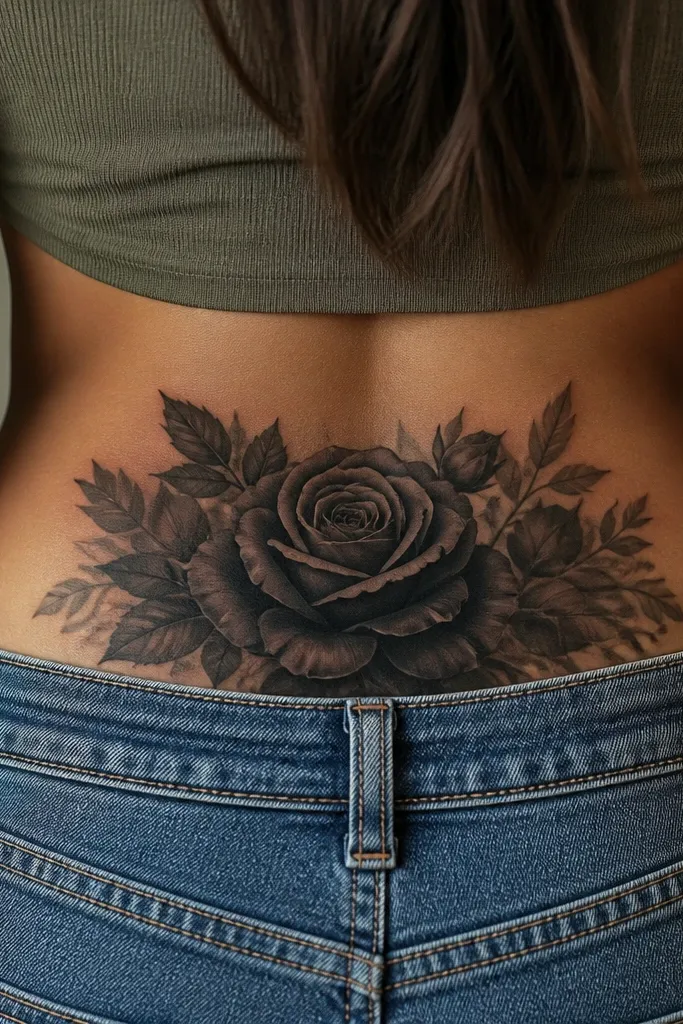
A rose is forgiving because petals create layered value. The dark underlayer is the key: it blocks the old tattoo so the red-brown accents don't turn dull or muddy. I've seen this look good even when the original ink was dark and slightly uneven.
Start with a solid charcoal/black base where the old tattoo shows most. Then pack the petals with darker shading, leaving small skin gaps only for highlight edges, not large negative shapes. Use red-brown rather than bright cherry so it stays readable at a distance.
Editor's noteRequest the artist to keep the inner rose darker than the outer petals so it stays dimensional after healing.
One warningSkip bright neon reds over dark old ink - they often heal as brown smears.
3. Blackwork half-mandala over the hips
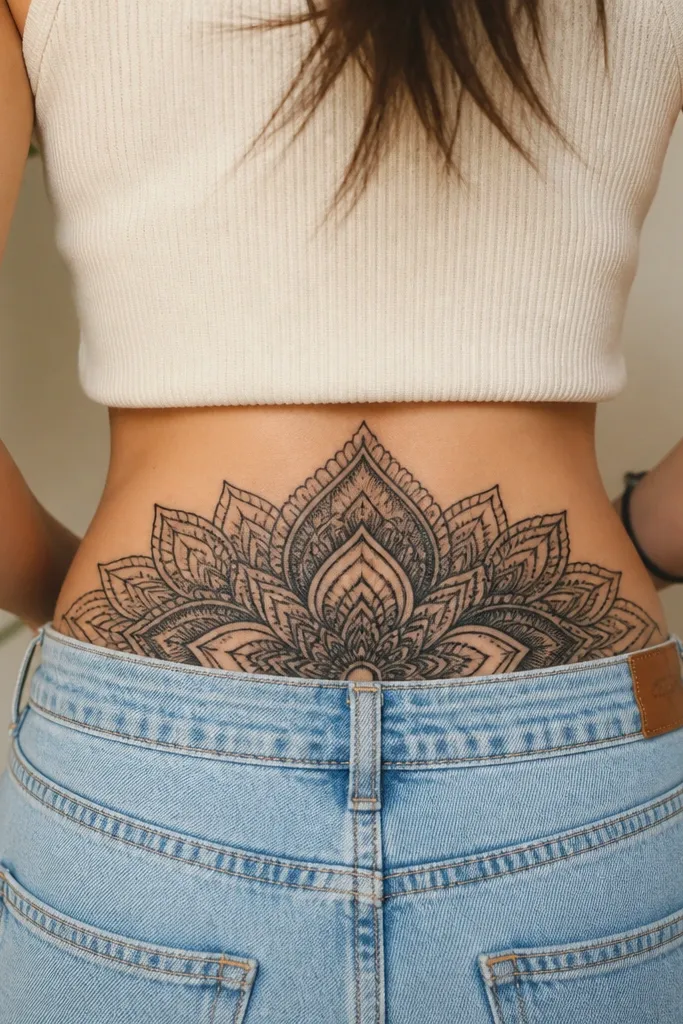
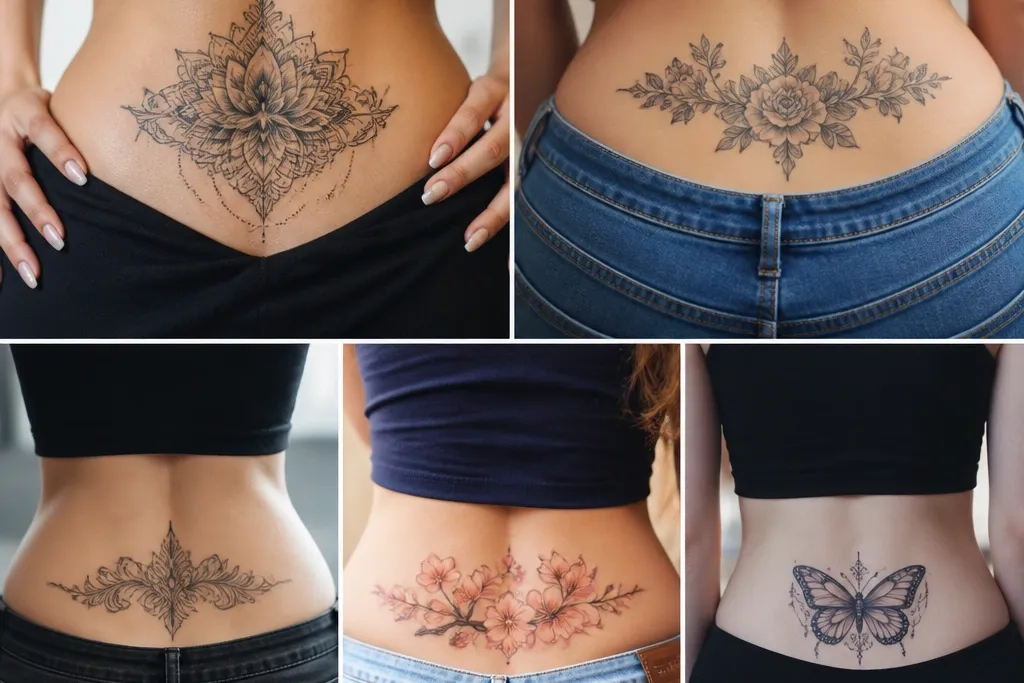
Half-mandala placement matches the way hip skin stretches - the design sits across a stable band and doesn't rely on ultra-fine lines. Dot clusters and geometric rings cover old marks because they add texture and opacity. The negative space gaps keep it from looking like a full blackout while still killing the previous ink.
Keep the mandala width close to your hip-to-hip spacing, usually 14 to 18 cm, but only go about 6 to 9 cm down from the waistband line. Use a thicker outer ring so the design frames the old tattoo. Ask for dot work density to be highest in the center.
Editor's noteIf your old tattoo is mottled, place the densest dot clusters right over the darkest patch.
One warningAvoid airy lace-like mandalas with lots of empty thin lines - they look see-through during healing.
4. Geometric blackout with angled highlight cuts
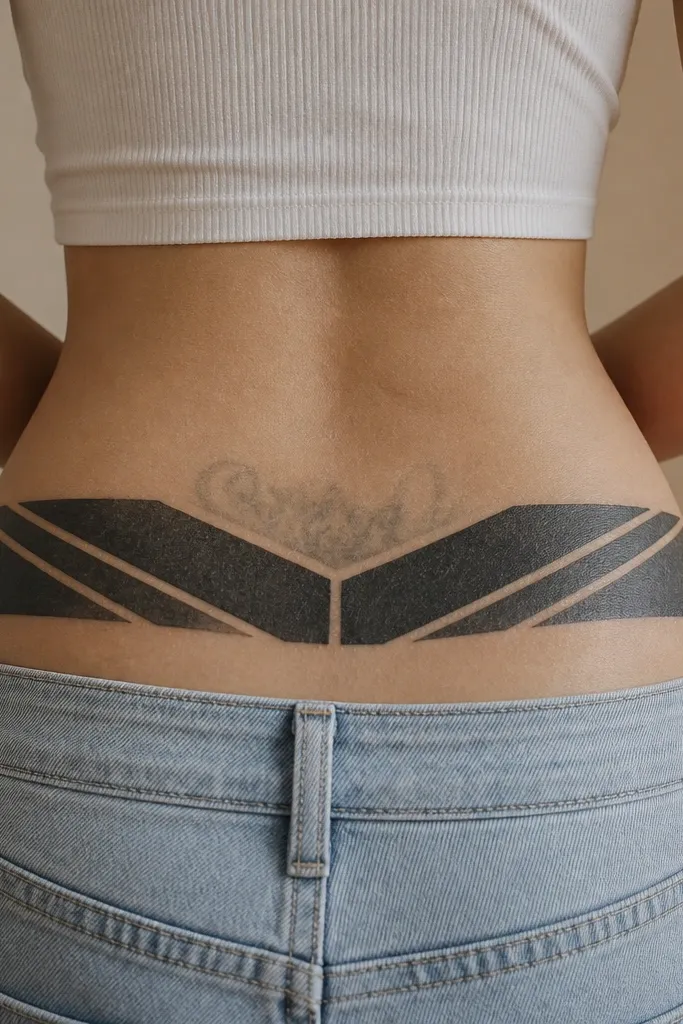
This is a budget-friendly cover-up because geometry can be planned to cover exact trouble spots. The angled highlight cuts create a "designed" look so the black doesn't feel accidental. It also works when the original tattoo has scattered lines, because the new shapes overwrite the chaos.
Plan a V or chevron that points toward the center of your lower back. Use 3 to 5 large black polygons instead of many tiny ones. Keep highlight cuts narrow - around 2 to 4 mm - so they don't stretch into ugly gaps.
Editor's noteAsk for a layout that aligns with the natural crease when you bend forward.
One warningDon't use lots of tiny polygons - they blur and make the cover-up look like a stain.
5. Thick black lily with smoke shading
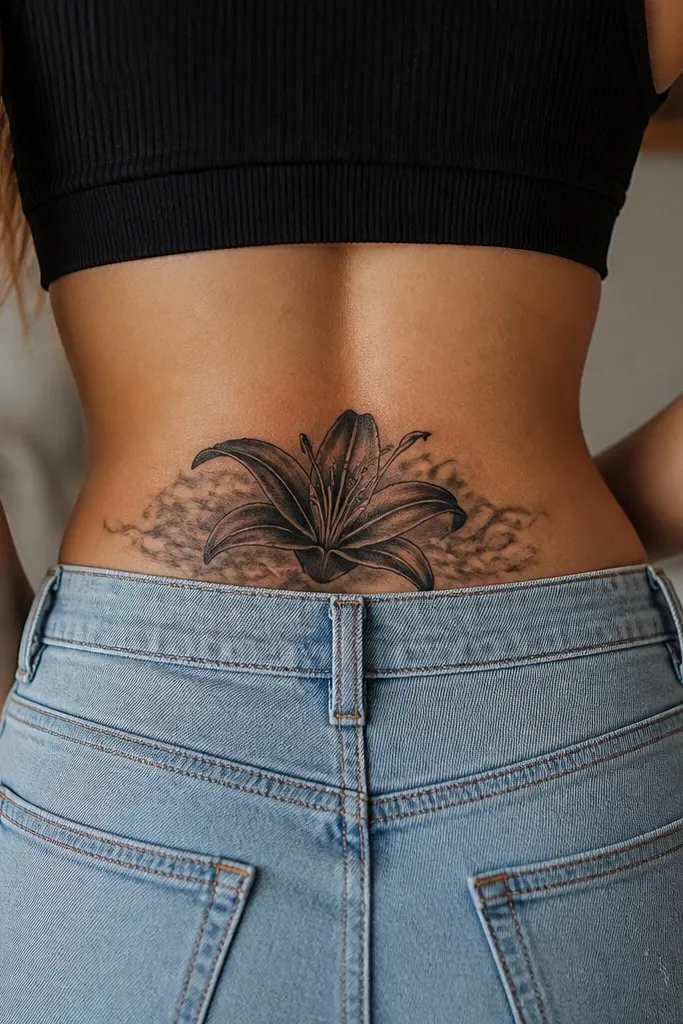
A lily cover-up works because the outline gives you a clear focal point and the solid petals do the opacity work. Smoke shading helps blend edges so the cover-up doesn't look like a sticker. I like this when the old tattoo has dark lines that need to be tamed without turning the whole area into a full blackout.
Place the lily so the main stem runs diagonally from upper-left to lower-right on your tramp stamp zone. Use solid black for the petals first, then add smoke shading around the edges at low contrast. Keep smoke density heavier near the center and lighter at the outer boundary.
Editor's noteBring a photo of your preferred lily style and ask for thicker petal fills than you think you need.
One warningAvoid thin linework inside the petals - it won't cover and it heals softer than you expect.
6. Black-and-gray tribal rework (thick lines only)
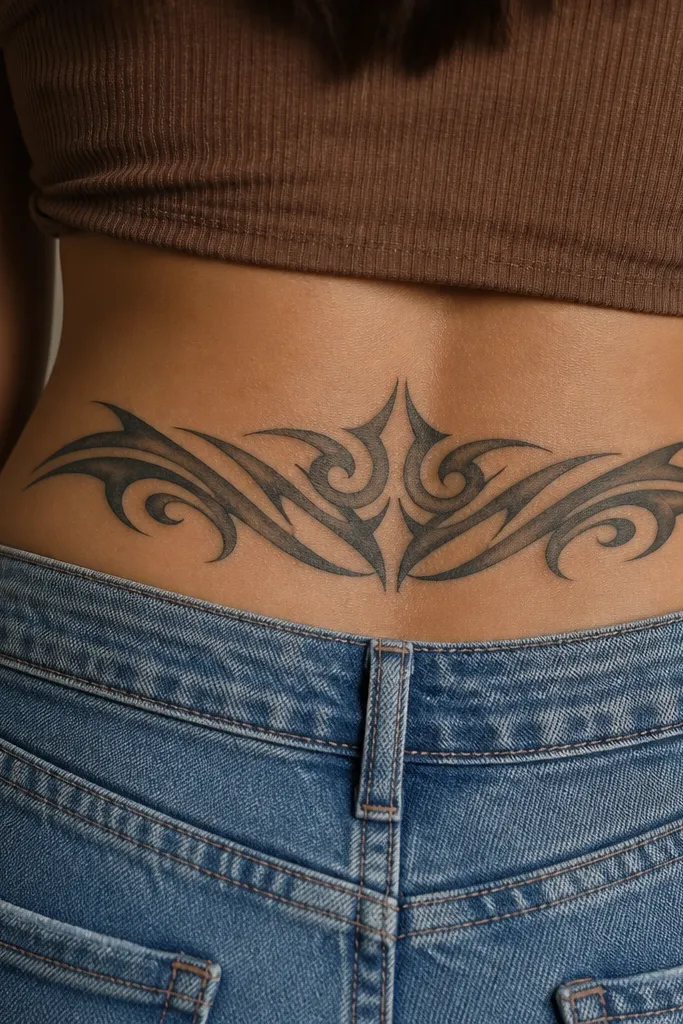
If your old tattoo already has tribal vibes, reworking it with thicker lines is one of the cheapest paths. Thick bands cover better than fine tribal strokes, and they survive the stretch of the upper butt. Gray gradients help hide transitions where the old ink might peek through.
Tell the artist you want fewer, larger shapes. The new tribal should be 2 to 3 times bolder than the original linework. Place darker bands over the old tattoo's densest areas and use gray only at the edges to blend.
Editor's noteAsk for a "no micro-lines" rule in the stencil so the artist doesn't sneak in thin details.
One warningAvoid reworking with lots of tiny tribal flecks - they fade and can reveal the original tattoo beneath.
7. Color peony cluster over a blackout foundation
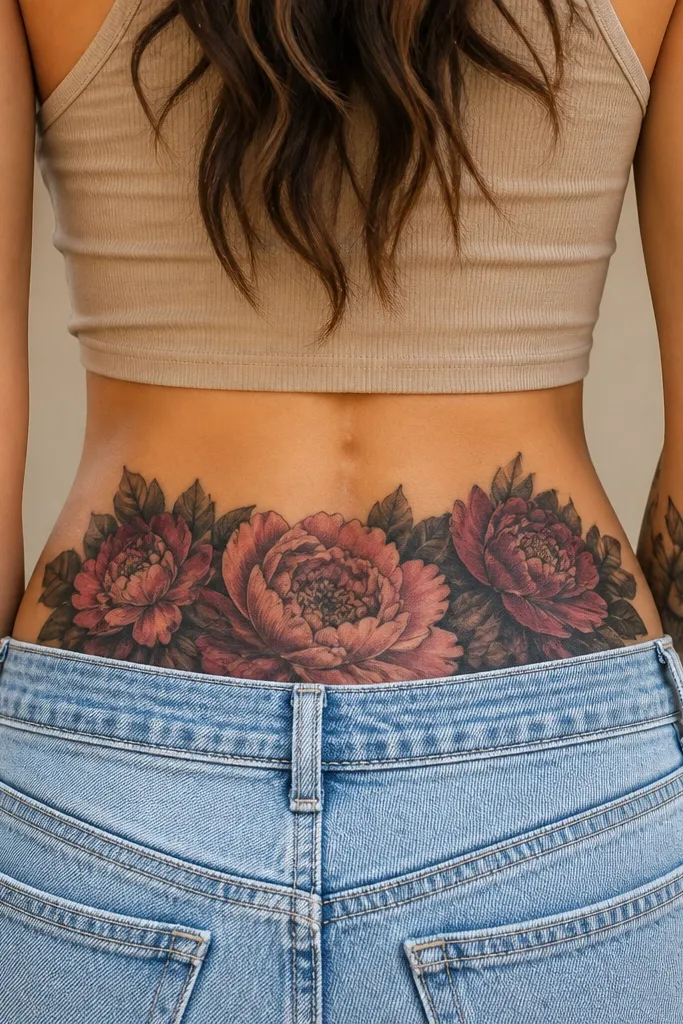
Color peonies can look gorgeous, but they only work as budget cover-ups when the artist uses a blackout foundation first. That foundation prevents the old tattoo from turning your pinks and peaches gray. Petal layering also hides uneven healing and gives the eye something to focus on.
Have the artist block out the old ink with solid black/charcoal first, then pack color into the petal centers. Use dusty shades rather than super-bright colors so they don't fight the darkness underneath. Keep petal spacing tight so the cover-up reads as one cohesive cluster.
Editor's notePlan for two-tone petals: darker outer petals and lighter inner highlights that stay opaque.
One warningAvoid asking for "only color" without a dark base - that's how you get bruised-looking colors.
8. Butterfly blackout with negative wings
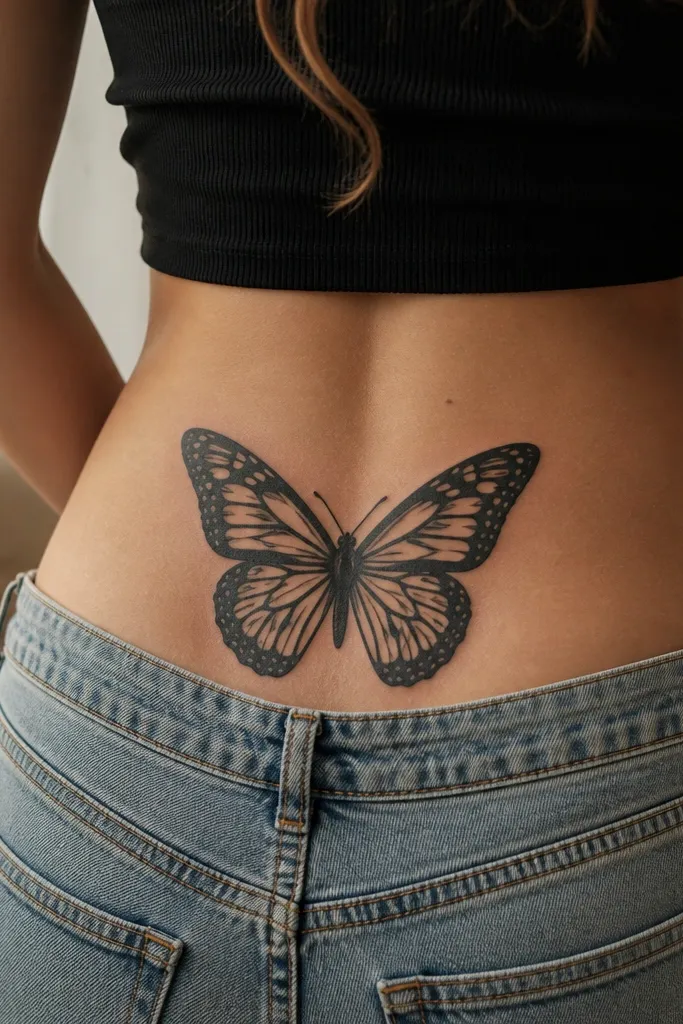
A butterfly works well because the wings create two big coverage zones with symmetry. Negative wing crescents add a clean, intentional look while the solid black does the heavy lifting. I've used this when someone's original tattoo had dark patches that needed to be fully killed.
Place the butterfly so the body sits near the center and the wings extend toward each hip without going too far down. Use solid black fills for most wing area and keep negative crescents thin. The body should be thicker than the wings' inner edges so it reads after healing.
Editor's noteAsk for the negative spaces to be narrower than you think - stretching makes them wider.
One warningAvoid wide open negative wing gaps - they expose the old tattoo and look unfinished.
9. Dark vine frame with hidden cover-up anchors
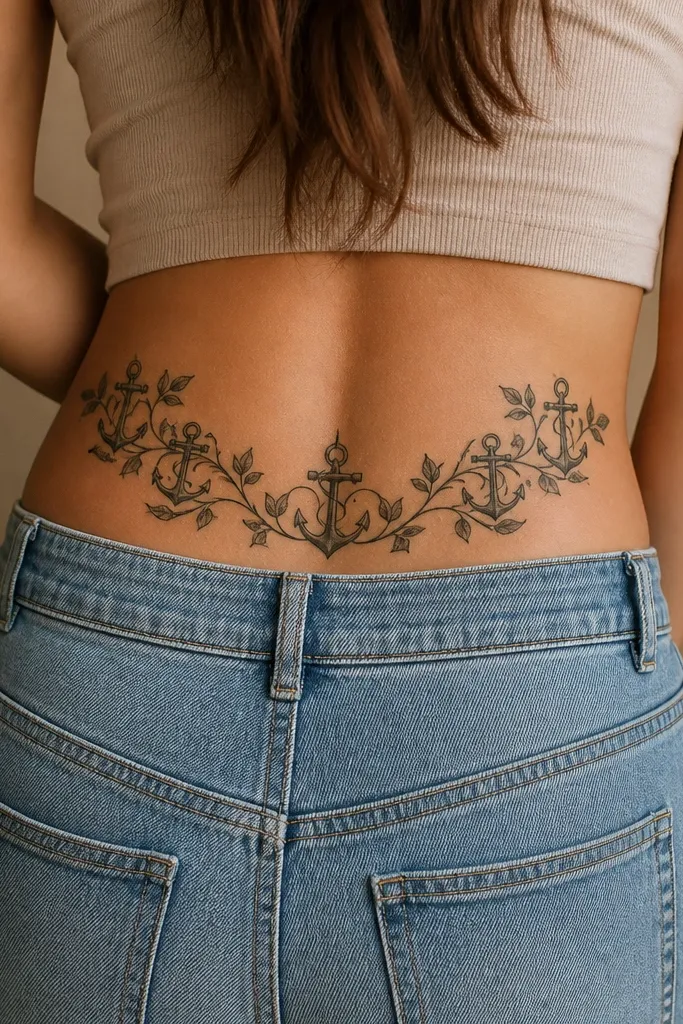
Vines are great when you want coverage but still want a "designed border." The trick is using the vine as a frame and placing the darkest leaf fills over the old tattoo's worst spots. It looks more natural than a full blackout because your eye follows the vine path.
Build the frame first with thicker vine lines, then add leaf clusters inside where the old tattoo is densest. Keep the leaf fills solid and use lighter shading only on outer edges. A frame that's too thin won't cover and will look like a line drawing sitting on top of old ink.
Editor's noteBring high-waist underwear or pants to the appointment so you can check how the frame sits in real life.
One warningSkip delicate vine lines - they don't hide anything and they blur into gray.
10. Sword-and-rose cross with solid black hilt
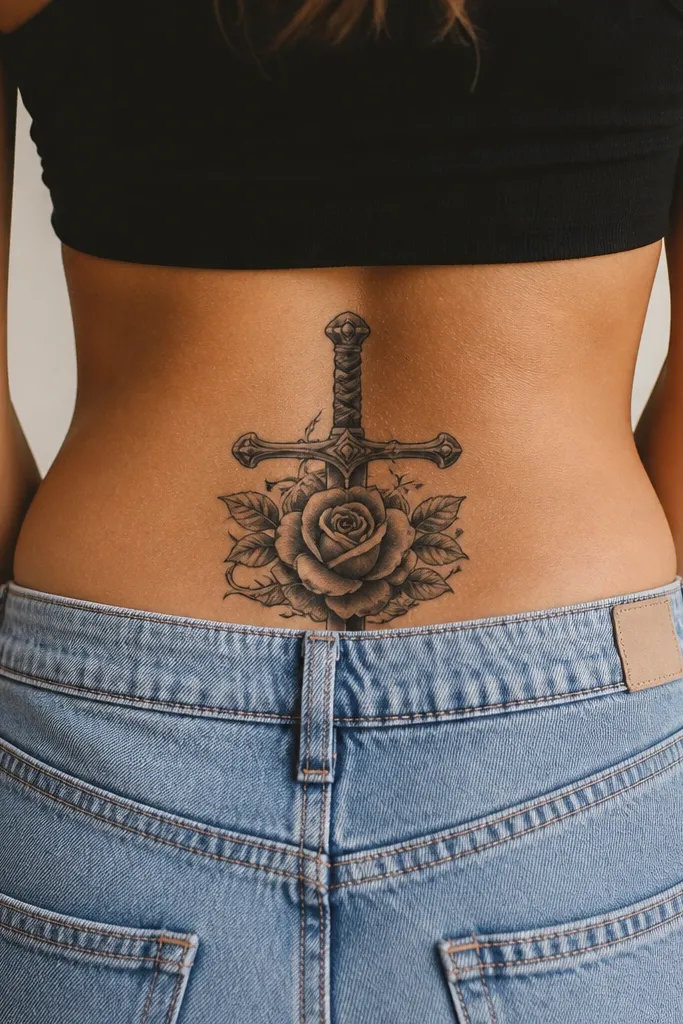
This design is practical for tramp stamp cover-ups because the X-shape gives you two thick coverage lanes. Solid black on the hilt and guard blocks old ink quickly, and the rose adds femininity without needing super-fine detail. I've seen it heal well because most lines are thick and bold.
Place the cross so the top of the sword sits near the upper center of the tramp stamp zone. Use solid black for the hilt and guard, then charcoal shading for the blade and petals. Keep the rose size proportional - around the width of your palm - so it doesn't look like it's floating.
Editor's noteAsk the artist to thicken any line that crosses over the darkest part of your old tattoo.
One warningAvoid thin blade lines - they look like a sketch and won't cover.
11. Dotwork gradient cloud over faded script
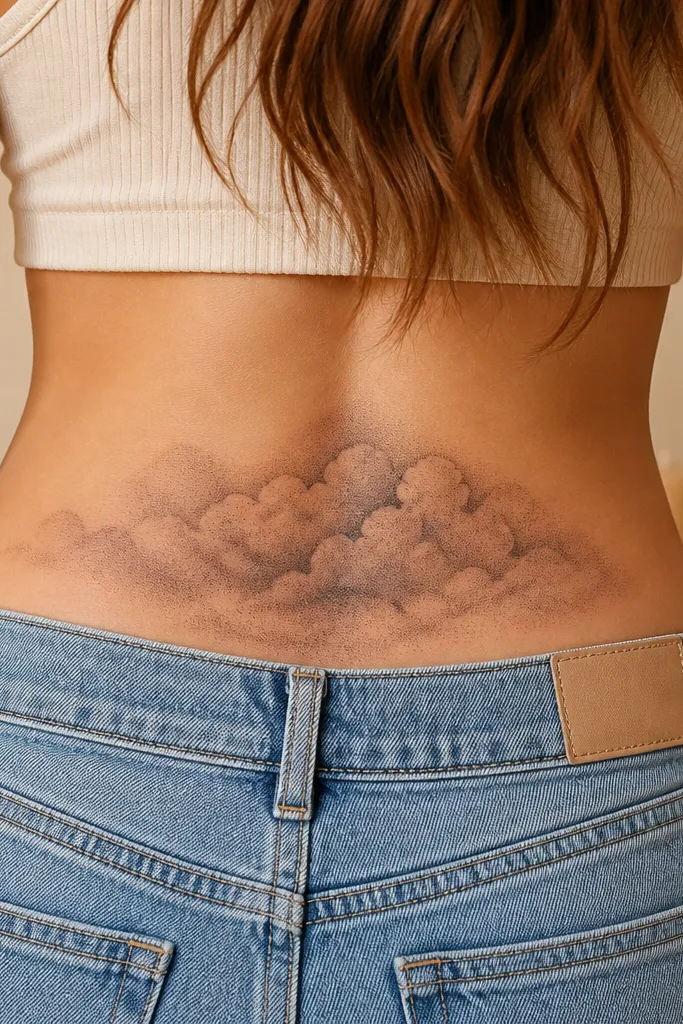
If your old tattoo is more faded than dark, dotwork clouds are a budget win. Dots build value gradually, so you can cover uneven edges without making harsh black blocks. The cloud silhouette also hides where the old lettering ended.
Start with a darker dot cluster in the center, then reduce dot density outward. Keep the cloud shape wider than the old tattoo by 1 to 2 cm on each side. If your old tattoo is still dark, add a black base under the densest dotwork.
Editor's noteRequest a stencil that covers beyond the original script edges - don't try to match it exactly.
One warningAvoid dotwork that's too light in the center - it won't kill the old lettering.
12. Sunburst cover-up with thick rays
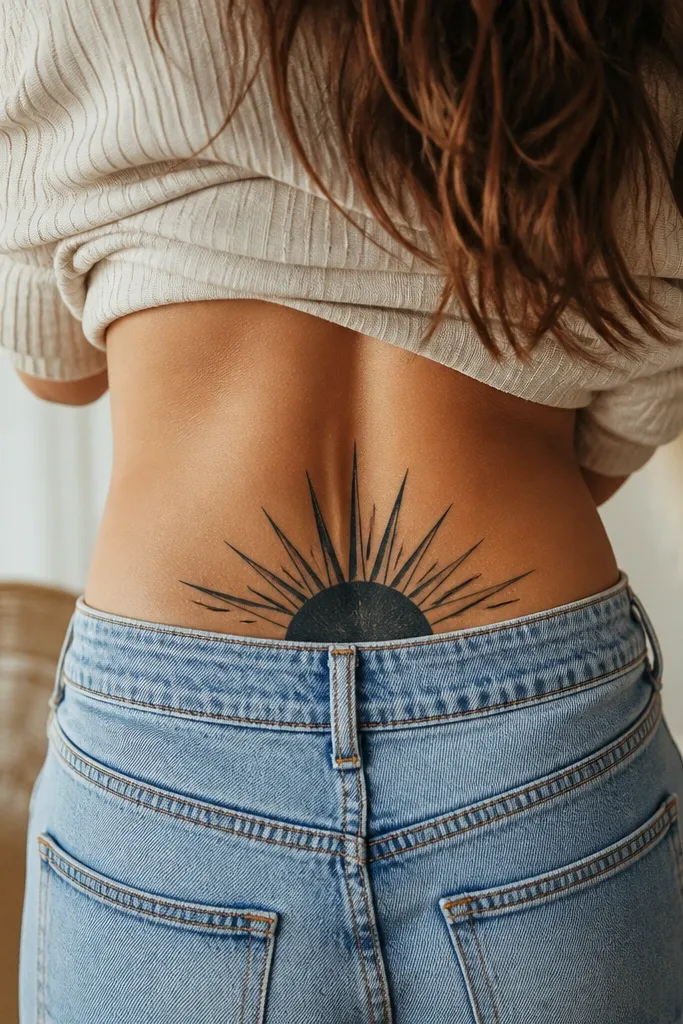
Sunbursts are a cheat code for cover-ups because rays hide messy old lines. Thick rays create strong contrast and the center circle anchors the eye. I like this when someone wants a graphic look that still feels feminine when paired with curves.
Make the rays about 6 to 10 mm wide, not pencil-thin. Use a filled center circle and keep gray shading minimal so the rays stay opaque. The sunburst should extend toward both hips but stop before the waistband crease.
Editor's noteAsk for slightly curved rays - they match the body's shape better than straight lines.
One warningAvoid skinny rays - they blur together and turn into a gray smear.